
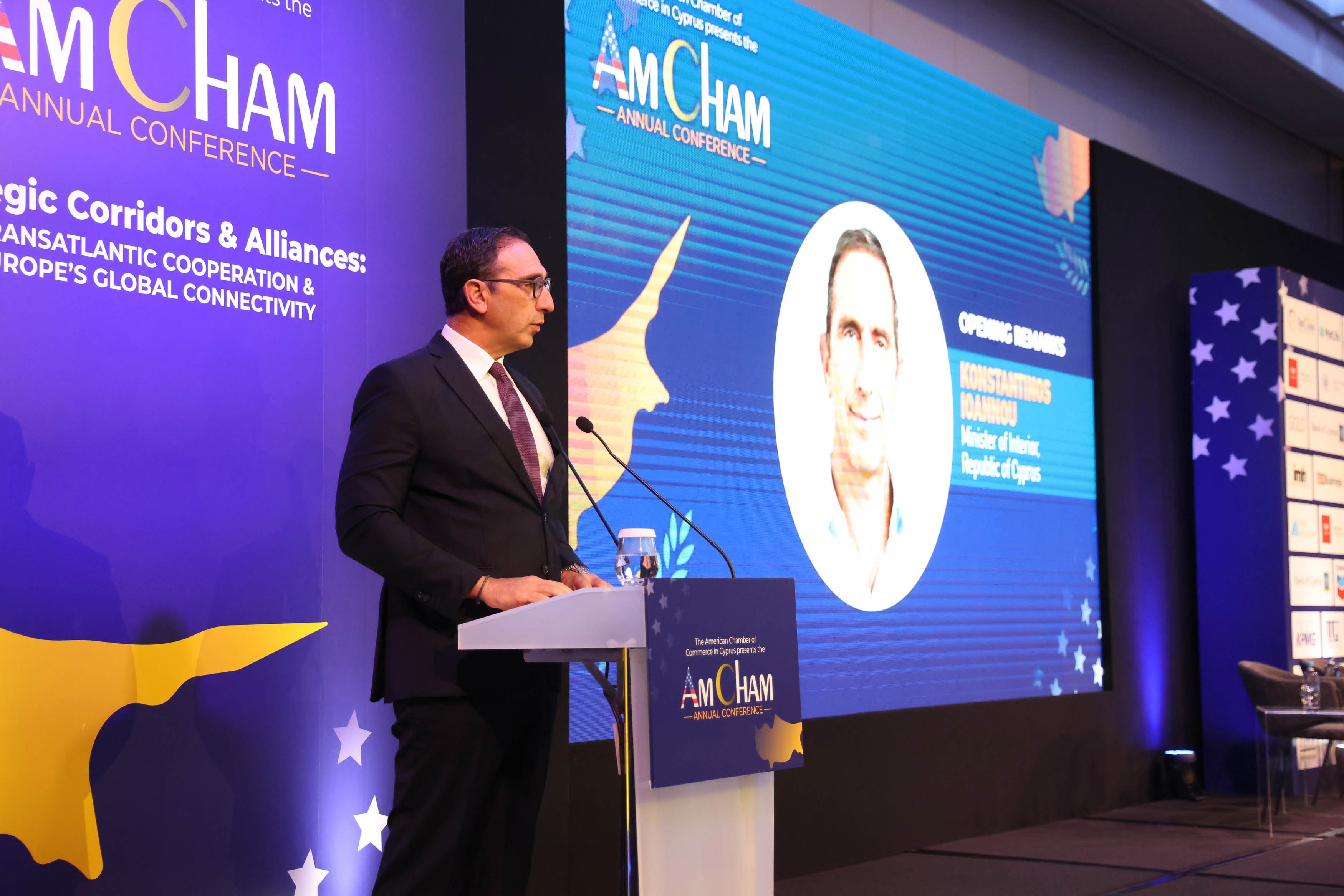
Cyprus will launch a four-year strategy to attract foreign investors and skilled workers, Interior Minister Constantinos Ioannou said on Friday, as the government sought to deepen its relationship with the United States.
Speaking at the annual conference of the American commerce chamber in Nicosia, Ioannou presented the government’s ‘strategy for attracting Investment’.
“Investor confidence depends on transparent processes, effective regulation and efficient public services,” he said.
Ioannou called transatlantic cooperation a “clear strategic priority” for Cyprus, resting on “democracy and respect for international law”.
He said the Cyprus-US strategic dialogue provides a framework for cooperation on security, crisis management, energy, trade, investment and education, and that the aim is stronger commercial ties and tangible results.
On energy, he said transatlantic liquefied natural gas trade and Eastern Mediterranean resources could help Europe diversify its supply.
The presence of American companies in Cyprus’s exclusive economic zone, he said, showed the value of such cooperation.
Projects in renewables, storage and electricity interconnection must rest on “sound technical assessment, reliable financing and environmental responsibility”, he said, with full respect for international law.
He said the India-Middle East-Europe Economic Corridor (IMEC) offered openings for trade and investment, with Cyprus able to contribute maritime expertise and access to the EU single market.
He pointed to the 3+1 grouping of Cyprus, Greece, Israel and the United States as a supporting framework, and cited the Cyclops training centre in Larnaca as an example of shared expertise.
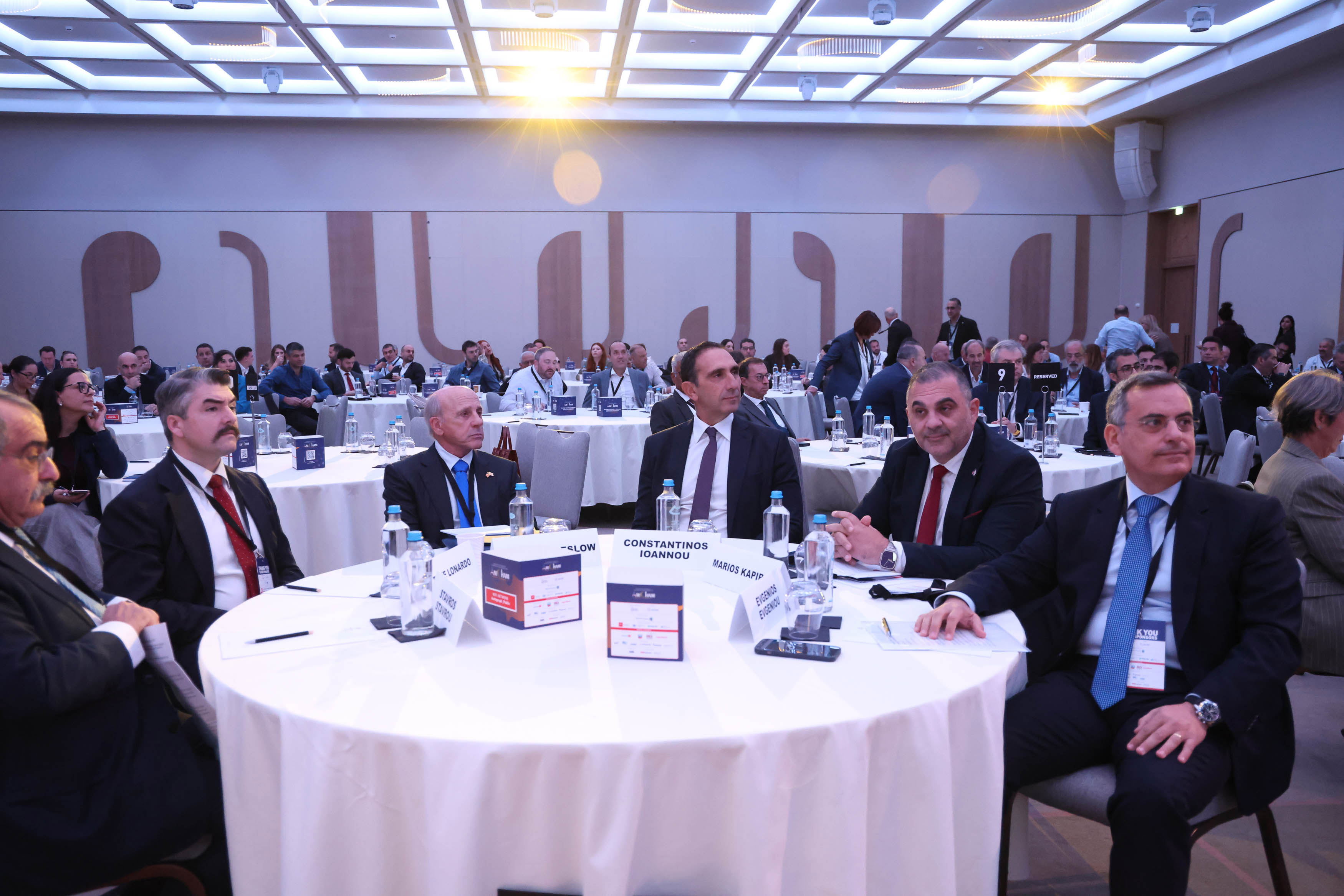
AmCham Cyprus president Marios Kapiris said the chamber, which marks 30 years since its founding in 1996, represents more than 100 major American firms and businesses with American participation.
He said its priorities include attracting investment and promoting cooperation in energy and technology.
Commerce chamber (Keve) president Stavros Stavrou said relations with the United States were at their strongest point, but cautioned that opportunities would not be taken up through geography alone and that strategy, investment and cooperation between government and the private sector were required.
“The real test of strategic partnerships is ultimately whether they produce tangible results,” he said.

Click here to change your cookie preferences