
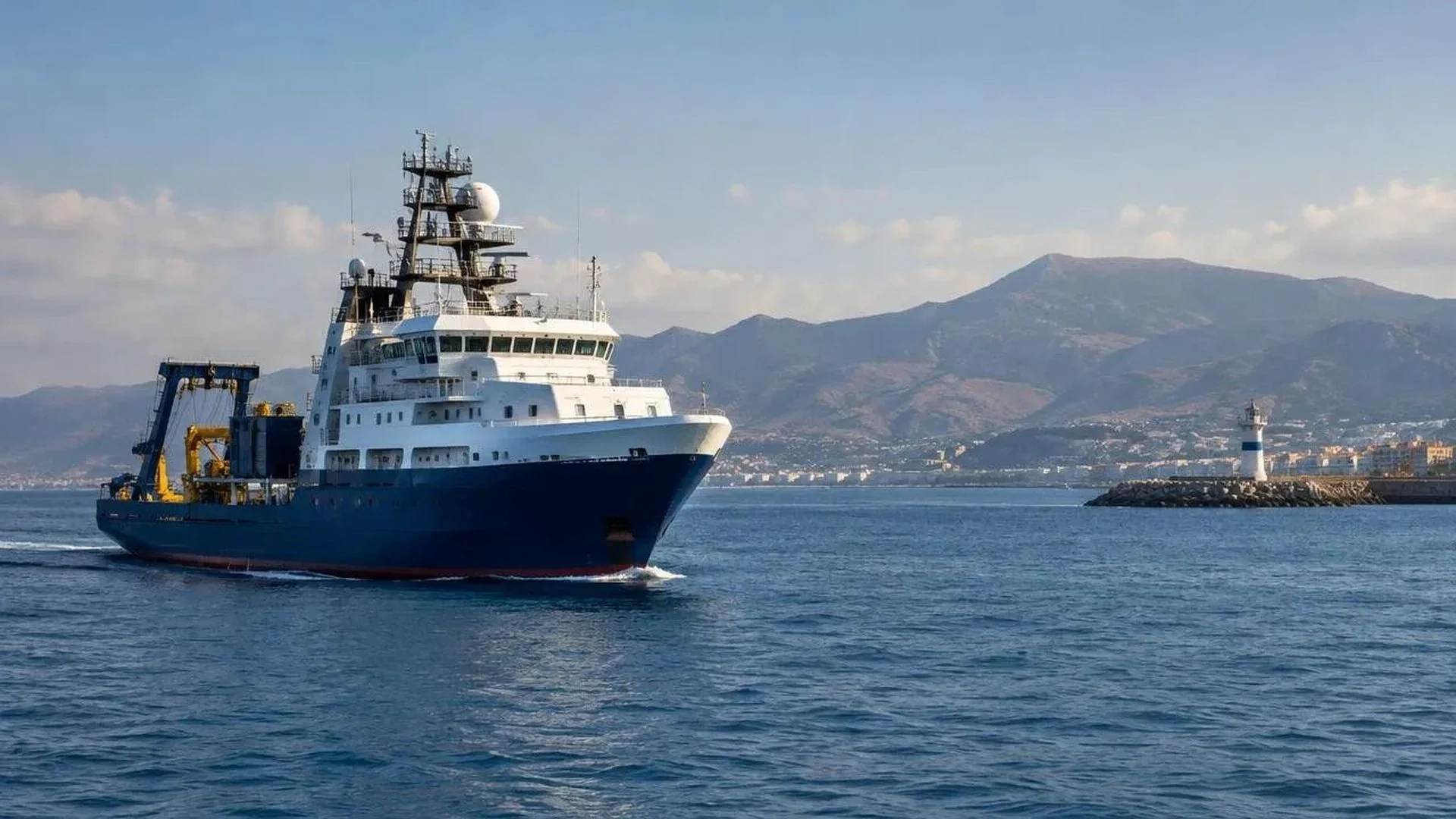
Turkish Foreign Minister Hakan Fidan has played down the row over the Greece-Cyprus electricity cable surveys, as the French research vessel Abeille Marengo prepares to sail from Heraklion.
Asked by Greek news outlet Skai to comment on the vessel and the Navtex exchange between Athens and Ankara over surveys for the Great Sea Interconnector (GSI), Fidan replied that “everything is normal, everything is good”.
Turkish diplomatic sources likewise told Greek media that the issue with the cable’s Navtex maritime notice had been resolved.
Athens was quick to reject any suggestion of a deal, with Deputy Foreign Minister Tasos Hadjivassiliou stressing that “Greece is the only licensing country” and that Turkey’s internal management “does not concern us”.
Hadjivassiliou insisted no agreement on licensing had been reached with Ankara and that “permission was requested and granted only by Greece”.
He said sovereign rights in the cable area are exercised exclusively by Greece and Cyprus, and that the Turkish counter-notice rests on “absurd arguments” and on a map Turkey submitted to the United Nations in 2020.
He said the project now carries French and European interests, with EU funding and the backing of allies including the United States.
The Greek notice, issued on Friday, allows the Abeille Marengo to work for five months, until March 6, 2027, along the whole route up to Cyprus’ exclusive economic zone.
An earlier attempt to survey the route in 2024 ended in tension after Turkish warships appeared nearby.
Greek reports say France is not expected to send an escort warship, and that Gerapetritis told parliament’s foreign affairs committee that Athens would take “the necessary operational interventions” if obstacles arise.
Energy analyst Dr Charles Ellinas said he is “somewhat optimistic” the surveys will go ahead “with some reaction from Turkey, but not enough to cause huge problems”.
He described Ankara’s response as “to some extent measured”, even though it issued a counternotice and sent drones, and said quiet diplomacy over the past two weeks had probably produced “some solution”.
He said he could not fathom what Fidan meant by saying ‘everything is normal’, arguing that Turkey cannot back down because of domestic opinion, having taken “dynamic positions that are very difficult to retract”.
He said Athens had kept a low profile and that starting next week leaves time to finish the surveys by the end of the year.
The Abeille Marengo is heading for the Greek island of Kasos, south of Karpathos, to begin surveys for the Great Sea Interconnector (GSI).
Greek reports say the work will be monitored remotely using autonomous systems and unmanned vehicles, with surface units available if needed.
Greece’s independent power transmission operator (Admie) announced on Friday that Greek and Cypriot authorities had issued the notices needed for surveys along the planned route of the Crete-Cyprus link.
Initially, Turkey responded with a counter-Navtex, claiming that part of the area lies within its continental shelf.
It said it had “not consented” to the work, which it called “unauthorised”, and that any research in areas it regards as under its jurisdiction must be coordinated with its authorities.
The Turkish foreign ministry then said no permission had been sought from Ankara for the French vessel’s work and that it had cancelled the Greek and Cypriot notices.
It said Turkey’s determination to protect its sovereign rights was “absolute” and that it favoured an approach in the region based on “cooperation, dialogue and coordination”.
Athens rejected the Turkish position, saying the law of the sea “is clear and does not allow for different interpretations”.
Greek media reports say a Turkish drone flew repeated surveillance circuits south of Karpathos, over the area where the cable is due to be laid.
The aircraft is believed to be an Akinci type that took off from the Dalaman naval base.
The reports say it switched its identification transmitter on and off, which made it harder for flight tracking systems to follow, and that it was the Turkish aircraft operating closest to the planned survey area.
The surveys come amid continuing uncertainty over the GSI project, which has faced delays caused by maritime disputes in the eastern Mediterranean.



Click here to change your cookie preferences