
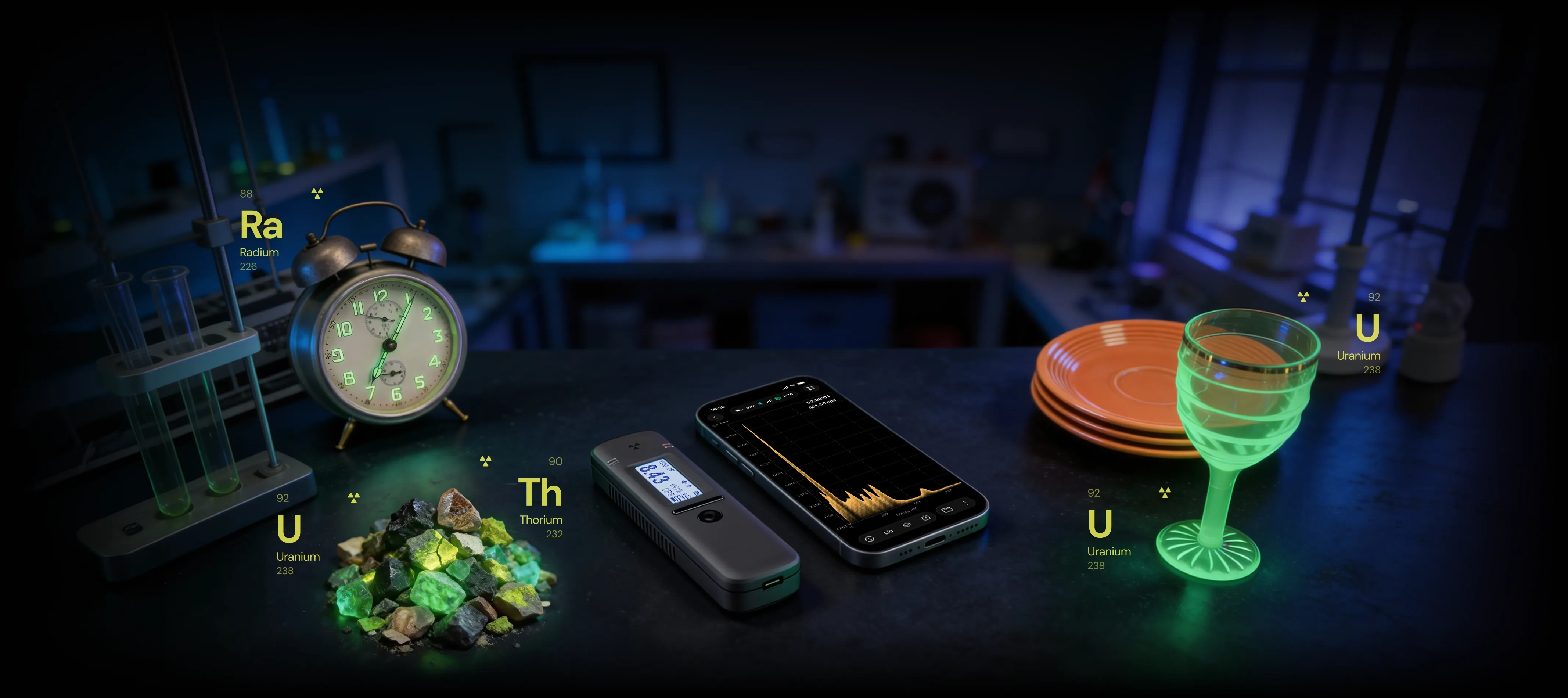
What if sophisticated radiation detection technology could fit in your pocket?
That is the idea behind Radiacode, a Cyprus-based technology company established in 2022 and began its operations in 2023 to design and manufacture compact radiation detectors. The company combines advanced sensors with software that allows users not only to detect radiation, but also to measure it, analyse its characteristics and map radiation levels using a smartphone.
Its first generation of products brought capabilities traditionally associated with larger scientific instruments into a portable device designed to be accessible to a much wider audience. Today, the company’s technology can detect changes in radiation levels in real time, analyse radiation spectra and connect measurements with geographic locations.
By mid-2023 Radiacode was already selling internationally, including in the United States, and was preparing for its next stage of growth.
But taking a technology company from a successful product to a larger international business requires more than a good idea. It requires continued investment in R&D, manufacturing capability, new products, talent and access to markets.
And that was exactly when the Research and Innovation Foundation Disrupt programme came into the picture. The programme was specifically designed to bring together public funding and venture capital, supporting the exponential growth of innovative Cypriot companies.
For Radiacode, a €1 million equity investment from a local venture capital fund unlocked a €1.5 million RIF grant, creating a combined investment of €2.5 million.
The investment was directed towards the company’s next growth stage: developing new radiation-detection technologies, strengthening its in-house R&D and manufacturing capabilities in Cyprus, expanding the software ecosystem connecting its devices and users, and accelerating sales and marketing activities in international markets.
The investment helped Radiacode accelerate the development of its next generation of products. In 2025, the company introduced Radiacode 110, a new generation of its pocket-sized radiation detector and spectrometer. In 2026, it unveiled Radiacode Zero, a compact radiation detector and dosimeter featuring innovative tissue-equivalent detection technology, designed to measure radiation in a way that more closely reflects how the human body experiences it, across an exceptionally wide range of radiation levels.
At the same time, the company continued developing its digital ecosystem, including powerful mobile applications for iOS and Android and Radiaverse.com, allowing radiation measurements to become part of a wider environment for mapping, sharing data and community-based monitoring.
With Radiaverse.com, anyone can explore a global interactive map to discover natural background radiation levels in their local area and identify locations with unusually elevated radiation levels.
This combination of hardware, software and data is important. Rather than simply manufacturing individual radiation detectors, Radiacode is building an ecosystem around radiation measurement.
Today, Radiacode has grown to 30 employees, with its operations headquartered in Germasogeia, Limassol.
Its customer base has expanded to include more than 50 universities and research laboratories worldwide, alongside a growing international community ranging from science enthusiasts and educators to enterprises and professional researchers.
For science enthusiasts, accessible radiation detectors offer the opportunity to explore and understand radiation in the environment. For universities and researchers, the same underlying technologies can support scientific measurements, fieldwork and environmental monitoring.
The company now has something more valuable than a successful product: technology, people, manufacturing capability, software and a growing global user base. That gives Radiacode the foundation for its next stage of development.
Its ambition is to move further into the professional radiation-detection and radiation-sensor markets, while continuing to develop its consumer products, software ecosystem and citizen-science community.
From a pocket-sized device developed in Cyprus to technology being used around the world, Radiacode’s journey illustrates what can happen when entrepreneurial ambition, private investment and targeted public funding come together.



Click here to change your cookie preferences