
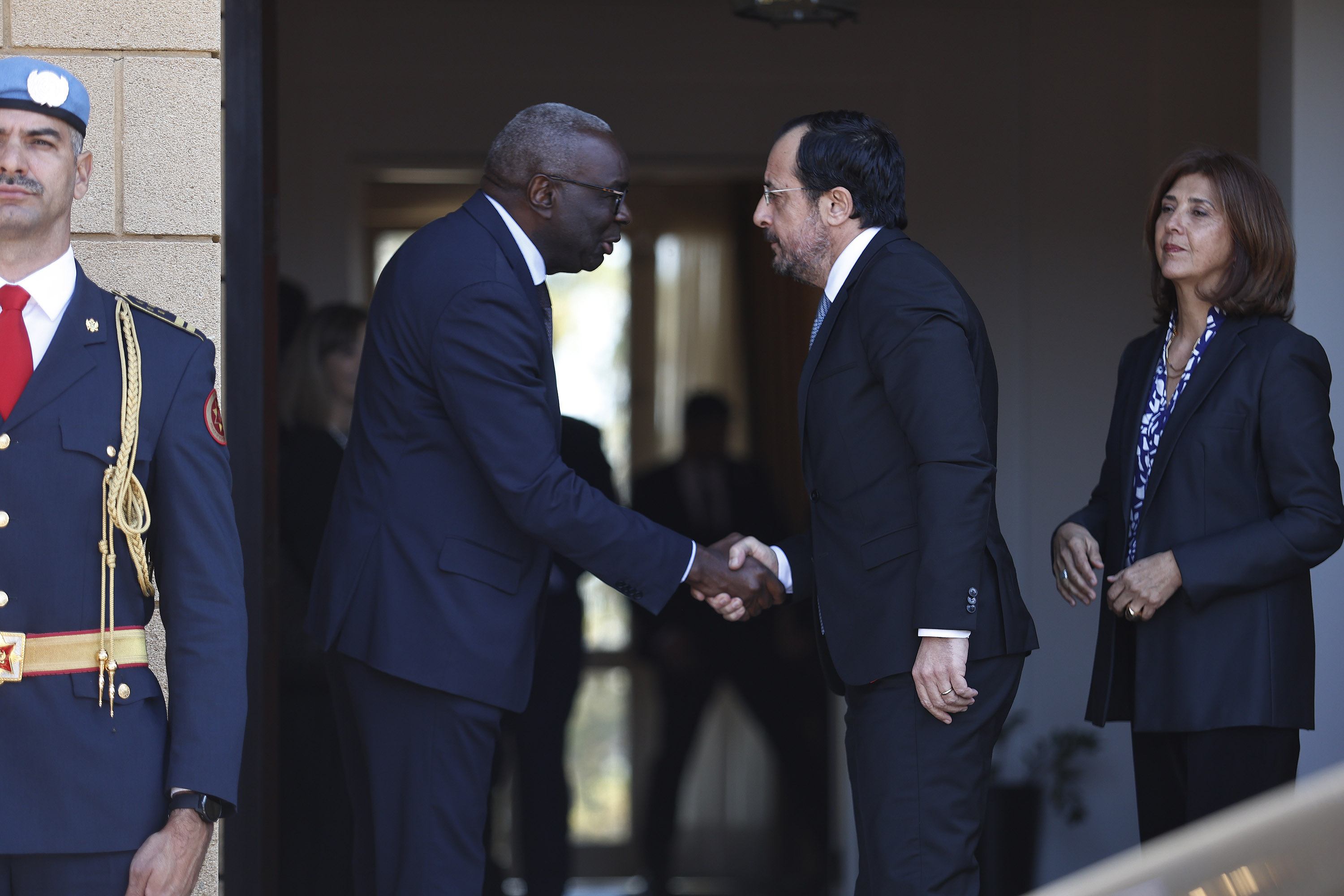
President Nikos Christodoulides on Monday said that the Greek Cypriot side has accepted “all” of the proposals put to it by United Nations envoy Maria Angela Holguin ahead of a tripartite meeting involving both and Turkish Cypriot leader Tufan Erhurman.
“I am going there with a very positive outlook. Since I met Holguin last Tuesday afternoon, I have accepted all the proposals she put forward. We have been awaiting the Turkish side’s responses, and I hope that these responses will be positive today,” he said as he left the presidential palace for the meeting.
He added that after the meeting, “we will proceed with specific announcements … to pave the way for further positive developments”.
Asked about the “bridge-building” proposals Erhurman had said he would put on the table at the day’s meeting, he reiterated that “both we and the Turkish side have before us specific proposals submitted by Holguin last Tuesday”.
“We have accepted these proposals and have been waiting for a response, a positive response, from the Turkish side, so that they may be announced,” he said.
He then said that “those responses have not yet been received” from the Turkish Cypriot side, before saying of Erhurman’s proposals that “I hope they are positive, allowing us to proceed with concrete announcements”.
Monday’s meeting ‘not merely a matter of confidence-building measures’
Then asked about the prospect of the opening of new crossing points between the island’s two sides and the possible announcement of new demining efforts, he said that Monday’s meeting would “not merely [be] a matter of confidence-building measures”.
“It concerns both the methodology and the substance. Some of what I have been reading is simply inaccurate. Therefore, please be patient. I hope that today, following the meeting, we will have positive announcements to share,” he said.
Earlier in the day, he had said at the Economist’s annual Cyprus summit that “for us, it is clear that a solution to the Cyprus issue cannot wait, and I am prepared to work substantively towards that end”.
“Moreover, such a solution would not only restore the unity of our country and the rights of all Cypriots, it would also significantly expand Cyprus’ geopolitical footprint and strengthen its regional role,” he said.
He added that “a reunified Cyprus would further leverage its potential as a European Union member state, contribute more effectively to confidence-building, and develop new partnerships for the benefit of the entire region, including Turkey itself”.
“Such a positive development, the resolution of the Cyprus issue, would not only enable Turkey to participate in regional cooperation frameworks, but would also create new prospects for relations between Turkey and the EU – relations which, despite various statements from the Turkish side, are of strategic importance to Ankara,” he said.
Cyprus solution ‘not merely about redressing historical injustice’
As such, he said, “the resolution of the Cyprus issue is not merely about redressing a historical injustice”, but instead “about the future”, including “the potential and opportunities it would unlock, and the contribution it would make toward strengthening the region’s resilience”.
Erhurman had said ahead of the meeting that the Turkish Cypriot side had “prepared a package of ‘bridge-building’ proposals concerning the issues discussed thus far”, and stressed that the proposals “do not merely reflect our own demands, but also take into account the views of the Greek Cypriot side”.
“We had previously informed Holguin that we were preparing such a package, without disclosing its specific content. Furthermore, we will present a new proposal which carries the potential and significance to fundamentally alter the dynamics of the process and influence the approaches taken,” he said.
He added that “our objective is to ensure a positive outcome from this meeting and to pave the way for future steps”.
Holguin suggested negotiations without preconditions
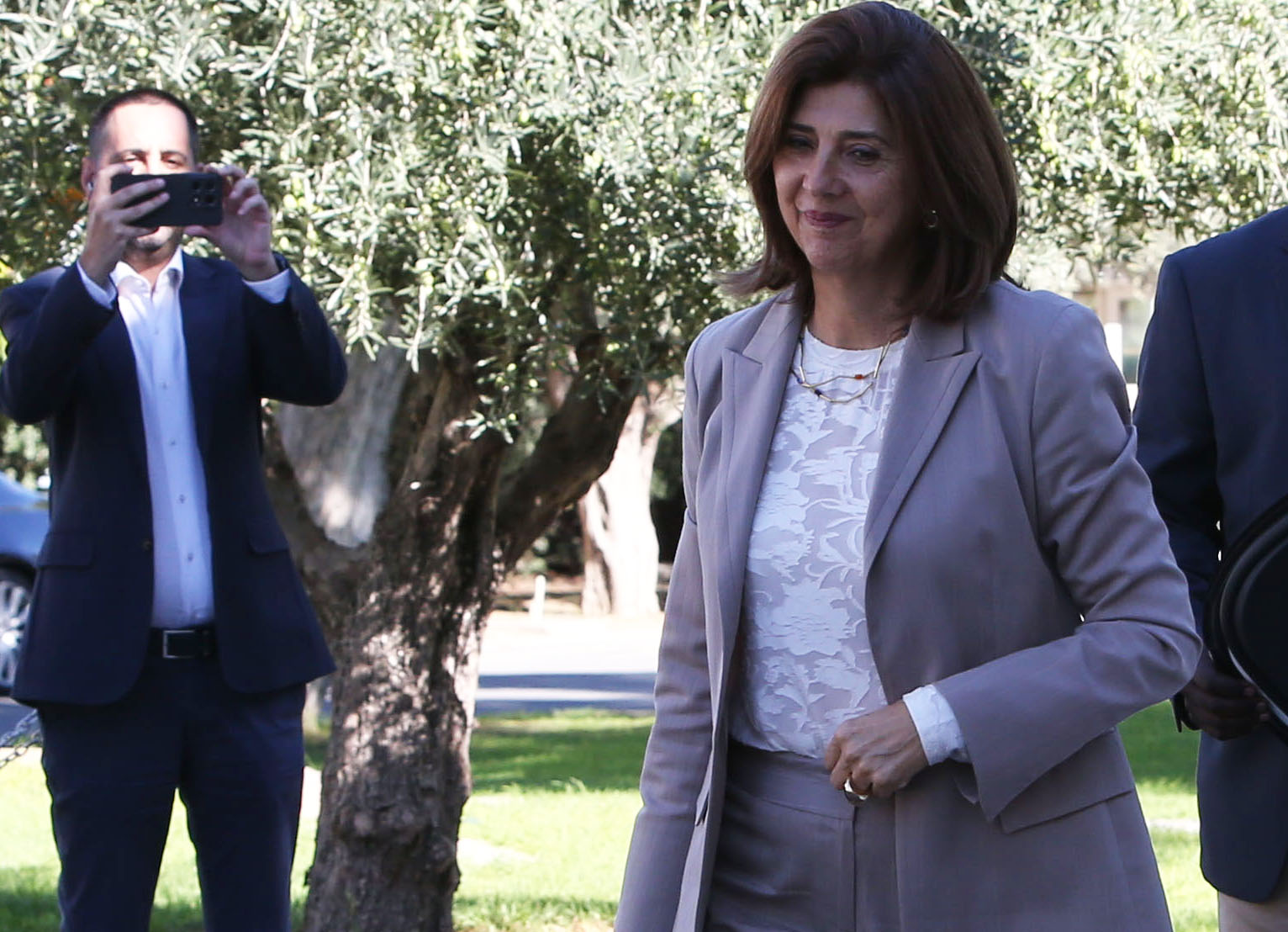
On this front, Holguin herself had told the Cyprus Mail that she considered that the island’s two sides should possibly commence negotiations in earnest without any preconditions, with the first topic of discussion the much-debated question of whether a post-solution Cyprus should have a rotating presidency, as a possible way to break the almost decade-long deadlock in solution talks.
The Turkish Cypriot side has maintained that the premise of a rotating presidency must be accepted by all before negotiations begin, while the Greek Cypriot side’s position is that the matter should be decided during negotiations.
“Maybe, why not think that you start negotiations without preconditions, but with the compromise that you are going to do it, the first point is that one, and so it is not like there would be months and months [of negotiations] and the last day is this one. On the contrary, start with this, and if it’s fine, continue, and if not, it’s over,” Holguin said.
However, she also warned that if the current initiative being undertaken with the aim of bringing about a resumption of negotiations in earnest fails, “there is going to be huge damage”.
“This is why [UN Secretary-General Antonio Guterres] doesn’t want to go to a five-plus-one without being well prepared, and this is why he said this time has to be different, because the feeling is that each bad meeting divided the sides more,” she said.
The term “five-plus-one” is used to describe an enlarged meeting on the Cyprus problem, involving the island’s two sides, its three guarantor powers, Greece, Turkey and the United Kingdom, and the UN.


Click here to change your cookie preferences