

Why successful businesses need to question the assumptions behind their forecasts before making their next big decision.
By Raluca Ioana Man
Two companies can present exactly the same financial forecast: 25 per cent revenue growth over the next year.
The first has a strong sales pipeline, understands its customers, has sufficient operating capacity and knows how much cash the expansion will require.
The second has taken last year’s revenue, added 25 per cent and built its business plan around the result.
On paper, both companies are forecasting the same growth.
In reality, they are making two very different bets on the future.
This distinction matters because businesses do not succeed simply by achieving the numbers written in their plans. They succeed by understanding what produces those numbers and making informed decisions when circumstances change.
Yet forecasting is still too often treated as an annual financial exercise rather than an essential part of business strategy.
The problem is rarely the calculation
A financial forecast can be mathematically correct and still be commercially unrealistic.
Imagine a business expecting 1,000 qualified sales opportunities over the coming year. If it converts 20 per cent of those opportunities into orders, with an average order value of €10,000, it could generate €2 million in orders.
Now imagine the conversion rate falls to 15 per cent.
The same business, with the same sales opportunities and the same prices, would generate €1.5 million in orders.
That is a €500,000 difference caused by a five-percentage-point change in one assumption.
These are hypothetical figures, but the lesson is very real.
The business does not need an entirely different strategy for its forecast to change significantly. Sometimes, a relatively small movement in customer behaviour or commercial performance can have a substantial financial consequence.
And there is another important distinction: orders are not necessarily recognised revenue, and revenue is not the same as cash received.
Customers may pay later than expected. Inventory may need to be purchased in advance. Additional employees, equipment or premises may be required before new sales become profitable.
A company can therefore experience strong growth and still find itself short of cash.
This is why understanding the business behind the figures matters as much as understanding the figures themselves.
Ambition, targets and forecasts are different things
Business leaders need ambition. Without it, companies risk becoming complacent.
But ambition should not be confused with evidence.
An ambition describes where a company wants to go. A target establishes the performance management intends to pursue. A forecast estimates what current information and assumptions suggest is likely to happen.
Consider a company aiming to become a regional leader.
Management may set a target of 25 per cent growth. That is a legitimate commercial objective.
However, if current demand, capacity and conversion data suggest 12 per cent growth, management should not automatically turn the 25 per cent target into its financial forecast.
The company can continue pursuing the higher target while recognising that the available evidence supports a more conservative estimate.
That distinction is important.
When forecasts are shaped primarily by what management wants to achieve, businesses risk committing money, people and resources to outcomes that have not been sufficiently tested.
What happens when the environment changes?
The September 2026 World Economic Forum Chief Economists’ Outlook offers an important perspective.
Of the 36 chief economists surveyed, 56 per cent expected the global economic outlook to remain stable or improve over the following year. Yet only 25 per cent expected the global economy to become more resilient.
The difference is significant. An economy can appear more stable without becoming less vulnerable to future disruption.
For a business, this means that even a reasonable forecast should not be treated as the only possible future.
A hotel considering expansion, for example, may forecast demand based on current bookings, expected tourism activity and operating costs.
But what if customers shorten their stays, energy costs rise and recruitment becomes more expensive at the same time?
A simple reduction of 10 per cent in projected revenue would not necessarily capture the combined effect of these changes.
This is where scenario planning adds value.
It examines different plausible conditions, how they might affect the business together and what management would do in response.
The distinction is important: scenario planning is not an attempt to predict the future with greater accuracy. It is a way to make better decisions across several possible futures.
Shell has used scenario thinking in leadership decision-making for more than 50 years. Its published methodology explicitly distinguishes scenarios from predictions and business plans.
For smaller companies, the approach does not have to be complicated. What matters is the discipline of considering what might change before the business is forced to react.
A forecast should change a decision
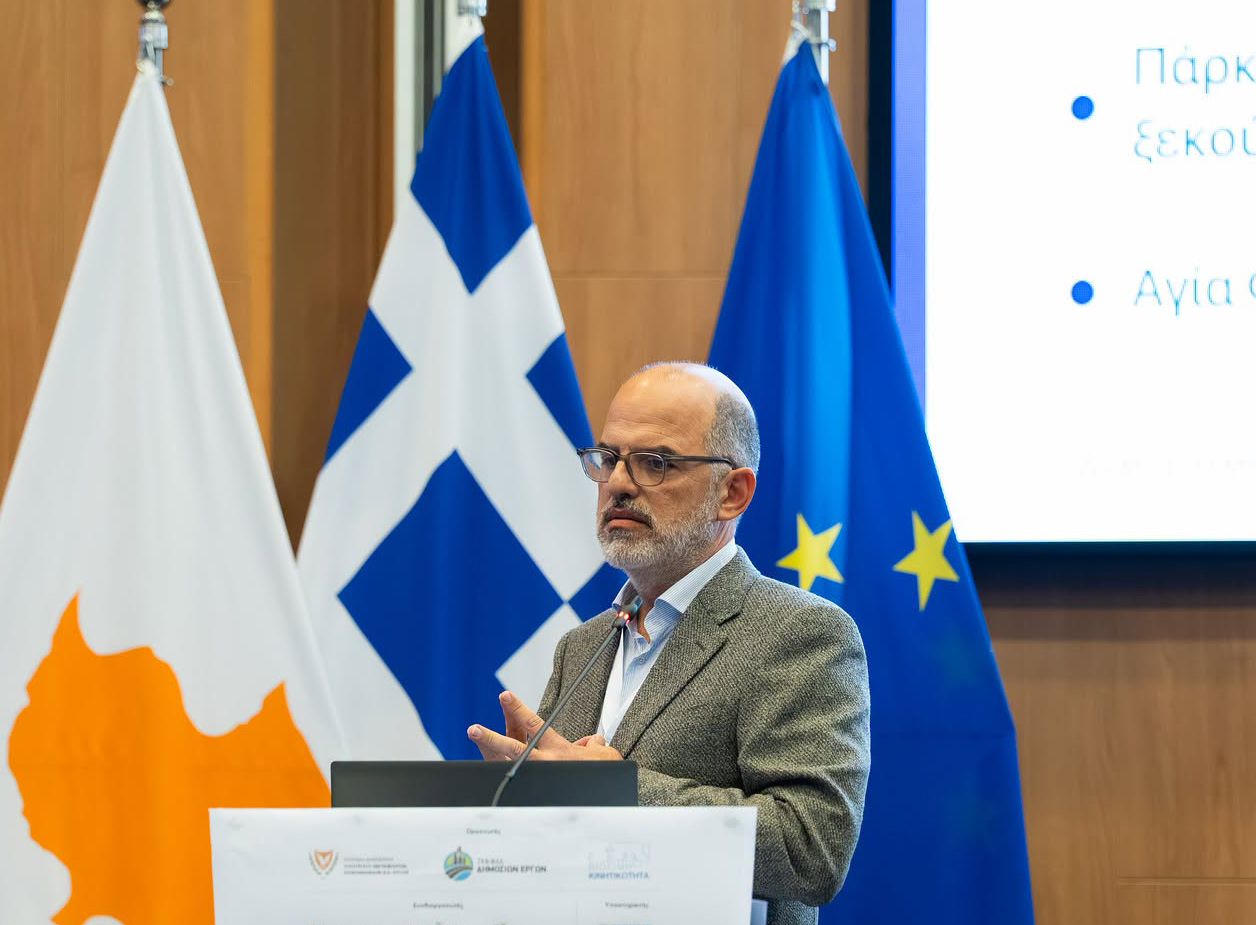
During my presentation at the Financing & IPO Summit 2026, organised by VERTIK in Bucharest in October, I explored how financial forecasting connects business strategy with financing and investment decisions.
Although the discussion was relevant to companies preparing for external capital, the underlying principle applies to businesses of every size.
A forecast becomes strategically useful when management knows what information would cause it to change a decision.
For example, if customer demand falls below an agreed threshold for two consecutive months, should a company postpone opening another location?
If customer payments begin taking significantly longer, should it revise its expansion budget?
If a new market performs better than expected, does the business have the capacity and financing to accelerate investment?
The thresholds will differ between companies. They must reflect the business model, historical performance, financial capacity and risk appetite.
But the management principle remains the same: a forecast should be connected to action.
Three questions worth asking before the next investment
Before committing substantial resources to expansion, technology, recruitment or a new market, I would encourage business leaders to examine three questions.
First, what must be true for this decision to succeed? This means identifying the commercial and operational assumptions on which the investment depends.
Second, how would we recognise that those assumptions are changing? Management needs relevant indicators, not just a financial report showing what went wrong several months earlier.
Third, what would we do differently? A warning is valuable only if the business has considered its response.
These questions cannot eliminate uncertainty. But they can expose weak assumptions early and prevent management from becoming unnecessarily committed to a single expected outcome.
My final thought
There is nothing wrong with setting ambitious growth targets. Businesses need direction, confidence and the willingness to invest.
The danger begins when the desire to achieve a number becomes stronger than the evidence supporting it.
A good forecast should be questioned, updated and used to guide decisions. Its value is not measured only by whether the final number proves accurate, but also by whether it helps management recognise change and respond in time.
Because the real test of a business plan is not how convincing the numbers look today. It is how well the business can respond when tomorrow looks different.
*Raluca Ioana Man is a business strategist, board advisor, and founder of RSEVEN



Click here to change your cookie preferences