
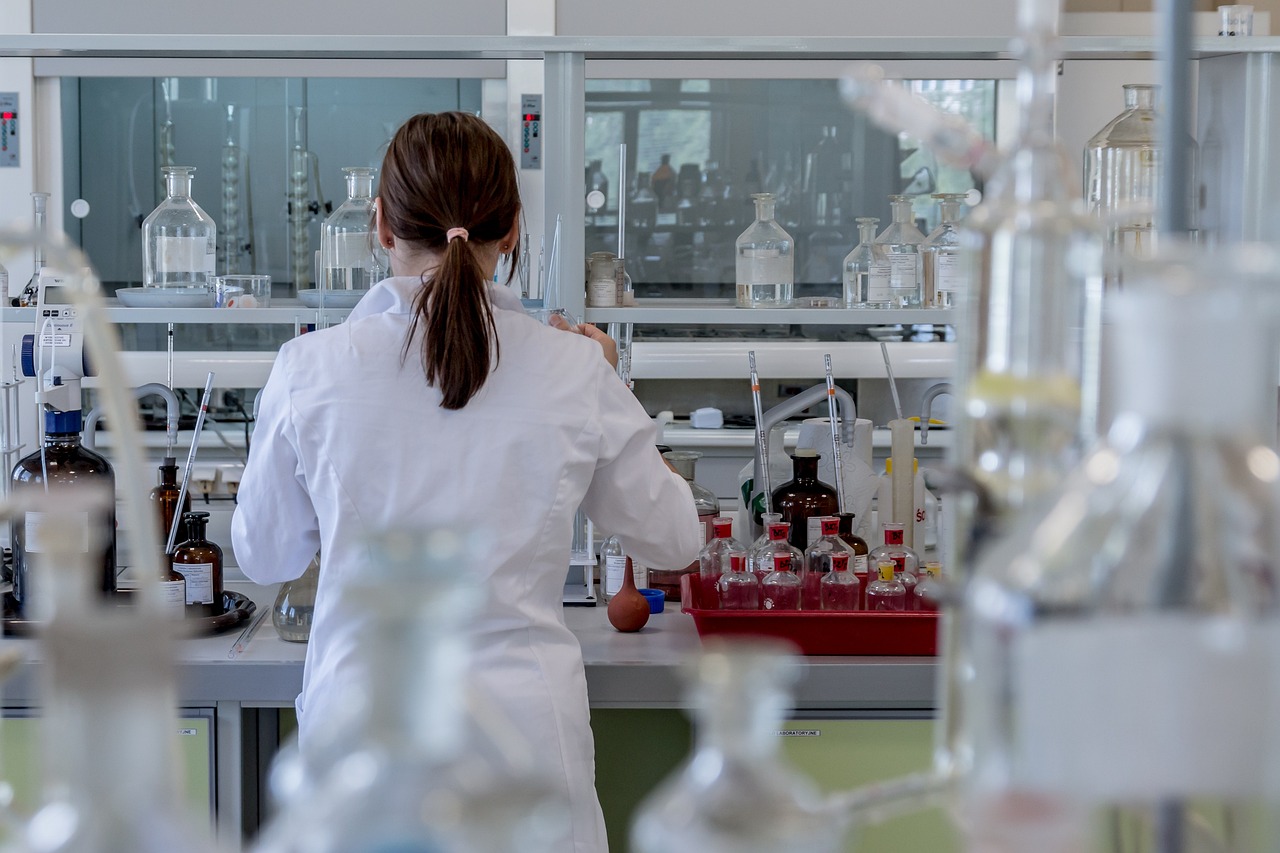
Cyprus trails EU average for women in science and engineering
Cyprus had 19,600 female scientists and engineers in 2025, accounting for 37.8 per cent of the country’s total workforce in these professions, according to figures released by Eurostat on Tuesday.
The figures place Cyprus below the European Union average, where women represented 41 per cent of all scientists and engineers, highlighting the continuing gender gap in science, technology, engineering and mathematics (STEM) occupations.
Across the bloc, there were 20.2 million scientists and engineers in 2025, of whom 8.2 million were women.
Cyprus is counted as a single statistical region in Eurostat’s regional breakdown because of its relatively small size, whereas larger member states are divided into several regions to provide a more detailed geographical picture.
The figures therefore do not provide a breakdown between individual districts or other parts of the island.
At regional level, the French capital region of Île-de-France recorded the highest number of female scientists and engineers, with 336,300 women working in these professions.
Women accounted for 38 per cent of all scientists and engineers in the region, a proportion broadly comparable to Cyprus’ 37.8 per cent.
Several other European regions recorded similarly high numbers of women in these occupations.
Germany’s Nordrhein-Westfalen had 281,400 female scientists and engineers, representing 35 per cent of its total, while Bayern recorded 271,100, also accounting for 35 per cent.
Spain’s Este region had 279,400 women in these professions, representing 46 per cent, while West-Nederland in the Netherlands recorded 271,600, or 40 per cent.
Portugal’s Continente region had 265,100 female scientists and engineers, equivalent to 46 per cent of its total.
Eurostat also identified 10 regions across the EU where women made up more than half of all scientists and engineers in 2025.
Most were located in southern European countries, with four regions in Spain, two in Portugal and one in Greece.
The remaining three were Poland’s Makroregion centralny, Sweden’s northernmost region and France’s outermost regions.
Despite having a majority of women in these professions, most of the regions in this group had relatively small overall numbers of scientists and engineers.
Spain’s Noreste region recorded the highest number among them, with 102,700 female scientists and engineers, representing 51 per cent of its total.
The figures underline the differences between European regions in terms of both the number of women working in scientific and engineering professions and their overall representation in these fields.
While Cyprus’ proportion of 37.8 per cent remains below the EU average, it is close to the share recorded in Île-de-France, one of Europe’s largest concentrations of scientific and engineering employment.



Click here to change your cookie preferences