
From Schengen and global competitiveness to maritime careers and the green transition, Cyprus shipping looks to strengthen its international standing and secure its future.
Cyprus has spent years building its reputation as a shipping centre. The harder job is persuading the companies behind the ships to keep their offices, employees and investment on the island.
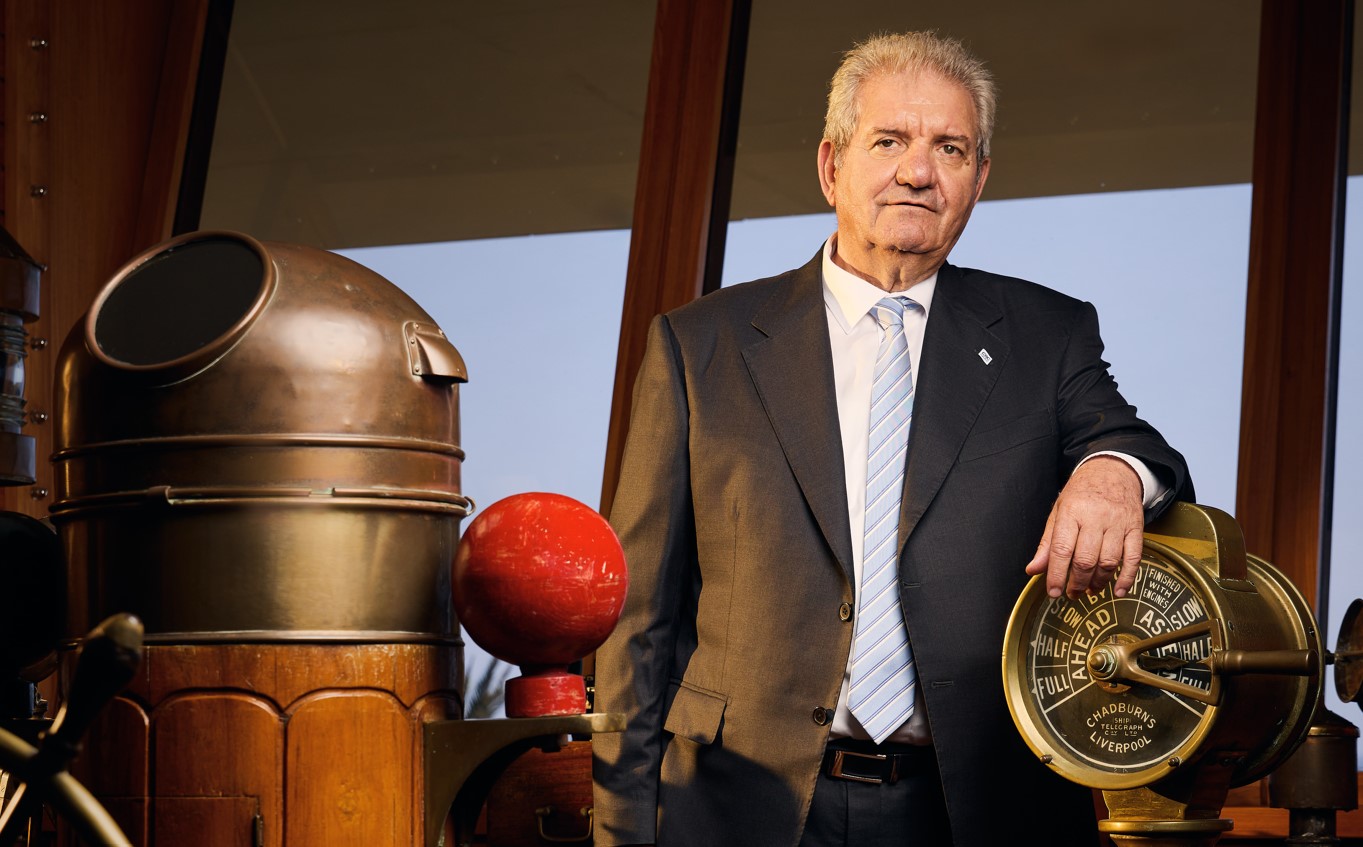
That is the distinction Cyprus Shipping Chamber (CSC) president Andreas Neophytou draws in an exclusive interview with the Cyprus Mail. A ship register gives the island international standing. A shipping company based here brings jobs, business and a reason for other firms to follow.
Schengen membership could make Cyprus a more convenient headquarters, particularly for staff who need to travel at short notice. But the competition for maritime business is only part of Neophytou’s concerns. There is the danger facing crews in the Gulf, the cost of Europe’s environmental rules and the rather awkward question of what fuel tomorrow’s ships will use. It is a substantial agenda for an industry estimated to contribute 7 per cent of Cyprus’ GDP.
More than a flag, a business worth keeping
Neophytou sees the island’s register as part of what he calls a “modern, efficient and integrated shipping cluster ranked amongst the leading in the world”, supported by more than 200 resident companies in ship ownership, shipmanagement and related services.
The national flag also gives Cyprus “a strong voice at the international intergovernmental fora” governing the industry, including the International Maritime Organisation (IMO), EU and International Labour Organisation (ILO). That is influence a country of Cyprus’ size cannot take for granted.
But influence at an international meeting is not quite the same as salaries paid or investment made at home. Neophytou draws attention to the “direct and indirect economic and social benefit” generated by resident shipping companies, from new jobs and offices to investment, and the more than 3,000 vessels they manage, either fully or partly. According to the Central Bank’s Shipmanagement Survey, shipmanagement contributes about 5.5 per cent of GDP.
Add the service providers that establish offices to support those companies, and his estimate rises to around 7 per cent. His priority is therefore not only promoting the flag, but “the attraction of shipowners and ship managers to establish ship management offices in Cyprus”. The ship may trade anywhere. The jobs behind it need not.
Why companies choose Cyprus, and why they might leave
And why should an owner choose Cyprus? Neophytou begins with the reputation of “a quality and leading flag” and “an established shipmanagement and shipping services centre”.
Then comes a distinctly commercial consideration: what Neophytou calls a “stable and competitive regulatory and tax framework”.
Shipmanagement is one of the principal activities covered by the country’s Tonnage Tax System, giving businesses long-term tax certainty under the EU State Aid Guidelines for Maritime Transport.
Tax, though, is only part of the attraction. Neophytou points to “high-quality maritime services”, a “cost-efficient business environment” and a well-established cluster of specialist providers supported by a responsive maritime administration and a collaborative regulatory framework built on a strong public-private partnership.
The Chamber represents and coordinates industry interests, while Cyprus offers “a highly professional and multilingual workforce” suited to an international business. Taken together, he believes, these advantages attract investment and strengthen confidence in the island as a maritime centre.
There is a catch, and it is hardly surprising. As Neophytou warns, “competition between maritime centres is intensifying”.
Cyprus must make its public services and administrative procedures more efficient, invest in digitalisation, strengthen its supply of maritime talent and keep responding to the industry’s changing needs. None of that makes for a particularly glamorous promotional campaign. It matters, though, when an international company is deciding whether the everyday business of running an office will be easier somewhere else.
Gulf tensions put seafarers first
Some problems cannot be solved by a faster government service. The crisis in the Gulf is one of them, and Neophytou puts seafarers before commercial considerations.
The situation, he says, is “a matter of serious concern for the international shipping industry”, particularly because of the risks to crews. Their safety and wellbeing, he insists, “must remain the industry’s foremost priority”.
Cyprus-based companies have been directly affected. Some had vessels stranded in the area, but those ships have since left safely, with no casualties reported.
Neophytou says developments are being monitored closely and cautions that “the situation remains volatile”. Alongside the danger to people, he identifies “significant operational challenges and uncertainty” for companies.
The Chamber continues to call for the protection of seafarers, safe navigation and freedom of navigation under international maritime law. For managers in Limassol, what happens to a crew thousands of miles away is far from a distant concern.

Cleaner ships, but no clear rulebook
Then comes the challenge of planning for a cleaner fleet. Shipowners may be willing to invest, but it would help to know the rules under which their vessels will operate.
Neophytou believes the IMO Net-Zero Framework agreed at MEPC83 in April 2025 “is no longer a viable global solution”. Discussions are continuing at the IMO in search of a compromise acceptable to the vast majority of member states.
Meanwhile, some owners have already invested in greener ships and new technology. The difficulty, as Neophytou explains, is that “uncertainty surrounding the regulatory direction and the pace of the transition” makes long-term decisions challenging.
Nor is there yet sufficient large-scale production and availability of renewable and low-carbon marine fuels. It is one thing to commission a vessel designed for a different fuel. It is another to know that fuel will be available wherever the ship trades.
The transition will require investment not only in fuels but in green technologies, digital solutions and modern port infrastructure. Neophytou wants a “unified, global and pragmatic regulatory framework under the IMO” to give owners confidence, while also sending clear signals to energy producers and fuel suppliers to accelerate investment and ensure viable alternatives will actually be available.
The next IMO negotiations, he says, will shape decisions for decades, influencing the technologies, fuels and infrastructure the industry develops. His test is whether any agreement is “clear, predictable and globally harmonised” and, above all, “practical, pragmatic and achievable”, given the readiness of technology, availability of fuel and the industry’s capacity to comply.
The rising cost of Europe’s green rules
Europe, of course, has already begun charging for the transition. Neophytou acknowledges that the EU ETS and FuelEU Maritime are “important instruments in driving shipping’s decarbonisation”.
But he argues that their effectiveness must also be judged against their commercial impact. Shipping companies face higher operating costs and significant investment requirements, while the availability and competitiveness of alternative fuels and technologies remain major obstacles.
The Chamber wants a targeted revision of the EU ETS and has called on the European Commission to work “constructively and in a spirit of compromise at the IMO” towards a globally implementable solution, then withdraw its regional measures.
Neophytou fears fragmented regional or national enforcement would “further complicate and increase the administrative and financial burden” on shipping companies without achieving the objective of decarbonising the global industry. His argument is for an internationally agreed approach that reduces duplication while still meeting the industry’s environmental goals.
There is another question for Cyprus. Where should the money collected under those European measures go? While the ETS remains in place, Neophytou wants a sufficient share of its revenues and FuelEU fines reinvested in maritime businesses.
The Chamber has called for “a balanced national approach”, with money generated by shipping in Cyprus “channelled back into the sector to support decarbonisation, innovation, new technologies and the green transition of Cyprus shipping”. In other words, it wants the funds raised from shipping to help pay for shipping’s transformation.
Schengen could make business travel easier
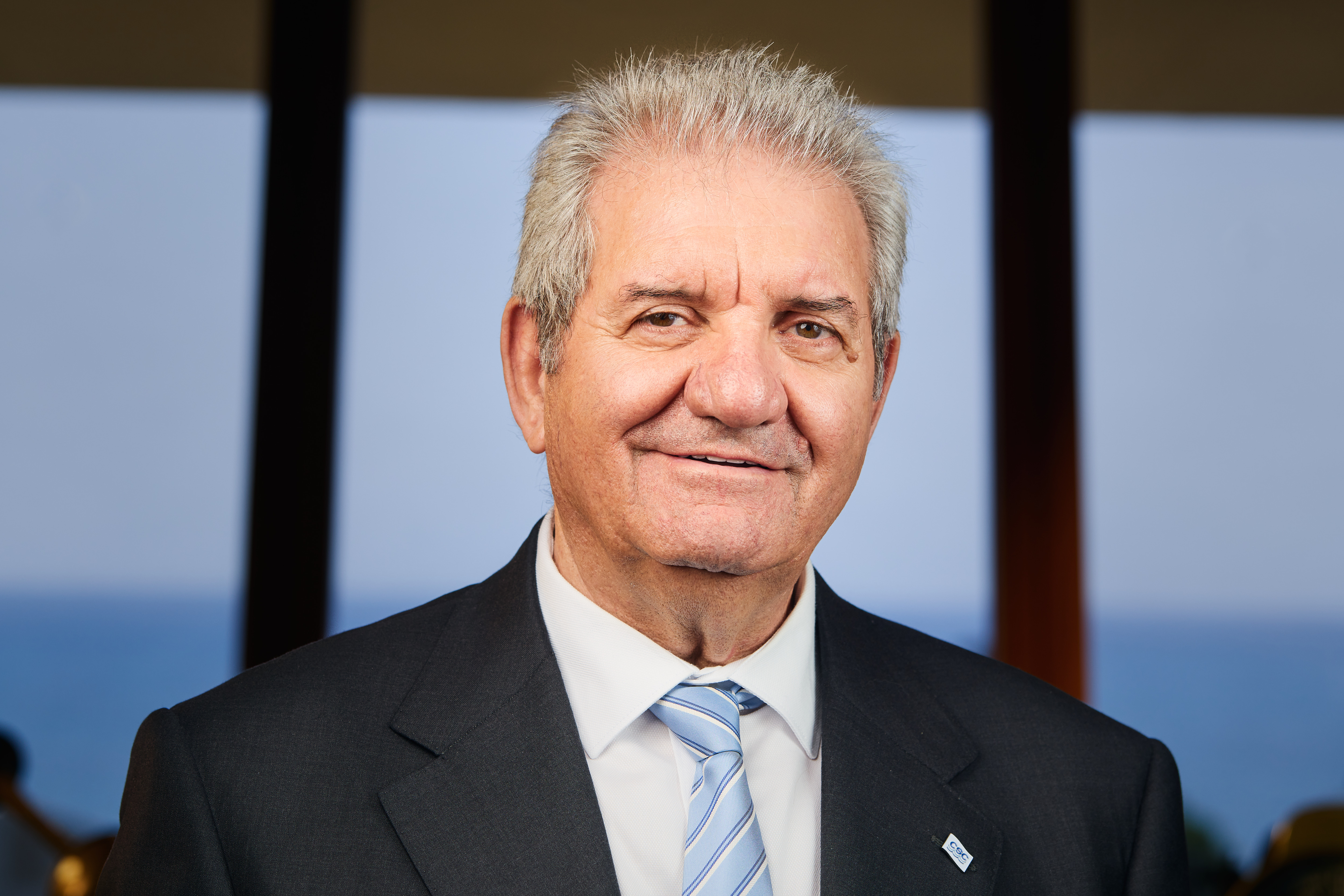
From questions of international regulation, the discussion turns to a far more ordinary difficulty. Travelling to work. Schengen, Neophytou says, “would definitely be an additional advantage for Cyprus Shipping”. Membership would facilitate international mobility and make the island a more attractive headquarters alongside the competitive tonnage tax system, stable business environment and strong maritime cluster it already offers.
The benefit is particularly clear for eligible non-EU executives and specialists who have to travel to European ports. For Neophytou, the fact that shipping “depends on the mobility of people” makes easier travel more than a convenience. It would reduce administrative burdens and help Cyprus-based companies operate more efficiently, especially when technical staff need to attend vessels.
The Chamber has consistently supported Cyprus’ accession and emphasised its practical advantages. It also maintains close cooperation with the government and wants the implementation arrangements to reflect “the operational needs of shipping companies and their personnel”. This is about running a shipping business, not simply avoiding a queue at passport control.
Getting the next generation on board
There is also a longer-term question. Who will work for those businesses? Maritime employment is still easily associated with a life at sea, even though Cyprus supports thousands of shore-based positions in shipmanagement, marine engineering, law, finance, insurance, technical services, crewing, digitalisation and maritime technology.
Neophytou wants young people to see shipping as “a modern, diverse and internationally oriented sector”, offering rewarding long-term career prospects without necessarily leaving the island.
The Chamber has been taking that message to schools and careers fairs since the early 2000s, addressing families as well as pupils.
Its Adopt-a-Ship programme introduces fifth and sixth grade primary school classes to maritime work. But early exposure is only a start. Neophytou wants to “strengthen the connection between education and industry” so young Cypriots see shipping as a place “in which they can build successful careers”. Bringing companies to Cyprus and developing the people who can work for them are, after all, part of the same business proposition.
Limassol prepares to host shipping’s big conversations
Those questions will be on the table when the Chamber holds its first Global Shipping Minds Summit in Limassol on November 27.
With geopolitical developments, energy security concerns and the shift towards more sustainable fuels changing the industry, Neophytou says the moment is right for a high-level platform bringing together leading industry figures and distinguished academics. The aim is an exchange of views on the challenges and opportunities shaping shipping, to contribute to international dialogue, promote the industry’s voice and encourage “open and constructive discussions” about its direction.
The summit is intended to be biennial, “for the industry, by the industry”, rather than another one-off event. It is designed for an in-depth exchange on the issues that matter to shipping now and in the years to come. Holding it in Limassol also gives Cyprus a chance to reinforce its position as “an established international shipping centre”.
That, perhaps, is a fitting place to finish. An international gathering will come and go. The more important measure is whether the businesses behind those ships continue to see Cyprus as somewhere worth staying.




Click here to change your cookie preferences