
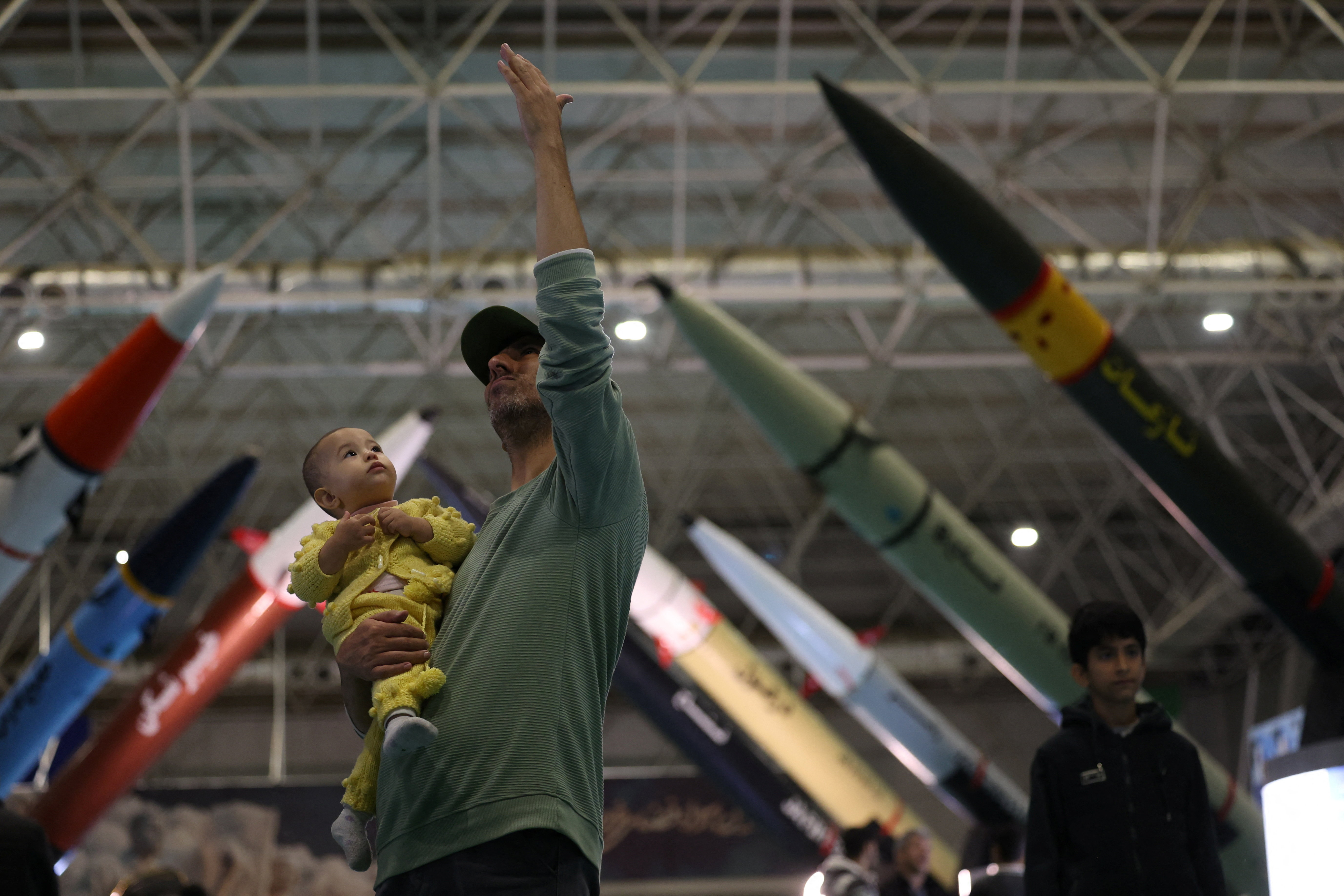
Pity the Central Intelligence Agency and the various other spy agencies that work for the US government. It’s bad enough when Donald Trump ignores their reports and insists that Iran is trying to get nuclear weapons. Marco Rubio’s State Department is now offering cash rewards for anybody who can tell him where Iran’s imaginary nukes are.
The offer was posted on the State Department’s ‘Rewards for Justice’ website on November 8: up to $20 million for information on Iran’s nuclear programme, including “facilities, equipment and associated personnel”. State will also provide “possible relocation” if the informant needs to go into hiding afterwards.
The first thing that strikes you is the sheer naïveté of the offer – you wonder why it doesn’t also say ‘please enclose stamped, self-addressed envelope for reply’. But then you realise that the truly weird thing about this invitation is that doing the research is the last thing the amateur spymasters thought of, not the first thing.
‘Amateur’, in the sense that these are the political appointees who followed Donald Trump and his spiritual guide, Israeli prime minister Benjamin Netanyahu, into the morass of unfounded suspicion and speculation that twice ended up in unprovoked US-Israeli surprise attacks on Iran (June 2025 and February-November 2026).
To be fair, not all Trump’s appointees drank the Kool-Aid. In March 2025 his then Director of National Intelligence, Tulsi Gabbard, loyally reported the US intelligence community’s collective view that “Iran is not building a nuclear weapon” and has not been working on it since 2003, but Trump just replied “I don’t care what she said” and attacked Iran anyway.
However, he did it in the usual slovenly way, waiting almost a week after he had made his intentions clear before the American bombers actually struck. That was plenty of time for the Iranians to remove the 400kg of 60 per cent enriched uranium from the Fordow and Isfahan sites and disperse it all over a country half the size of India.
Satellites actually spotted 16 big trucks leaving the sites – but they couldn’t track them to their destinations because orbits don’t work that way. And the Iranians cannot just turn that uranium into bombs, because a) ‘weapons-grade’ uranium must be over 90 per cent enriched, and b) several other engineering challenges still lie between Iran and functional nuclear weapons.
So – leaving aside the question of why Iranian nuclear weapons are any more dangerous than North Korean, Pakistani or indeed American nuclear weapons – why is the hunt for a few probably non-existent Iranian nukes getting more attention than the war in Ukraine or global heating or even a Silicon Valley IPO?
A little history. After the 1979 revolution, Ayatollah Khomeini banned all weapons of mass destruction as ‘un-Islamic’. Did he mean it, even though he and everybody else in Iran knew that Israel had already had nukes for decades? Of course he did. Is the Pope a Catholic?
Why did Iran have a secret but rudimentary nuclear weapons programme between 1998 and 2003? Probably because there was always a tug of war between the Revolutionary Guards and the religious authorities on this question, and the Pakistani nuclear tests of 1998 temporarily gave the soldiers a plausible reason to want nukes.
Once Iran’s secret programme was exposed to the world in 2003, Ayatollah Khamenei was able to reimpose the ban on weapons of mass destruction. It has remained in force ever since, which is why Khamenei was free to sign the treaty promising no nukes with all the great powers in 2015.
Iran got a substantial easing of US economic sanctions as part of that deal, and it would probably have been renewed for another decade last year if Donald Trump, obsessed with erasing every jot and tittle of Barack Obama’s legacy, had not torn it up in 2018. Nobody claimed that Iran had been cheating, but the sanctions snapped back automatically.
Iran was hung out to dry, and its only leverage was a gradual increase in the enrichment of its nuclear fuel. The implicit threat was that it might one day go to ‘weapons grade’, but it meticulously declared each step up in advance, moved very slowly, and never went beyond 60 per cent enrichment. But nothing worked: everybody was too frightened of Trump.
So here we are eight years later, with Trump stuck in a self-inflicted ‘forever war’ and the whole global economy waiting to see which way he jumps next. I don’t know, and probably neither does he.
Trump could just declare a victory and leave, but his pride won’t let him. The Revolutionary Guards are having too much fun to let him off the hook, ignoring the small but very real risk that he might go nuclear. Where are the grown-ups when we need them?




Click here to change your cookie preferences