
The lessons from Antalya
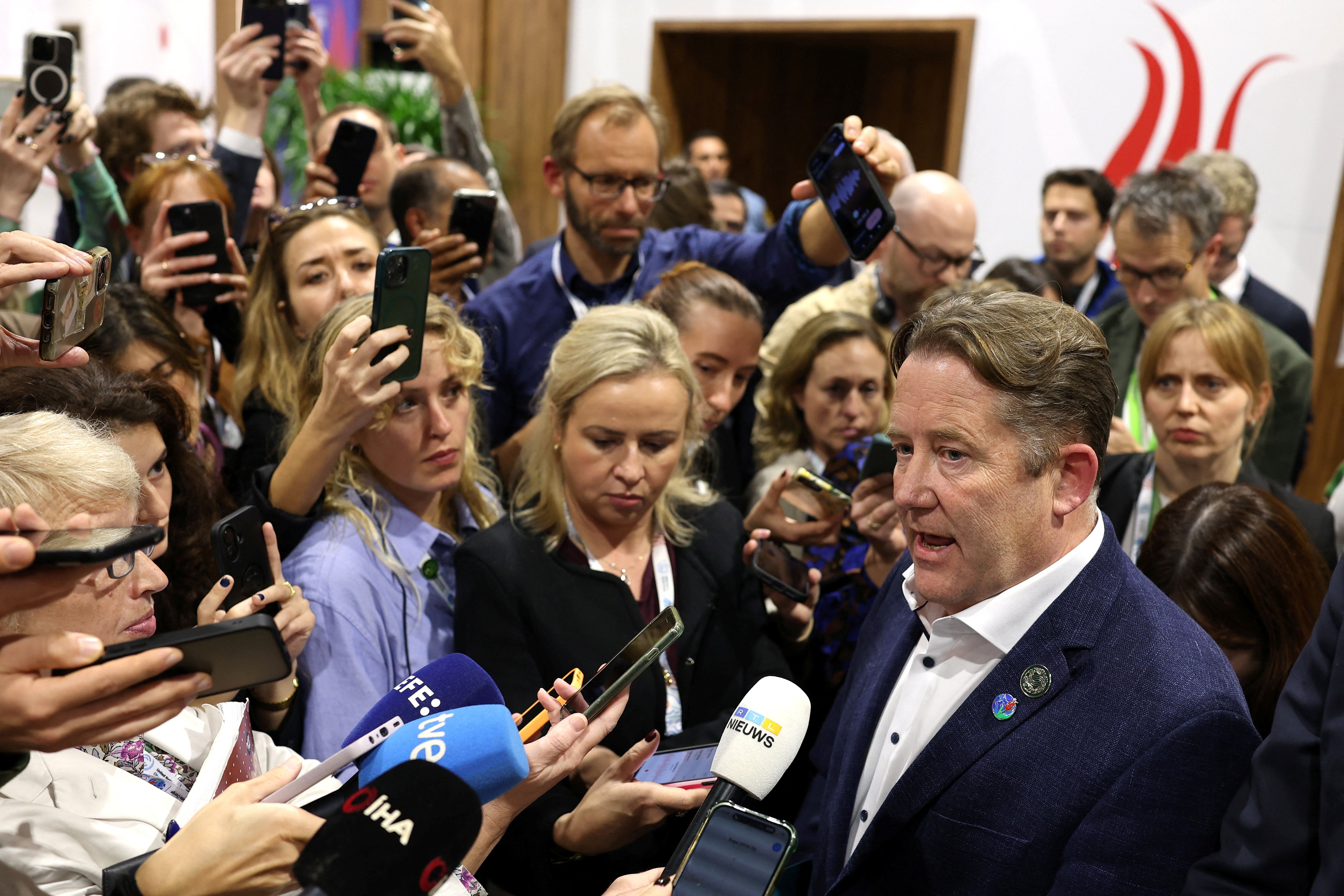
COP31 ended in political failure. After prolonged negotiations, countries left Antalya without an overarching agreement capable of bridging their differences over fossil fuels, climate finance and implementation.
Yet describing COP31 simply as a failure overlooks important achievements. Electrification initiatives, clean-energy partnerships and practical cooperation advanced even as political negotiations collapsed.
The summit exposed a fundamental reality: international climate diplomacy is struggling to reconcile global ambitions with national economic and geopolitical priorities. Energy security and affordability have become inseparable considerations. Secure energy supplies that households and industry cannot afford do not provide lasting resilience.
Why the negotiations failed
The principal dispute concerned fossil fuels. Draft language proposing stronger commitments to transition away from them met resistance, while attempts to dilute it were unacceptable to other delegations.
Differences over climate finance, particularly adaptation funding for developing countries, compounded the impasse. Proposals involving carbon capture and removal also generated controversy over whether they could justify continued fossil-fuel production.
The outcome was a serious setback for multilateral diplomacy, not a reversal of earlier agreements. It demonstrated how difficult translating shared climate objectives into commitments acceptable to countries with different economic circumstances has become.
A revealing global divide
The disagreement extended far beyond the familiar divide between oil producers and climate advocates.
An indicative grouping of countries, the ‘Like-minded Group’, resisting or not endorsing stronger fossil-fuel transition commitments, including the US, represents approximately 60% of the world’s population, against around 36% in countries supporting a transition roadmap.
These figures are broad estimates, not a formal vote. Nevertheless, the contrast is revealing.
The division reflects different economic circumstances, development priorities and perceptions of energy security, profoundly reshaped by the wars in Ukraine and Iran, rather than simply fossil-fuel producers opposing climate-conscious countries.
China and India, in particular, must meet expanding energy requirements while sustaining industrial development and affordability. Their reluctance to accept externally prescribed transition timetables does not imply opposition to decarbonisation. Both are investing substantially in clean-energy technologies.
Future climate agreements must confront these realities rather than assume that countries can follow identical pathways.
Electrification emerges as an achievement
One important outcome was support for the voluntary 35-by-35 initiative, intended to increase electricity’s share of global final energy consumption from approximately 23% to 35% by 2035. Around 90 countries supported the pledge during the summit.
Electrification offers benefits beyond emissions reduction.
Electric vehicles, heat pumps and industrial electrification can reduce dependence on imported fuels while improving energy efficiency. When supported by low-carbon electricity, they also reduce emissions.
The wars in Ukraine and Iran have strengthened these arguments by exposing the vulnerability created by dependence on disrupted energy supplies.
However, electrification requires substantial investment in electricity networks, storage, flexible generation and infrastructure. Its benefits also depend on affordable electricity.
Energy security without affordability is not sustainable. High energy costs damage households, weaken industrial competitiveness and undermine public support for the transition.
The initiative’s significance will depend on whether participating countries translate their support into investment and implementation.
Progress beyond government negotiations
COP31 demonstrated that climate action increasingly extends beyond formal agreements between governments.
New partnerships involved businesses, financial institutions, cities and international organisations.
Initiatives included expanding rooftop solar installations, strengthening energy-storage cooperation, supporting cleaner industrial development and improving climate resilience.
One declaration aims to increase the number of homes with rooftop solar panels to 300 million by 2030. Several countries also announced plans to develop national fossil-fuel transition roadmaps.
These initiatives are voluntary and should not be confused with binding commitments or completed investments.
Nevertheless, they demonstrate that practical cooperation can advance even when universal political consensus proves impossible.
Climate finance remains a critical weakness
Developing countries demanded stronger guarantees that wealthy economies would provide resources for adaptation and resilience.
Their concerns are legitimate. Many vulnerable countries face worsening floods, droughts and water shortages despite contributing relatively little to historical emissions.
Yet developed countries face fiscal pressures and remain reluctant to make additional commitments.
Private investment can help but cannot replace public support for projects with limited commercial returns, including flood protection and water security.
Without affordable finance, developing countries will struggle to reconcile climate commitments with economic development.
The 1.5°C dilemma: Is a more realistic debate needed?
COP31 also exposed an increasingly uncomfortable question about the Paris Agreement’s 1.5°C objective.
With temporary overshoot now widely considered increasingly difficult to avoid, attention has shifted towards “overshoot and return”: exceeding 1.5°C before bringing temperatures back below that threshold later this century.
But how realistic is this expectation?
Returning to 1.5°C would require exceptionally rapid emissions reductions and potentially massive removal of carbon dioxide from the atmosphere. The technologies needed at the required scale remain uncertain and costly.
Supporters argue that weakening the objective could reduce pressure for action and expose vulnerable countries to greater climate risks. Others question whether targets that may be practically unachievable retain sufficient credibility.
The question is not whether the world should abandon 1.5°C, but whether retaining it through an overshoot-and-return strategy remains scientifically credible and practically achievable.
Retaining 1.5°C may still be the appropriate choice. But that conclusion should emerge from rigorous debate rather than reluctance to reconsider an established objective.
Such a debate should begin before COP32, involving climate scientists, economists, energy specialists and policymakers.
Reconsidering the realism of an objective need not represent defeat. It can be part of responsible climate policy.
Addis Ababa should place this issue on its agenda.
Climate action is advancing, but not fast enough
The Energy Institute’s 2026 Country Transition Tracker provides perspective.
Between 2017 and 2025, renewable energy consumption increased substantially, yet global fossil-fuel consumption also increased, by approximately 8%, while energy-related emissions continued rising.
Clean-energy growth does not automatically translate into declining fossil-fuel consumption, particularly while global energy demand continues expanding.
The challenge is to ensure that cleaner technologies increasingly displace fossil fuels while meeting additional demand.
What happens after Antalya?
COP32 in Ethiopia will inherit unresolved disagreements over fossil fuels, finance and implementation.
Repeating ambitious declarations without addressing economic realities risks repeating Antalya’s outcome.
Climate ambition remains necessary. But commitments must be financially credible, technologically achievable and compatible with energy security, affordability and development.
COP31 failed to reconcile global climate ambition with national economic and geopolitical realities. That failure should not be minimised.
Yet progress in electrification, clean-energy technologies and practical partnerships continues.
The political process failed to deliver a breakthrough. The energy transition itself has not failed. The challenge now is to bring climate ambition and economic reality closer together.





Click here to change your cookie preferences