
An activist and rescuer working to debunk myths about migrants, who has made a real difference, says Palestine has inspired the people of the world
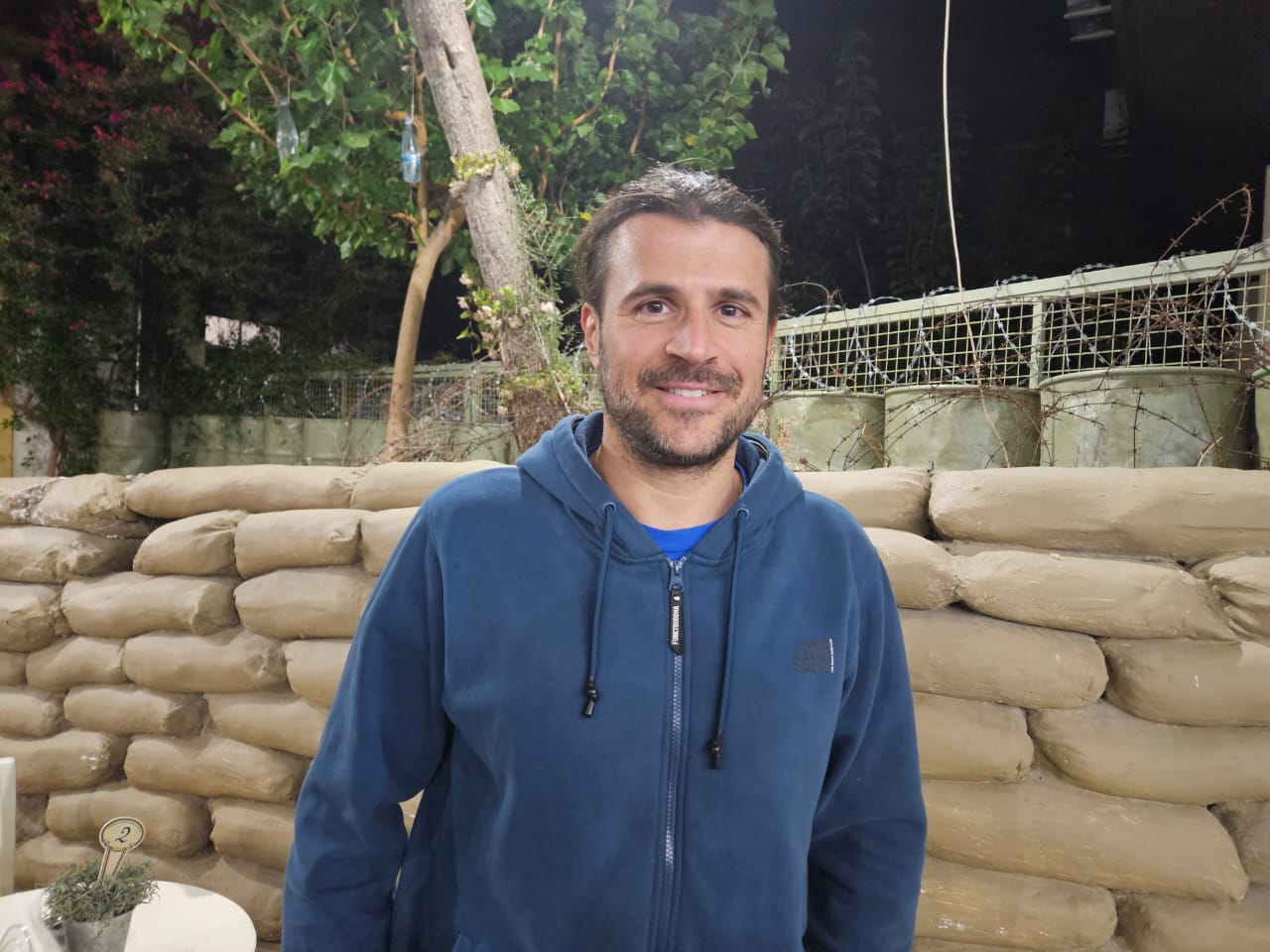
We don’t talk much about Iasonas Apostolopoulos himself. He’s not shy about his personal life, it just seems like we have more important subjects to talk about. He’s based in Athens, works in Italy (as co-ordinator of rescue operations at Mediterranea Saving Humans) and was in Cyprus for a couple of weeks, giving talks – mostly about his experiences on the Global Sumud Flotilla, which set sail for Gaza in September.
We meet on a Friday evening at Yiayia Victoria, Greek (like himself) and right on the Green Line. He orders a ‘politiko’, a kind of syrupy cream cake, and a coffee, even though it’s almost 9pm. The coffee is surely superfluous (to be fair, he’s going out with friends later): he’s already full of energy, very open – we switch straight to informal singular mode – and very articulate. It’s easy to see why he’s so often asked to speak on TV panels and talk shows.
That’s the interview – but my first impression comes three days earlier, at the Journalists’ House in Nicosia where, speaking without notes (just a few prompts on his laptop), he delivers an inspiring 40-minute speech, tying Palestine together with his full-time work rescuing migrants, and speaking of the “international social structure” which he defines as follows:
“A structure that requires the poor to stay in their own countries, working for $1 a day in Elon Musk’s mines, with multinational companies squeezing out all their wealth – and, if these people try to escape, then the same countries that exploit them on land, will drown them at sea.
“One could say that Palestine combines all these struggles. The anti-colonialist struggle. The anti-imperialist struggle. The anti-racist struggle – since, after all, who is the target of today’s racism? The Muslim man, the Arab. Or actually the poor Muslim, since they have no problem with the rich ones.
“Palestine represents all these things at once. That’s why [French MEP] Rima Hassan was right when she said: ‘We’re not freeing Palestine; Palestine is freeing us’. Because it wakes us up, brings us out to the streets, makes us fight…
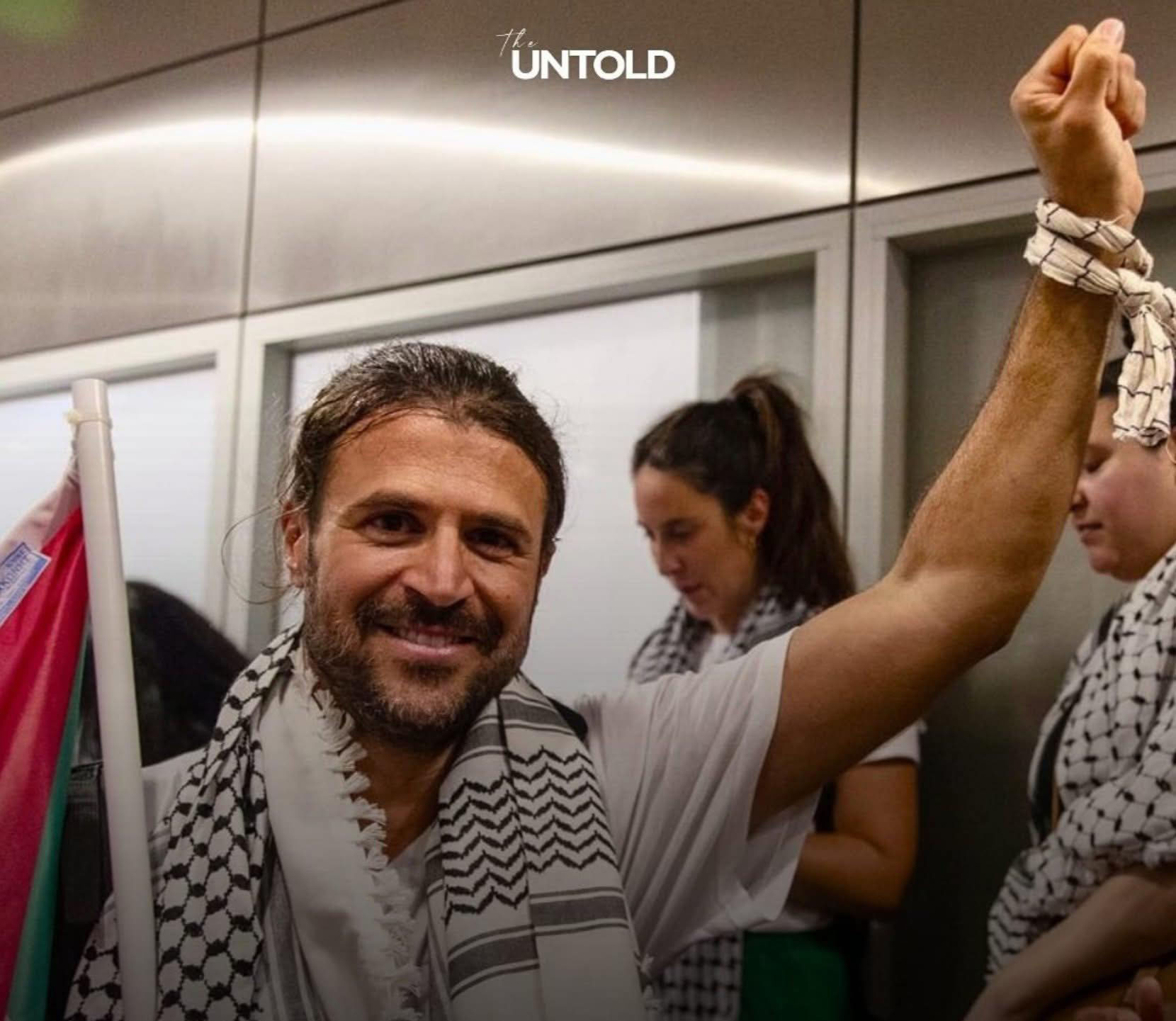
“This is why they hate Palestine. Because Palestine has become a global symbol of resistance. Palestine inspires the peoples of the world.
“And, for that very reason, it’s going to win.”
The audience burst into applause – but of course it would. The event was organised by five left-wing groups, attracting mostly like-minded people. It’s fair to say that nothing in the subsequent Q&A challenged or opposed Iasonas’ speech; most weren’t even questions at all, just vehement expressions of agreement with the speaker.
That’s the problem, as anyone who’s tried to debate Gaza with friends and family will tell you: people retreat into moral and historical narratives, spouting talking points and barely engaging with the other side. “The governments are with Israel, the people are with Palestine,” as Iasonas put it in his talk – which is true, but the people aren’t exactly unanimous either.
That’s why his own contribution is so important – because he talks the talk, but also very much walks the walk. He spent a year in South Sudan, building a hospital (and dodging crossfire) with Médicins Sans Frontières. He saves migrants from drowning, and has twice been shot at by Libyan warlords – paid by the EU to stop boats and capture the ‘invaders’ – for his trouble.
And of course he was on the flotilla, kidnapped by Israel, not just suffering along with the other activists (including, of course, Greta Thunberg) but talking with the prison guards, trying to break through extremist “brainwashed” narratives.
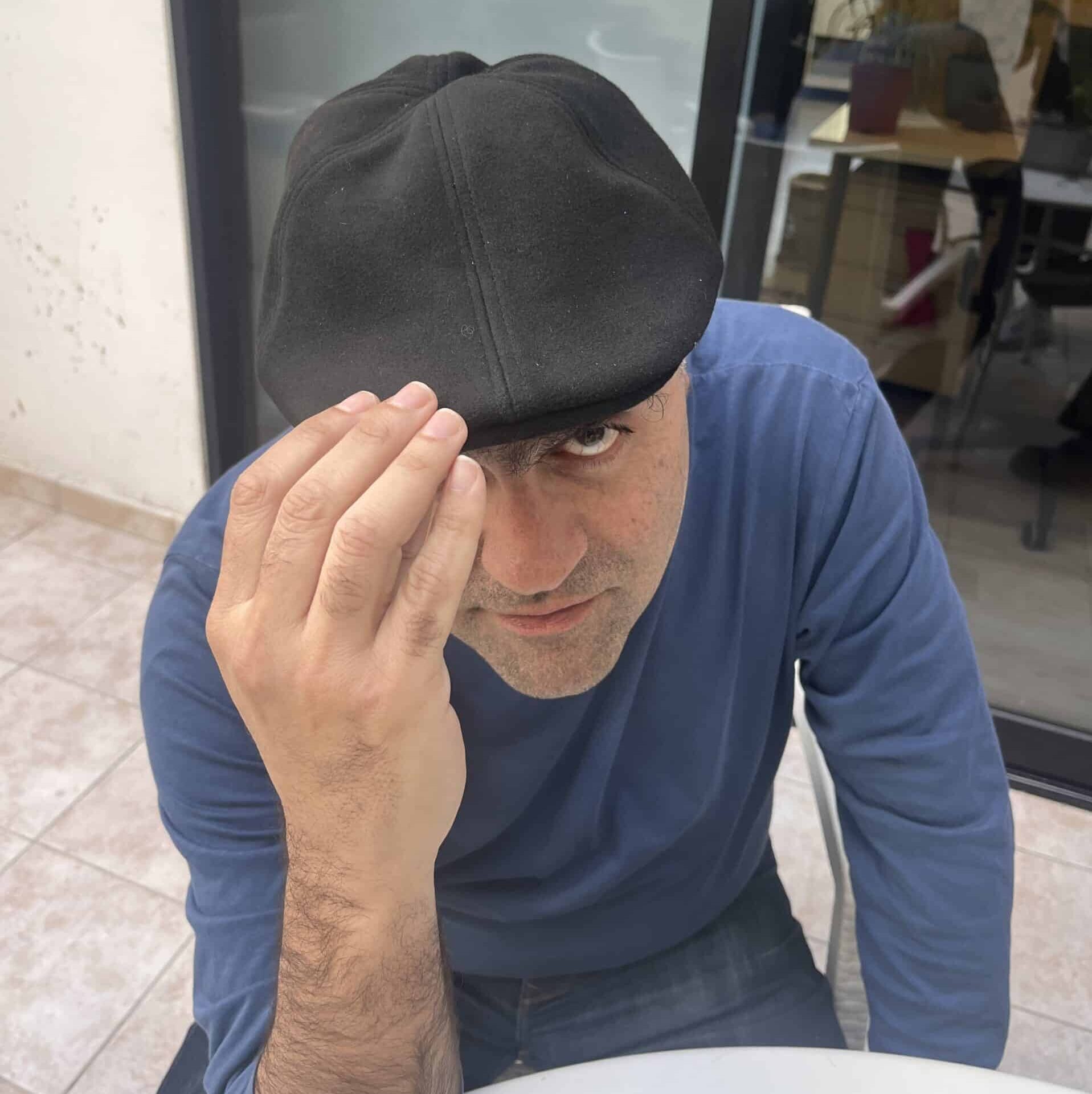
Iasonas is easy to talk to – and also comes across as a good listener, unlike many activists. He’s tall but seems taller, with a lean, athletic look; he’s been sailing all his life, as a hobby – he’s a civil engineer by training – and does a lot of swimming and hiking, partly to de-stress from his often traumatic work. His background is firmly middle-class, but with a twist: his dad (also a civil engineer) was a stalwart of the Communist party, while his mum was one of the first female computer programmers in Greece. The family were progressive in general – they also had many Palestinian refugee friends – though his own politicisation was undoubtedly helped by coming of age in the mid-00s.
First came the protests against the war in Iraq – his first experience of thousands coming out for a protest “which wasn’t even about Greece”, much like Gaza now. Then came the massive student movement of 2006-07, with most Greek universities under occupation, then came the murder of Alexis Grigoropoulos in 2008 – then full-blown crisis, and the rise of Golden Dawn.
Ironically, while the flotilla activists were being held in Ketziot prison (the same one, incidentally, where 16 Palestinians have died in custody in the past two years), the wardens tried to play the anti-Semitism card. “You’re just here because ‘no Jews, no news’,” they taunted, according to Iasonas.
“And I told them: ‘It has nothing to do with Jews. I was defending the Jewish cemetery in Athens against Golden Dawn, when the neo-Nazi party was attacking Jewish cemeteries, in the synagogue in Athens – and we were defending it, the anti-fascist movement of Greece. So don’t talk to me about Jews. Come on. The problem is the genocide’.”
He worked as a civil engineer for a while, in his 20s – but everything changed in 2015 with the refugee crisis in Greece, especially in Lesvos: “One million refugees from Turkey to Greece – Syrian refugees, Iraqi, Afghan… It was a mind-blowing thing”.
Iasonas was among the first volunteers, hastening to Lesvos and a state of chaos: “They were sleeping on floors, in the street, in gardens, in homes. There were people everywhere”. Photos of three-year-old Aylan, lying dead on a beach while attempting to cross, had already shocked the world, though another iconic photo – the three Lesvos grannies, later nominated for a Nobel peace prize – offered hope in humanity.
He and others built a camp, giving out food, clothes and medical attention – “We made a public call to doctors”, covering the cost of their ticket to Lesvos; the money came mostly from online donations – helping refugees as they arrived soaking-wet, plucked from the sea. “There was a lot of hypothermia, a lot of exhaustion. It was critical to give dry clothes immediately.”
The chaos extended to the boats themselves. The ‘captains’ were helpless refugees, forced by the smugglers to drive at gunpoint. The distance from Turkey was just six miles – but boats would often hit the cliffs, or zig-zag aimlessly and run out of fuel. And of course “many of them hadn’t seen the sea before. Afghan people were telling us, ‘Your river is very salty’, I heard it with my own ears… And they couldn’t swim, obviously”.
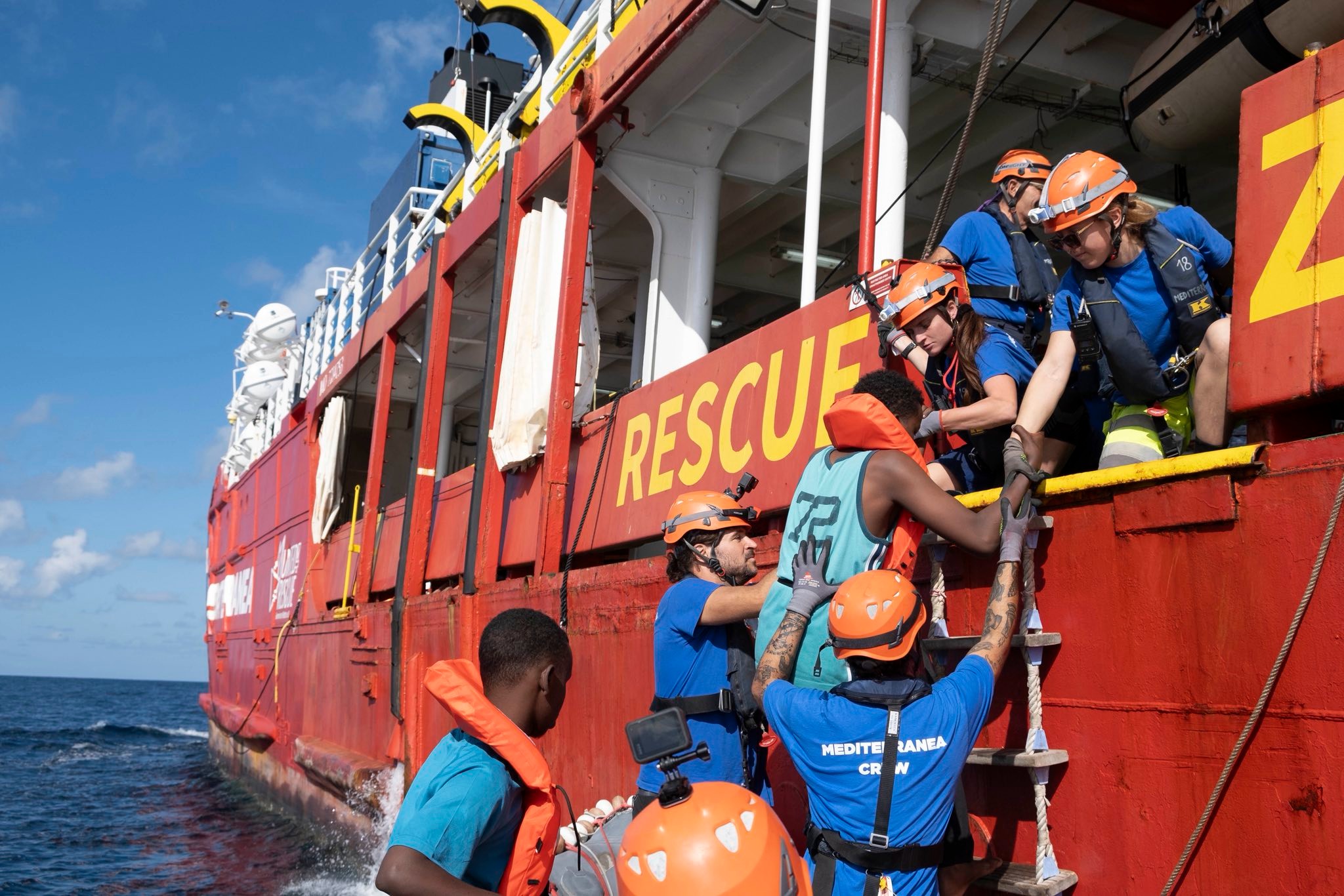
“What changed my life forever,” he recalls, “was the shipwreck on October 28, 2015 – when a wooden boat with 300 refugees sank, and we were watching the people sinking and could not do anything.”
That same night, he told the others: “Guys, we can’t just witness people die like this… I have a boat in Athens” – he had a six-metre Zodiac – “if we all put money together I can bring it”. Iasonas brought his boat, found a doctor, translator and lifeguard – and they set up a rescue team, the first on the island. 10 years later, he’s officially known (to quote Wikipedia) as a “human rights activist and rescuer”.
He’s also, as already mentioned, a TV pundit and explainer, forever trying “to debunk the myths” about migrants.
“We hear a lot of myths,” he sighs – like for instance ‘Why can’t they just come legally?’. “Speaking about ‘legal’ and ‘illegal’ migrants implies that there’s an option of coming legally, which migrants mysteriously reject. So we have to be super-clear: there is no legal or safe way for a person to seek asylum on European soil right now.”
But why come to Europe at all? Why don’t they go to a neighbouring country?
Four out of five refugees do exactly that, he replies patiently – “or inside the country, IDPs, internally displaced people… So, the majority of Syrians are in Turkey – neighbouring country. The majority of Afghans are in Iran and Pakistan. The majority of South Sudanese, Uganda.”
Only a small percentage of refugees even attempt to come to Europe – often precisely because they’re the ones most able to afford the journey, the most resourceful or the most resilient. “So it’s not true that everybody will come here. It’s not true. We have to debunk that myth.”
The mood has changed, admits Iasonas. 10 years ago, after Lesvos, “I think I was a bit more optimistic… I’m still optimistic – but back then it was a huge wave of solidarity in Greece, everybody was helping refugees.
“Of course, racist people were still there – but they kept their mouth shut, [whereas] now they feel empowered to harass migrants, and speak badly about them… I think the rhetoric is super-racist in Europe.” That said, it’s not really about race or creed – it’s a reflex of disgust at the poor and vulnerable, implicitly viewed as dirty or diseased. During Covid, some Greek media even claimed that Covid-ridden migrants were deliberately being sent by Erdogan, to “commit biological jihad against Greece”!
He’s been saving lives for 10 years, which also happen to have been his 30s. (He turned 40 in March.) It’s unclear what’ll happen in his 40s – but the one certainty is that he won’t be going to Israel, having been hit with a 10-year entry ban due to his role in the flotilla.
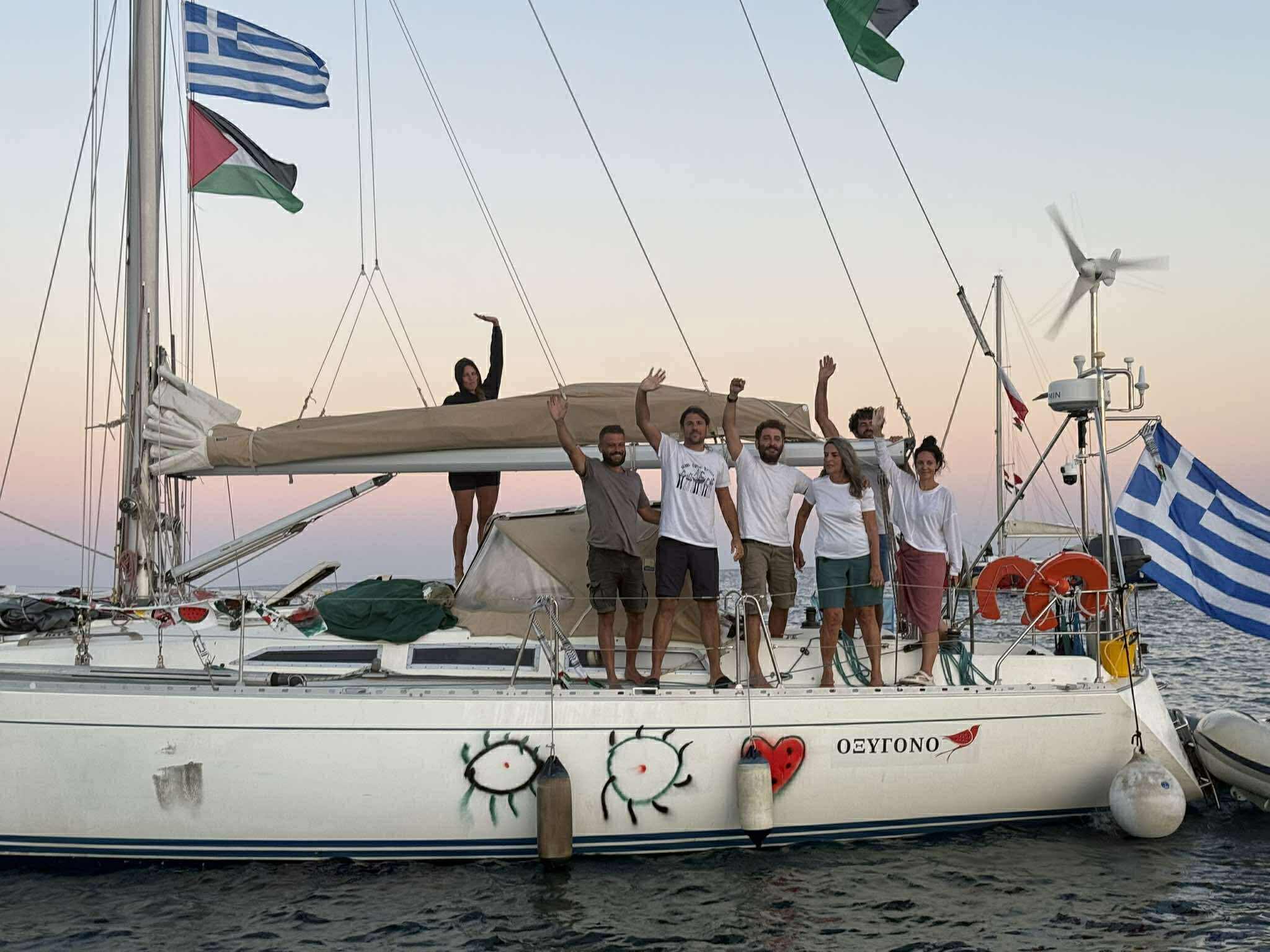
Ah, the flotilla! 42 boats, as he says, and 500 activists from 53 countries. He was on the ‘Oxygono’, Oxygen (invoking Tempi, the Pylos shipwreck and George Floyd), captured in international waters, which of course is illegal – though at least, while the Israeli navy was preoccupied with abducting them, Gazans took advantage of the pause to go fishing (which would normally be a death sentence), easing the famine which the prison guards insisted was fake news.
What happened has been widely documented – but Iasonas still recounts it all, the prisoners arrayed on the tarmac with head down and hands behind their back, Greta Thunberg forced to kiss the Israeli flag, the arrival of Itamar Ben-Gvir who ranted and called them terrorists only to be met with “shouts of ‘Free Palestine’ in every language”. Then what he calls their “collective punishment”, 24 hours without water, five hours blindfolded, five hours naked in freezing-cold cells, four days without medical attention…
It would take too long to repeat all the details. But the bottom line is that he considers Sumud to have been a victory (another flotilla is planned for next year and Cyprus really ought to take part, he says), even though its stated aim – to break the blockade of Gaza – wasn’t actually achieved.
Ben-Gvir threatened them with months in jail, he points out – yet “in three days we were back home… What protected us was the global movement of solidarity.” In the past two years, “we have seen the biggest demonstrations in the US since the Vietnam war”. There were two general strikes in Italy, specifically to support the flotilla, “and the day after the attack on the flotilla there were one million protesters, just in Rome”. European countries have recognised a Palestinian state; a few have even mentioned sanctions. A boycott of Israeli goods is gathering pace. “We are winning. We are gaining victories.”
Are they, though? Seems like the Gaza plan is going according to plan. Since the so-called ceasefire, Israel has imposed a ‘yellow line’, meanwhile continuing to throttle aid and demolish buildings. Gaza’s split in two – and, for instance, Jared Kushner has already said that reconstruction money won’t be going to areas “controlled by Hamas”.
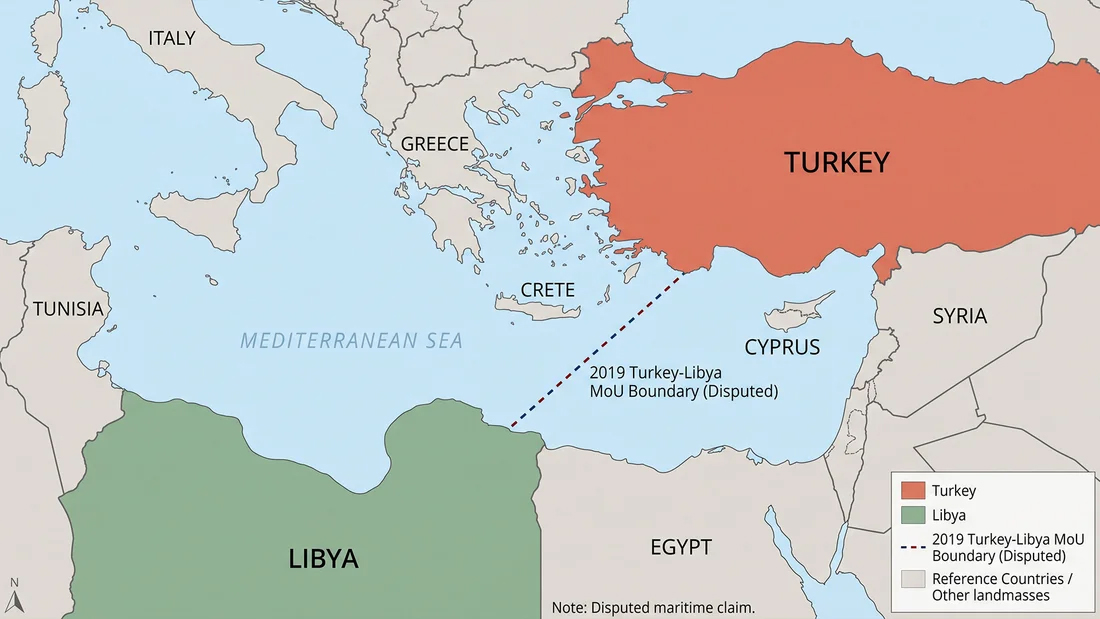
So the flattened, Israeli-ruled eastern part will be rebuilt, whether as Trump’s mythical ‘Riviera’ or more settlements. Meanwhile the Palestinians live in squalor in the west, with no government willing to help them. Eventually they’ll either die off, or become desperate enough to accept that one-way ticket to Libya.
I put all this to Iasonas Apostolopoulos – but he shakes his head, unwilling to countenance such a dark scenario. Maybe he’s too optimistic – or maybe he’ll keep going anyway, refusing to accept the possibility of a world that can’t be changed. One could hardly call him naïve, after all – not when he’s literally saved lives, stood up to fascists and made such a difference, certainly more than most of us.
Exploitation and injustice, racism and colonialism and apartheid and imperialism. Some would say they’re just words – but a few people feel them in their blood, and Iasonas is one of those people. “Something’s changing,” he insists, of the Gaza situation. “They’re not invincible. There are cracks in the system, where we can find our way in, and make the cracks bigger.” Time will tell.
Click here to change your cookie preferences