
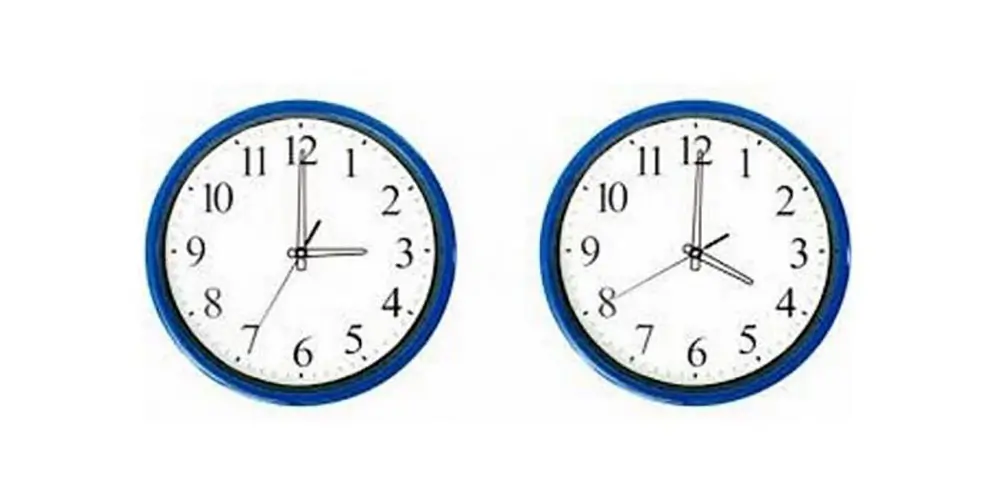
Daylight Saving Time (DST) is used by many countries as a way to make better use of natural daylight during the longer days of spring and summer. By moving clocks forward—typically by one hour—people can enjoy more daylight during the evening hours when they are likely to be active. This helps reduce the need for artificial lighting, which historically led to energy savings. Although modern studies show that the energy benefits vary by region and climate, DST originally gained popularity as a way to conserve fuel and electricity, especially during wartime and periods of energy shortage.
In addition to potential energy savings, DST can support economic and social activities. Longer daylight in the evening can encourage people to shop, socialize, and participate in outdoor activities, which boosts local businesses and tourism. It may also contribute to road safety by reducing accidents during darker commuting hours. Overall, countries adopt DST to align waking hours more closely with daylight, aiming for economic benefits, improved lifestyle, and better resource utilization—though the effectiveness of DST continues to be debated in many places.
Cyprus operates on the Eastern European Time Zone (EET), which is UTC+2 during the winter months. Like many European countries, Cyprus observes daylight saving time (DST). When DST begins, the country switches to Eastern European Summer Time (EEST), moving clocks forward by one hour to UTC+3.
Daylight saving time in Cyprus begins on the last Sunday of March, when clocks are moved forward at 03:00 to become 04:00. It ends on the last Sunday of October, when clocks are turned back at 04:00 to become 03:00. This system aligns with the European Union-wide DST schedule, meaning Cyprus changes clocks at the same time as most European countries.
Comparison with mainland Europe
Most European Union countries follow the same DST schedule as Cyprus: the last Sunday in March and the last Sunday in October. Therefore, Cyprus remains well-aligned with mainland Europe throughout the year. The main difference usually lies in the hour offset. For example, many central European countries use Central European Time (CET), which is UTC+1 in winter and UTC+2 in summer, meaning Cyprus is consistently one hour ahead of Central Europe year-round.
Comparison with the United Kingdom
The United Kingdom also observes daylight saving time, moving from Greenwich Mean Time (UTC+0) in winter to British Summer Time (BST), UTC+1, in summer. Like the EU, the UK changes its clocks on the last Sunday of March and last Sunday of October, so it follows the same pattern as Cyprus.
However, because of their different base time zones, Cyprus remains two hours ahead of the UK throughout the entire year — both in winter and in summer. For example:
In winter: Cyprus UTC+2 vs UK UTC+0 → 2 hours ahead
In summer: Cyprus UTC+3 vs UK UTC+1 → 2 hours ahead
Comparison with the United States
The United States follows a different daylight saving schedule. American DST begins on the second Sunday in March and ends on the first Sunday in November. During these periods of transition, there can be temporary changes to the time difference between Cyprus and U.S. time zones.
For example, during early March before Cyprus switches to DST, the time difference between Cyprus and the eastern U.S. may be slightly larger than usual. The same happens in late October when Cyprus ends DST earlier than the U.S., again altering the time gap by an extra hour. The United States also has multiple time zones — Eastern, Central, Mountain, and Pacific — so the exact time difference varies depending on which region you’re comparing with Cyprus.
Why the differences matter
These variations are especially important for international business, remote meetings, travel planning, and flight schedules. While most digital devices adjust automatically to daylight saving time, manual clocks and scheduling across different regions still require attention during the transition week in spring and autumn.
Because Cyprus follows the EU schedule, it aligns smoothly with most European countries and the UK — but coordination with the U.S. often requires extra care, especially in March and November.
Cyprus vs Europe / UK / U.S. – Time difference calendar for 2026
Base time zones
- Cyprus: UTC+2 (standard), UTC+3 (DST) Time and Date+2Time and Date+2
- Central Europe (e.g., Germany, France): UTC+1 (standard), UTC+2 (DST) Time and Date
- United Kingdom: UTC+0 (standard), UTC+1 (BST / summer) Time and Date
- United States – Eastern Time (ET): UTC–5 (standard), UTC–4 (DST) Wikipedia+1
Key DST transition dates for 2026
| Region | DST Starts | DST Ends |
|---|---|---|
| Cyprus / Central Europe / UK | 29 March 2026 Time and Date+2Time and Date+2 | 25 October 2026 Time Change+1 |
| United States (most states) | 8 March 2026 CalendarDate+1 | 1 November 2026 CalendarDate |
Month-by-month differences: Cyprus → Others in 2026
Here’s how many hours Cyprus is ahead compared to those regions in different periods of 2026.
| Period | Cyprus Time | Comparison | Time Difference (Cyprus → Other Region) |
|---|---|---|---|
| Jan – early Mar 2026 | UTC+2 (standard) | Central Europe (standard) | +1 hour |
| UK (standard) | +2 hours | ||
| U.S. Eastern (still standard) | +7 hours | ||
| 8 March – 28 March 2026 (U.S. switched to DST, Cyprus / Europe haven’t yet) | Cyprus: UTC+2 U.S. Eastern: UTC–4 | +6 hours (temporary) Compared also with Europe / UK: same as before (they’re still on standard) | |
| 29 March – 24 October 2026 (Cyprus, Europe, UK all on DST) | Cyprus: UTC+3 | Central Europe (DST) | +1 hour |
| UK (BST) | +2 hours | ||
| U.S. Eastern (DST) | +7 hours | ||
| 25 October – 31 October 2026 (Cyprus / Europe / UK back to standard, U.S. still in DST) | Cyprus: UTC+2 | U.S. Eastern: UTC–4 | +6 hours (temporary) |
| 1 November – December 2026 | Cyprus: UTC+2 (standard) | Central Europe: +1 hour UK: +2 hours U.S. Eastern: +7 hours | Same as Jan–Mar period |
What this means in practice
- With Central Europe and the UK: Cyprus is consistently one hour ahead of central Europe and two hours ahead of the UK, except for minor shifts during transitions (but because Cyprus and Europe/UK change on the same day, those differences don’t actually vary).
- With the U.S. (Eastern): There are two “transition windows” in 2026 when the time difference temporarily shrinks by one hour:
- Early March (8–28 March), when the U.S. goes to DST but Cyprus / Europe / UK haven’t yet changed.
- Late October (25–31 October), when Cyprus / Europe / UK have reverted to standard time, but the U.S. is still in DST (until 1 Nov).
These nuances can be important when scheduling meetings, calls, or travel across these regions — especially in those transition weeks.
Time-zone comparison: Cyprus vs countries to the east
1. Cyprus Time Recap
- Cyprus operates on Eastern European Time (EET): UTC+2 during standard time. Time and Date+1
- During daylight saving time (DST), it switches to Eastern European Summer Time (EEST): UTC+3. Time and Temperature+1
- The IANA time zone for Cyprus is Asia/Nicosia. timezoneconverter.com+1
2. Key eastern neighbouring countries: Time zones & differences
Here are some of the main countries located east of Cyprus (in the Middle East / West Asia) and how their time zones compare with Cyprus.
| Country | Time Zone (Offset) | Daylight Saving? | Difference from Cyprus |
|---|---|---|---|
| Turkey | UTC+3 (Turkey Time, TRT) Wikipedia | No – Turkey stays on UTC+3 year-round. Wikipedia | – When Cyprus is on EET (UTC+2): Turkey is +1 hour ahead. – When Cyprus is on EEST (UTC+3): Turkey is same time. |
| Syria | UTC+3 (Arabia Standard Time) Wikipedia | No – DST was abolished. Wikipedia | – When Cyprus is UTC+2: Syria is +1 hour ahead. – When Cyprus is UTC+3: Same time. |
| Jordan | UTC+3 (Arabia Standard Time) Wikipedia | No longer changes clocks – fixed at UTC+3 year-round. Wikipedia | – When Cyprus is UTC+2: Jordan is +1 hour. – When Cyprus is UTC+3: Same time. |
| Lebanon | Alternates between UTC+2 (EET) and UTC+3 (EEST) for DST. Wikipedia | Yes – similar to many European DST rules. Wikipedia | – When Cyprus is on standard (UTC+2): Same time. – When both are on DST (UTC+3): Same time. – In transition periods, small differences may appear depending on exact DST change dates. |
| Israel | Standard: UTC+2 (Israel Standard Time) Wikipedia Daylight: UTC+3 (Israel Daylight Time) Wikipedia | Yes – Israel shifts to daylight time. Wikipedia | – In winter: same as Cyprus (when Cyprus is UTC+2). – In summer (Israel on UTC+3, Cyprus on UTC+3): same time. – Note: Israel’s DST change date is not exactly the same as European countries, so there may be brief offset differences around transitions. |
| Iraq | UTC+3 (Arabia Standard Time) Time and Date | No – Iraq does not observe DST. Time and Temperature | – When Cyprus is UTC+2: Iraq is +1 hour ahead. – When Cyprus is UTC+3: Same time. |
| Iran | UTC+3:30 (Iran Standard Time) Time and Date+1 | No – Iran abolished DST. Wikipedia | – When Cyprus is on UTC+2: Iran is +1.5 hours ahead. – When Cyprus is on UTC+3: Iran is +0.5 hours ahead. |
| United Arab Emirates (UAE) (further east) | UTC+4 (Gulf Standard Time) Wikipedia | No – no DST in UAE. Wikipedia | – When Cyprus is UTC+2: UAE is +2 hours ahead. – When Cyprus is UTC+3: UAE is +1 hour ahead. |
3. Why these differences are useful to know
- Business & Communication: Knowing how much time difference there is between Cyprus and its eastern neighbors helps in planning calls, meetings, and coordinating across borders.
- Travel Planning: For flights, appointments, or connecting with people in countries like Turkey, Syria, or Iran, these offsets matter.
- Transition Periods: Because Cyprus has DST but many of its eastern neighbors don’t (or have different DST rules), the time gap can shift temporarily during the “spring forward” or “fall back” wee
Countries that do not use daylight saving time (DST)
🚫 These countries keep the same time all year, so their time difference relative to Cyprus shifts during Cyprus’s DST period.
| Country | Time Zone | UTC | Winter Difference (Jan–Mar & Nov–Dec) | Summer Difference (Apr–Oct) |
|---|---|---|---|---|
| Turkey | TRT | UTC+3 | +1 hour | Same time |
| Syria | AST | UTC+3 | +1 hour | Same time |
| Jordan | AST | UTC+3 | +1 hour | Same time |
| Iraq | AST | UTC+3 | +1 hour | Same time |
| Iran | IRST | UTC+3:30 | +1h 30m | +30 minutes |
| United Arab Emirates | GST | UTC+4 | +2 hours | +1 hour |
| China (all of China) | CST | UTC+8 | +6 hours | +5 hours |
| Russia (most regions) | Multiple zones (no DST) | UTC+2 to UTC+12 | Varies — see below | Varies — see below |
To explore more:
Essential tips, customs, and useful words for Cyprus visitors
Paphos: Where myth, history and the sea meet
Aphrodite’s Rock: The heart of Cyprus’ coastal magic
Nicosia: Inside Europe’s last divided capital
From flamingos to Finikoudes: Fall in love with Larnaca
Limassol: The Mediterranean city that has it all
Protaras – Cyprus’s family-friendly coastal gem
Ayia Napa: Cyprus’s sun-drenched blend of buzz and beauty
Best beaches in Cyprus – From golden sands to hidden coves
Cyprus, but cooler: Why Troodos is the island’s best-kept secret
Omodos: A timeless mountain village in the heart of Cyprus
Unearthing Cyprus: Walking through 10,000 years of history
UNESCO world heritage sites in Cyprus: What to see, why they matter, and how to visit
A guide to Nicosia’s modern retail landscape
Traditional Cypriot dishes: A guide to the most popular foods in Cyprus
What is the best time to visit Cyprus?
Moving to Cyprus: A guide to the pros and cons
Where to live in Cyprus? A guide to each major city (pros & cons)
Understanding Cyprus’ time zone and how it compares with Europe, the UK, and the US




Click here to change your cookie preferences