
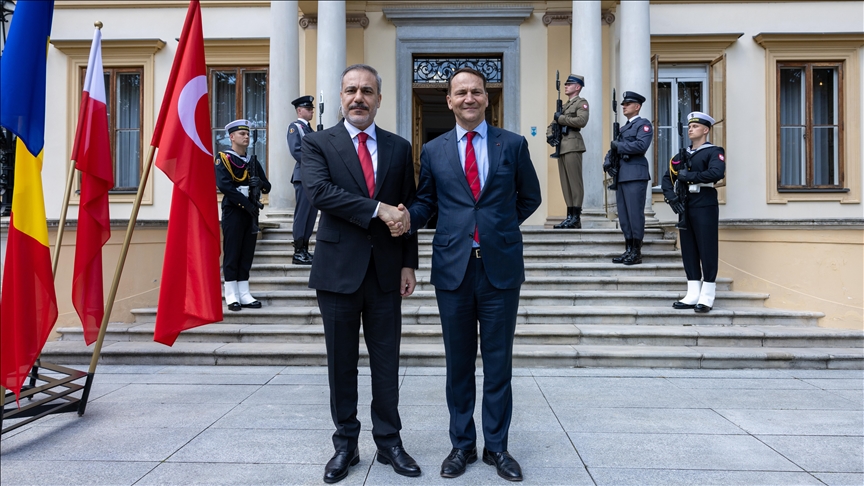
The Polish embassy in Nicosia on Friday said it had no intention to “attribute responsibility for disinformation material distributed online to the Turkish state” after an employee of the embassy had earlier in the week made reference to Turkey and its relations with the island during a presentation on disinformation in Poland and Cyprus.
It said that instead, it had intended to “show that disinformation will continue to be a sensitive issue” when Cyprus undertakes the Council of the European Union’s rotating presidency at the beginning of next month,
“The purpose of the meeting was to present the activities and achievements of the Polish presidency of the Council of the EU, which took place in the first half of 2025,” it said.
It added that the presentation had, in part, focused on the matter of “information security”, and that in this context, “we focused on disinformation, which is one of the biggest threats spread through the internet and social media”.
“To demonstrate the scale of this phenomenon, we presented a number of examples of disinformation and propaganda campaigns currently affecting Poland, the sources of which are primarily traced to Russia,” it said.
To this end, it said, it also wished to “show that disinformation is a very widespread phenomenon observed virtually throughout the world, including in Cyprus”, and that as such, “we presented several examples of false news and graphics distributed through social networks regarding, among other things, the Cyprus problem”.
“It was not our intention to attribute responsibility for disinformation material distributed online to the Turkish state, but to show that disinformation will continue to be a sensitive issue during Cyprus’ presidency [of the Council of the EU], to which we wish every success,” it said.
On Wednesday, an employee of the Polish embassy had said that “Turkey and the institutions affiliated to the occupied side are conducting disinformation and propaganda campaigns within Cyprus”.
“They try to portray the Republic of Cyprus as a state dependent on external powers,” they said, adding that this is being done with the aim of causing fear and mistrust, of weakening the Republic of Cyprus’ status in the region, of undermining trust within Cypriot society, and of influencing international relations, among other things.




Click here to change your cookie preferences