
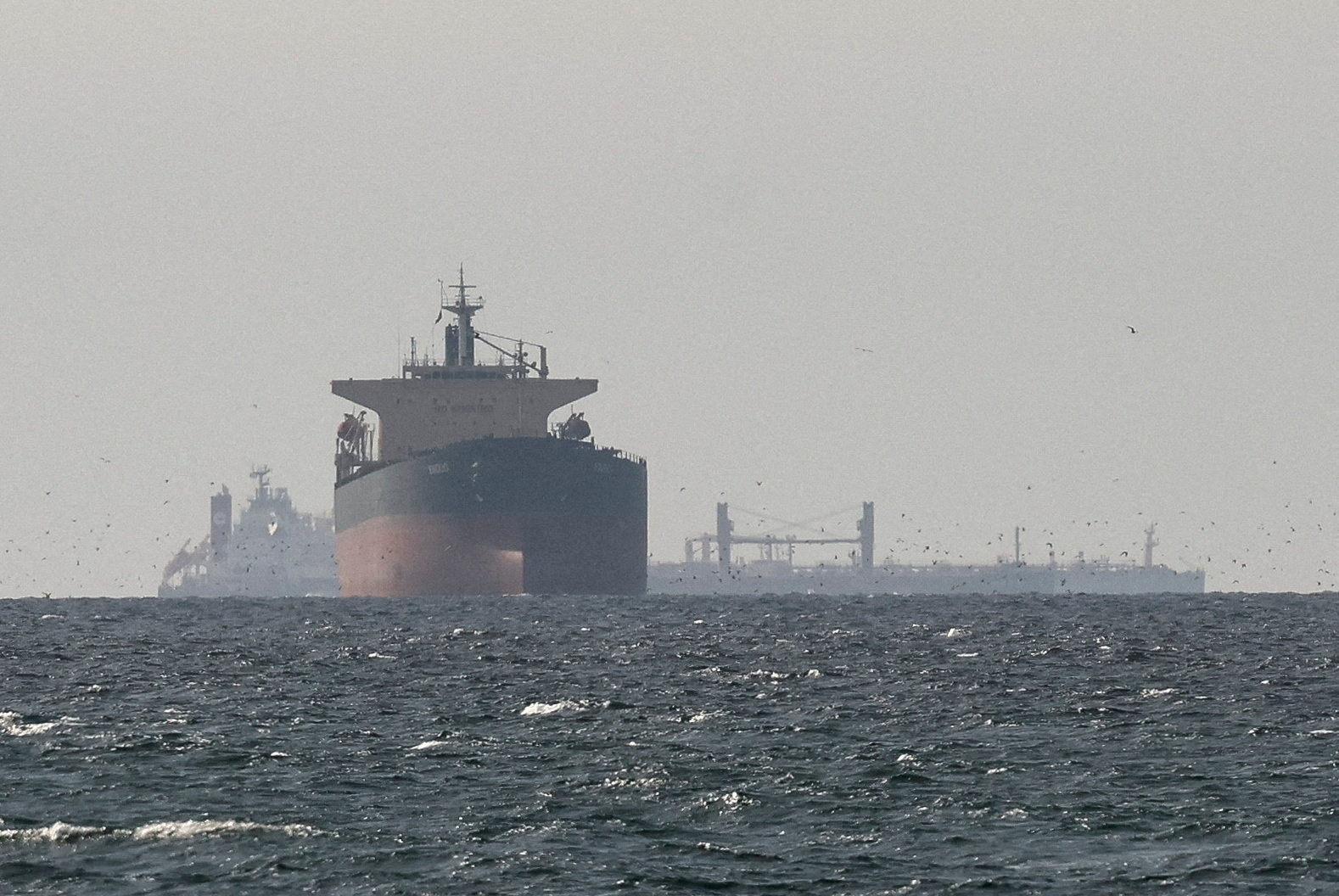
Seafarers who do not wish to sail through war-risk zones have the right to disembark from vessels, Charalambos Avgousti, head of the Cyprus maritime union Omepege-Sek, said on Tuesday, stressing that the union’s primary concern is the safety of crew members.
Avgousti said there are no Cypriot seafarers stranded in the Strait of Hormuz, based on current information.
However, he noted that some seafarers covered by union agreements remain in the wider region and are safe, including crew members who were aboard a vessel that recently came under attack.
He referred to the Star Gwyneth, operated by Star Bulk Carriers, which was struck by a missile on March 11 while sailing approximately 50 nautical miles northwest of Dubai.
“The vessel has sustained damage, including a large hole, but the crew are safe and have supplies,” Avgousti said, adding that no injuries were reported and the ship has since moved away from the danger zone.
Around 20 crew members are believed to have been on board.
Avgousti noted that Star Bulk maintains offices in Cyprus, meaning its seafarers are covered through the International Transport Workers’ Federation (ITF), in cooperation with Omepege-Sek in Cyprus and the Panhellenic Seamen’s Federation in Greece.
He added that the union is in contact with the shipping deputy ministry to assess whether any further action is required. “Fortunately, there were no Cypriot seafarers involved,” he said, noting that some Greek nationals were on board.
Meanwhile, the ITF is participating in an emergency two-day meeting of the International Maritime Organisation, which began on Tuesday, focusing on the safety of seafarers in the Strait of Hormuz and the wider region.
Avgousti said the ITF has revised its policy on “warlike zones”, expanding it to include the entire Middle East following the outbreak of war in Iran. Although some parties pushed for the inclusion of the Eastern Mediterranean, this was not adopted.
“The positive is that we have not had strikes on vessels in the Eastern Mediterranean, either near Cyprus or Israel. I believe it will not be included,” he said, warning that such a designation would create significant operational and financial challenges.
He noted that there is already an economic impact, as ships are avoiding routes through the Strait of Hormuz and, to some extent, the Suez Canal.
However, Avgousti cautioned that if the conflict continues for an extended period, the Eastern Mediterranean could still be classified as a war-risk zone.
“Our concern is that seafarers remain safe, and those who do not wish to travel to these areas have the right to leave the vessel,” he said, explaining that once a region is designated as a war zone, crews cannot be compelled to sail through it.
He added that Cyprus-flagged vessels typically avoid such routes under these conditions, and there are relatively few tankers of Cypriot interest operating in the area.
Regarding the 19 Cyprus-flagged ships reported by the Shipping Deputy Ministry to be in the Strait of Hormuz, Avgousti said they have not been in danger and remain in the area. “They are safe, they were not threatened and have not loaded cargo. Some have moved to safer locations,” he said.



Click here to change your cookie preferences