
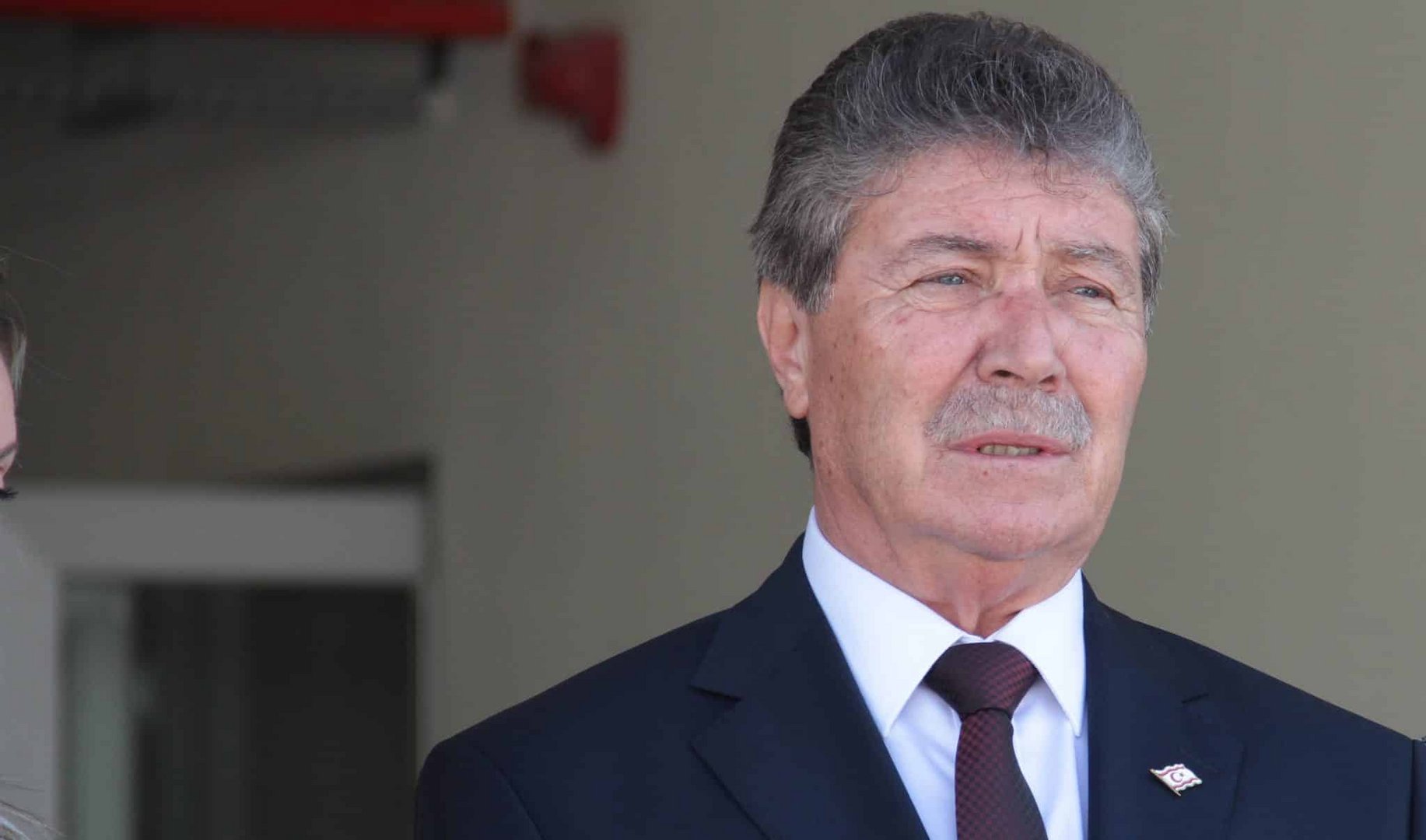
Turkish Cypriot ‘prime minister’ Unal Ustel on Saturday decried the “constant arms race undertaken by the Greek Cypriot side” during a meeting with Turkish Vice President Cevdet Yilmaz in Ankara.
He added that the Greek Cypriot community is making efforts to “destroy the economy of the TRNC”, and that this is “disturbing the people of our country”, before making reference to the Cyprus problem.
“We are reaching out to reach a solution through an agreement, while the Greek Cypriot administration in southern Cyprus is considering going from Nicosia to Karpasia and planting the Greek flag there,” he said.
He said that his ruling coalition “wants to raise the TRNC flag higher in the skies” and that to this end, it is “working to boost” the north’s “economy, industry, agriculture, animal husbandry, tourism, and education” sectors.
In addition, he said that he and Yilmaz are “working on a financial protocol to be signed to alleviate the difficulties faced by the manufacturing sector and the construction sector by providing long-term, low-interest loans to those sectors”.
Yilmaz, meanwhile, said that his government’s aim is for the north to “produce more, increase its prosperity, and walk more firmly into its future on its own two feet”, before promising to “make every effort to achieve this”.
“The Republic of Turkey will continue to provide all possible support for the development and progress of the TRNC in the coming period. We see this as an integral part of the Cyprus issue,” he said.
To this end, he said that the next financial protocol signed between the north and Turkey will be formed “considering today’s needs” and said that he will visit Cyprus again once Turkey’s state budget for 2026 is passed into law.
Ustel was joined in Ankara by his ‘deputy prime minister’ Fikri Ataoglu and ‘transport minister’ Erhan Arikli.
His reference to an “arms race” comes after Turkey’s defence ministry had raised concerns when the Republic of Cyprus took delivery of the Israeli Barak MX air defence system – a surface-to-air missile which is designed to defend against airborne threats including aircraft, helicopters, anti-ship missiles, drones, ballistic missiles, cruise missiles and combat jets.
Sources from the ministry warned of “dangerous consequences”, before adding that the ministry was “closely following” the matter.
Defence Minister Vasilis Palmas had pre-empted a Turkish response to the purchase of the missiles, saying it would be hypocritical.
“I consider them to be absolutely hypocritical in the sense that for 51 years, 40,000 Turkish troops have been in occupied Cyprus. Cyprus is a victim of invasion, and its self-evident right to defend its territorial integrity and sovereignty through its deterrent power, through its defensive armour, is an obligation we have towards the Cypriot people and towards ourselves,” he said.
In addition to the acquisition of the Israeli air defence system, the Republic of Cyprus earlier this year secured over €1 billion of funding which the Republic of Cyprus secured through the European Union’s Security Action for Europe (Safe) defence procurement programme.
Meanwhile, plans to upgrade both the Evangelos Florakis naval base at Mari and the Andreas Papandreou airbase in Paphos were publicly announced by the government at the end of last year, with Palmas saying at the time that the upgrades at Mari may cost in excess of €200 million.
Military ties between Cyprus and the United States have also been strengthened this year, with the US having authorised Cyprus to buy military hardware directly from the government after joining three programmes run by the country’s department of defence.


Click here to change your cookie preferences