
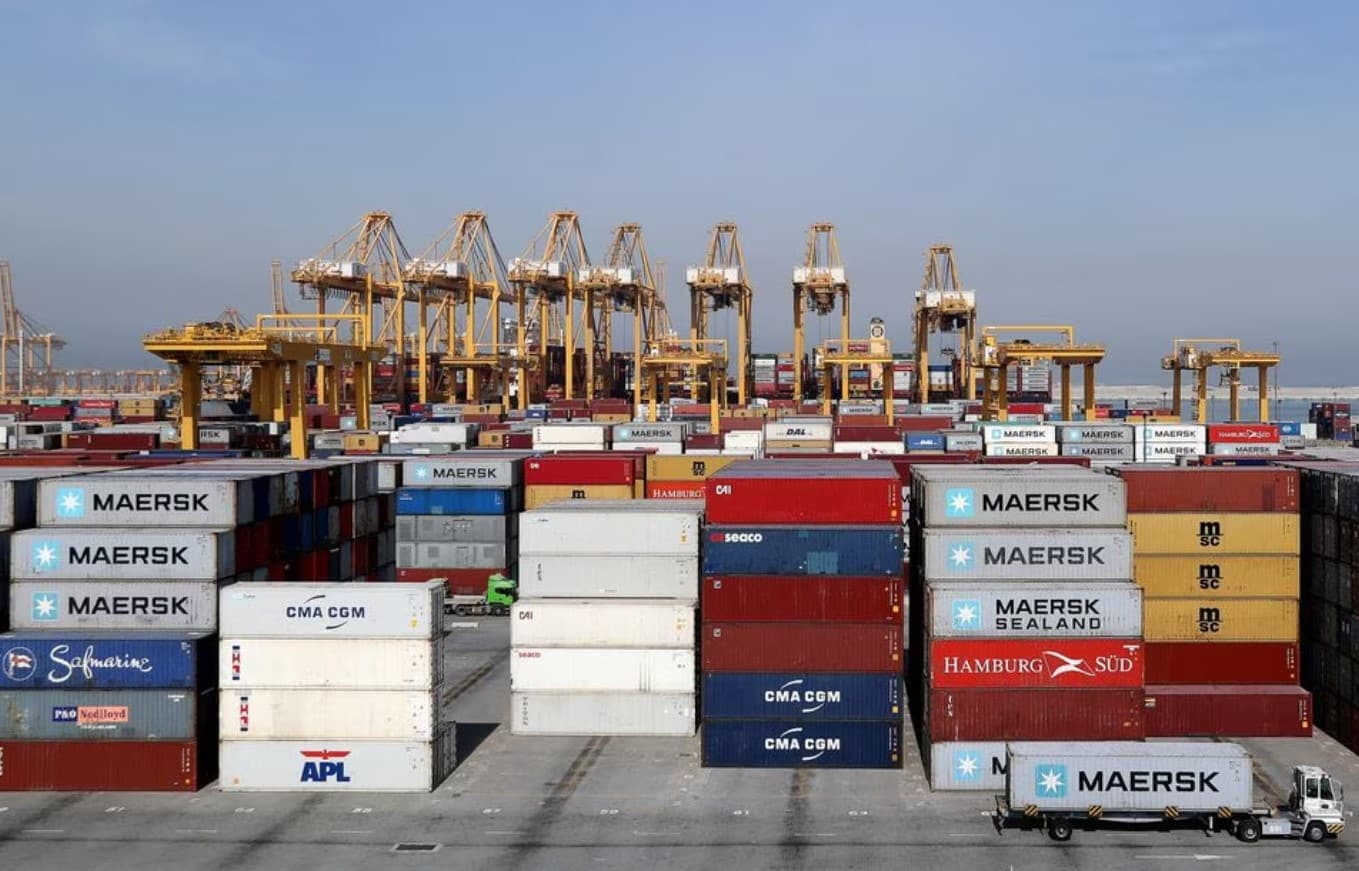
The European Union’s sea ports handled an estimated 3.4 billion tonnes of freight in 2024, a level unchanged from the previous year but still short of the decade’s peak as the bloc continued to navigate shifting trade patterns across major maritime hubs.
According to Eurostat, this volume remained below the record high of 3.6 billion tonnes registered in 2019, underscoring how activity has yet to fully rebound to pre-pandemic momentum.
Rotterdam in the Netherlands retained its long-held position as the EU’s leading maritime freight port, handling 397 million tonnes in 2024 and reinforcing its role as the bloc’s dominant logistics gateway.
Antwerp-Bruges in Belgium followed with 244 million tonnes, while Hamburg in Germany ranked third with 97 million tonnes.
Only four of the EU’s ten busiest ports registered annual increases, pointing to uneven performance across the sector.
Valencia recorded the strongest rise with 3.6 per cent growth, while Algeciras in Spain expanded by 2.6 per cent.
At the opposite end, Constanța in Romania posted a sharp decline of 14.3 per cent, and Gdańsk in Poland fell by 11.0 per cent, reflecting localised pressures that weighed on throughput.
Coal and lignite, crude petroleum and natural gas together formed the largest category of goods handled by the EU’s main ports, accounting for 19.0 per cent of all freight.
Coke made from coal and used mainly in steelmaking, together with refined petroleum products such as fuels and lubricants, accounted for 16.5 per cent of all freight handled.
Metal ores and other mining and quarrying materials made up 7.4 per cent, while chemicals, rubber, plastics and nuclear fuel represented a combined 7.2 per cent.
Products from agriculture, hunting, forestry and fisheries amounted to 6.3 per cent of total freight.
Food products, beverages and tobacco accounted for 4.9 per cent of all goods moved through EU ports in 2024.





Click here to change your cookie preferences