
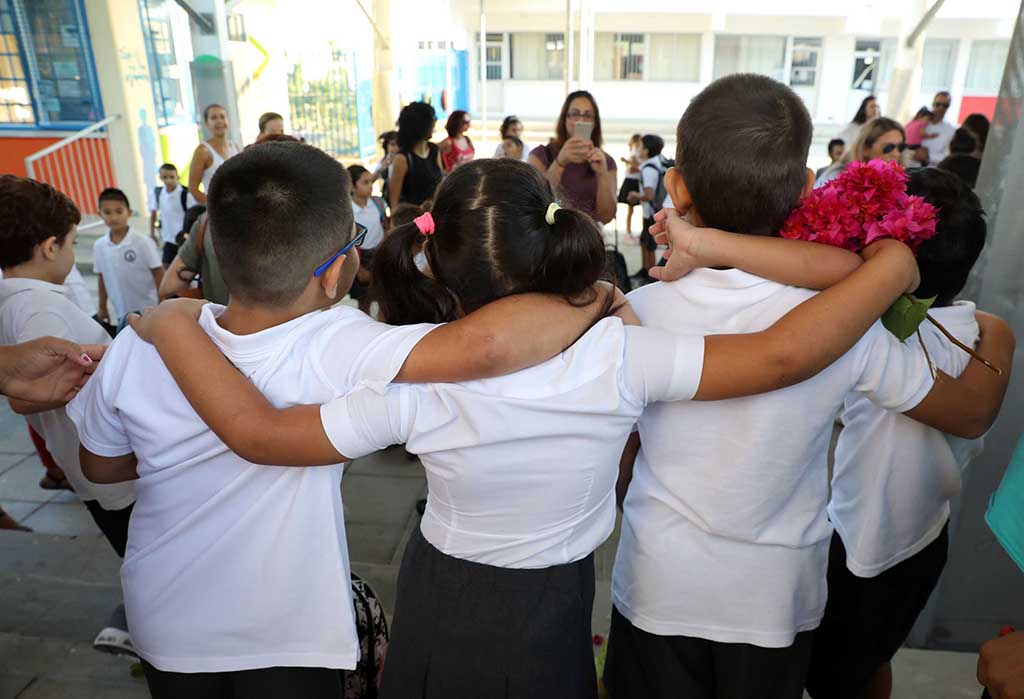
The transfer of Greek Cypriot students to other schools is the real issue, according to the parent and guardian associations of the third public primary and nursery schools of Kaimakli.
In a statement, the associations of the two schools expressed disappointment over remarks made by chairman of the House education committee Diko MP Pavlos Mylonas, following Friday’s meeting on matters concerning the schools in question.
They said the statements “do not reflect our views or what was said last Friday; among other things, the data he presented is entirely inaccurate”.
On Friday, Mylonas said “there are serious problems regarding the demographic alteration of the area and the fact that at the nursery school there are six Greek Cypriot children and 170 children from third countries”, adding that “many Arabic-speakers move their children from other areas to this school because it has the most Arabic-speaking children.”
The associations clarified that “the real issue repeatedly raised by parents is the transfer of Greek Cypriot students to other nearby schools, with the tolerance or even approval of the education ministry. In practice, this leads to an uneven distribution of students, creates segregation between schools, and exacerbates the decline in student numbers in certain school units.”
Additionally, the associations outlined some of the proposals that were submitted, such as extending the all-day school schedule until 5pm, enriching the range of activities offered in the all-day programme, reducing class sizes to 18 students per class, increasing funding for the Drase programme – a government programme to support migrant and low-income families – and reviewing both the transfer criteria and the criteria for admission to public nursery schools.
“We expected that Mr Mylonas, in his public statements, would at least mention some of the proposals submitted to the ministry and other relevant authorities, so as to support our efforts to improve the situation in our schools, rather than amplifying an existing issue with inaccurate data,” the parents’ associations stated.
“The opportunity we were given to speak as parents allowed us to highlight the high standard of the teaching staff, as well as the positive aspects of the Drase programme in our school,” they added.
They furthermore called “on the state and the competent authorities to wake up to the serious issues affecting our schools, and to work together with us to find the necessary solutions”.
In conclusion, the parents’ associations welcomed the prompt response from all relevant authorities who attended the meeting, as well as the commitment of the school board to provide support until the end of the year.




Click here to change your cookie preferences