
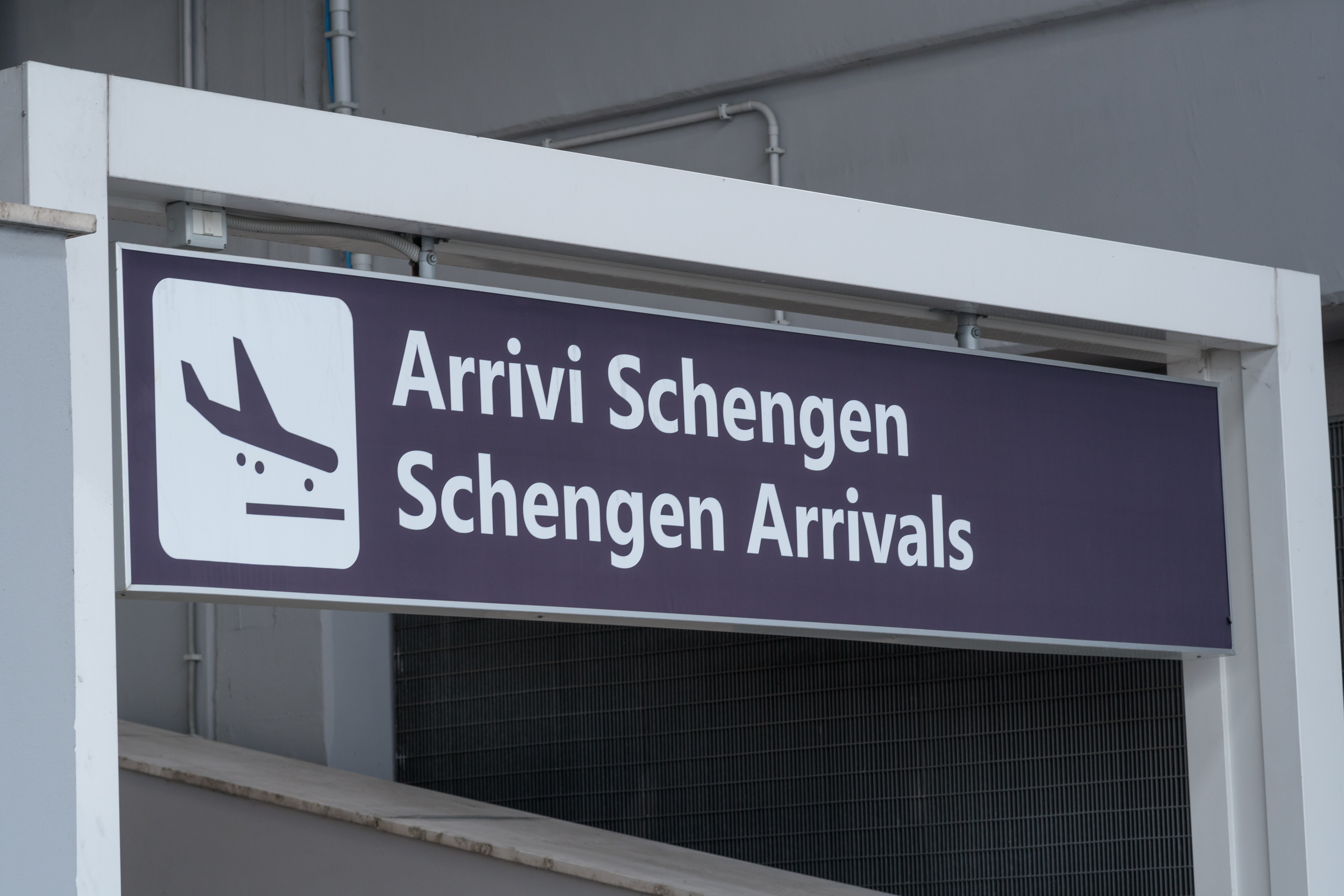
The situation at the crossing points which connect Cyprus’ two sides “will not be easier” than it is today after Cyprus joins Europe’s border-free Schengen area, former Turkish Cypriot chief negotiator Ozdil Nami said on Monday.
“I do not know what kind of problems will arise because of Schengen, because how the Greek Cypriots will proceed in this regard is also important. However, it is certain that things will not be easier than they are today,” he told Gundem Kibris Web TV.
He added that this “is not just about the speed of crossing”, but that “much stricter rules may be introduced” regarding who is allowed to cross, and that joining the Schengen area “may also have dimensions which affect trade” across the Green Line.
“We are completely outside of this,” he said.
To this end, he said he supports Turkish Cypriot leader Tufan Erhurman’s plan to “reactivate” the bicommunal European Union ad hoc committee, which was established in 2016 to prepare the Turkish Cypriot community to comply with the EU’s acquis communautaire following the resolution of the Cyprus problem.
This plan, he said, is “very meaningful”.
“The issue of Schengen not affecting crossings on the island will be discussed and resolved by experts. The last thing the EU would want is a hard border in the middle of Cyprus,” he said.
The Republic of Cyprus’ potential accession to the Schengen area was one of the issues discussed between Erhurman and the EU’s envoy for the Cyprus problem Johannes Hahn when the latter visited Cyprus last week.
Erhurman had said earlier in the year that it is “extremely important” for the Turkish Cypriots to be involved in Cyprus’ accession to the Schengen area, warning that Schengen accession “has the potential to bring about many complications, especially in the area of freedom of movement” regarding Turkish Cypriots.
As such, he said, “it is extremely important for the Turkish Cypriot side to be involved in this process to bring the complications which may arise in the future onto the European Union’s agenda in a timely manner, and to produce solutions for them”.
He had also at the time called for the reestablishment of the EU ad hoc committee, saying that it had been “unilaterally dissolved by [former president Nicos] Anastasiades after Crans Montana”, but that it is “very necessary at this point”.
“Turkish Cypriots exist. In such a situation, which has the potential to affect them negatively, it is not possible for their will to be considered ‘unnecessary’,” he said, adding that Turkish Cypriots are “increasingly faced with the risk of being confined to the north of Cyprus”.
President Nikos Christodoulides has repeatedly stated that he wishes for the Republic of Cyprus to join the Schengen area next year, describing the move as “a strategic decision, a development, for both the Republic of Cyprus and the European Union”.
Cyprus is one of just two EU member states left outside the Schengen zone, following the accession of Bulgaria and Romania at the beginning of this year, Ireland the only other EU member on the outside. Four non-EU members – Iceland, Liechtenstein, Norway and Switzerland – are also Schengen members.
Reports earlier in the year set out the likely requirements Cyprus must fulfil to be able to join the Schengen zone, with the country said to have been tasked with “strengthening [its] border controls”.
Particular attention on this front has been paid to the Green Line, which, while not de jure an external border, is said to “require strict controls” and is not exempt from EU frontier standards.


Click here to change your cookie preferences