
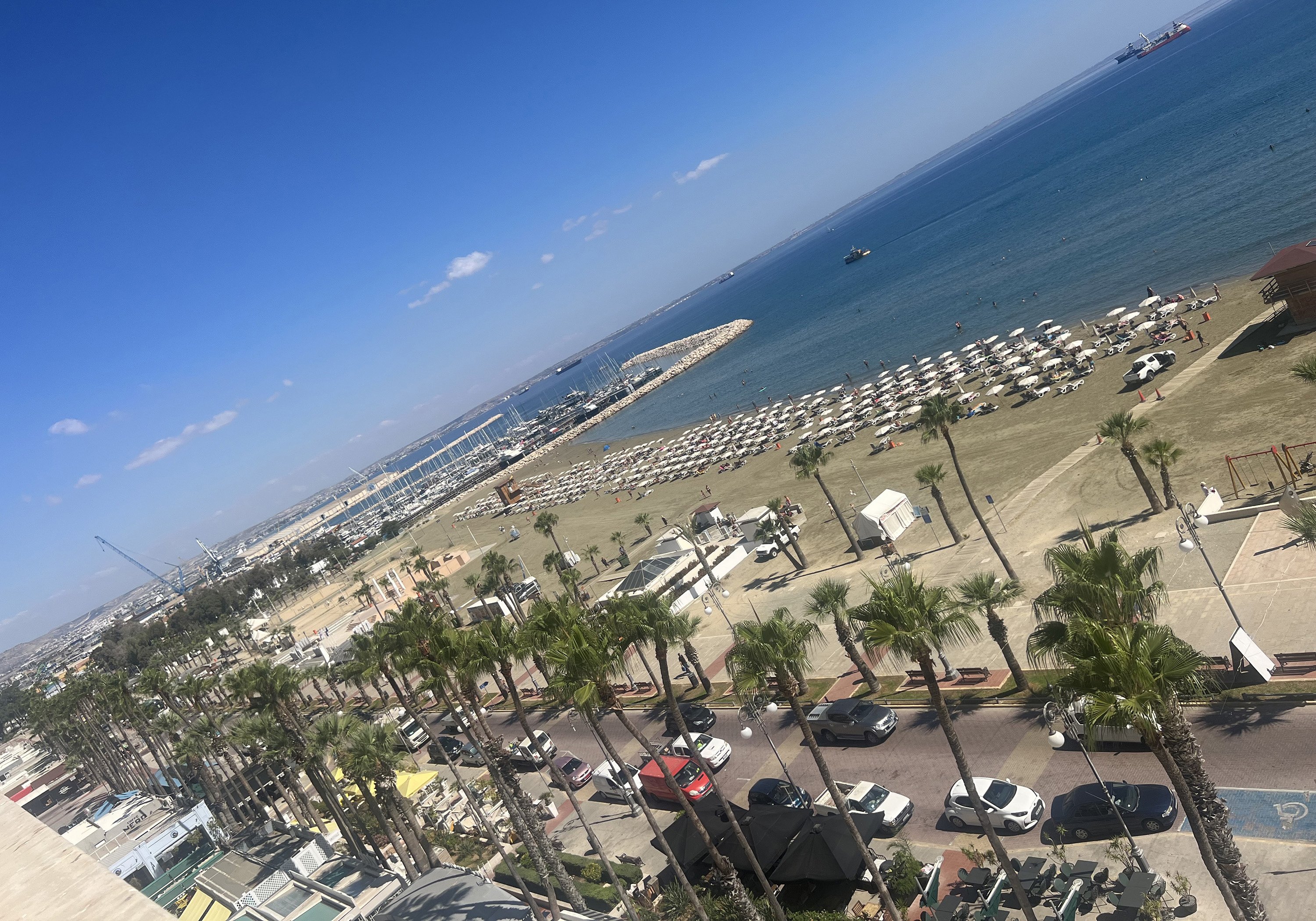
Cyprus is a “completely safe” destination for tourists, President Nikos Christodoulides insisted on Tuesday, amid rising fears for the immediate future of the island’s tourism industry after its British Akrotiri air force base was hit by an Iranian-made drone earlier this month.
He told Greek business news website money-tourism.gr that the island “remains a stable European pillar in a geographical area of particular geopolitical importance”, before pointing out the success in recent years seen by Cyprus’ tourism industry.
“The course of recent years is indicative of this dynamic. In just three years, Cypriot tourism has recorded an increase of approximately 40 per cent in visitor arrivals and approximately 50 per cent in tourism revenues,” he said.
He added that this development “confirms the strong position of the destination on the international tourism map”, and that “at the same time, [it] reflects the success of a model of cooperation between the state and the private sector”.
As such, he said that despite the drone strike, he remains optimistic regarding the immediate future of the island’s tourism industry.
“The country has repeatedly proven that it has the ability to adapt to difficult conditions and maintain its … momentum, even in times of uncertainty,” he said.
He referred at this point to the ongoing war in Ukraine, saying that while “approximately one million Russian visitors were lost” by the island’s tourism industry in the aftermath of the outbreak of the war in 2022, nonetheless, “the country managed”.
To do this, he said, the government and the private sector undertook “targeted actions … to make up for the loss with visitors from other countries, such as Poland, Israel and other European countries”.
Returning to the matter of the ongoing conflict in the Middle East, he stressed that Cyprus is “not part of the region’s problems, but on the contrary, functions as a pillar of stability and cooperation”.
“The island’s location, combined with its status as a member state of the European Union, make Cyprus an important connecting link between Europe and the Middle East,” he said.
On this front, he said that he remains in “constant communication with European officials and the institutions of the European Union”, with the aim of “ensuring that Cyprus continues to be promoted as a completely safe and reliable tourism destination”.
Looking beyond the conflict, he said that the overarching goal of the island’s tourism policy is “to transform the country into a complete 12-month destination”.
“Cyprus is an ideal destination for holidays all year round,” he said, adding that the island is “a place which combines history, culture, gastronomy, natural beauty and high-level hospitality”.
“The fact that the country has one of the highest rates of repeat visitors is the strongest proof of the trust which travellers show in Cyprus,” he added.
His comments came amid reports that levels of reservations at hotels, particularly in the Famagusta district, remain well below last year’s levels, with the hoteliers’ association (Pasyxe) calling for the government to provide financial support to those who may find themselves short of work in light of lower-than-expected booking levels.
Nonetheless, it is not expected that hotels and other tourism-related businesses will delay their summer reopening.


Click here to change your cookie preferences