
Cyprus now stands between confrontation and the most transformative peace of its history
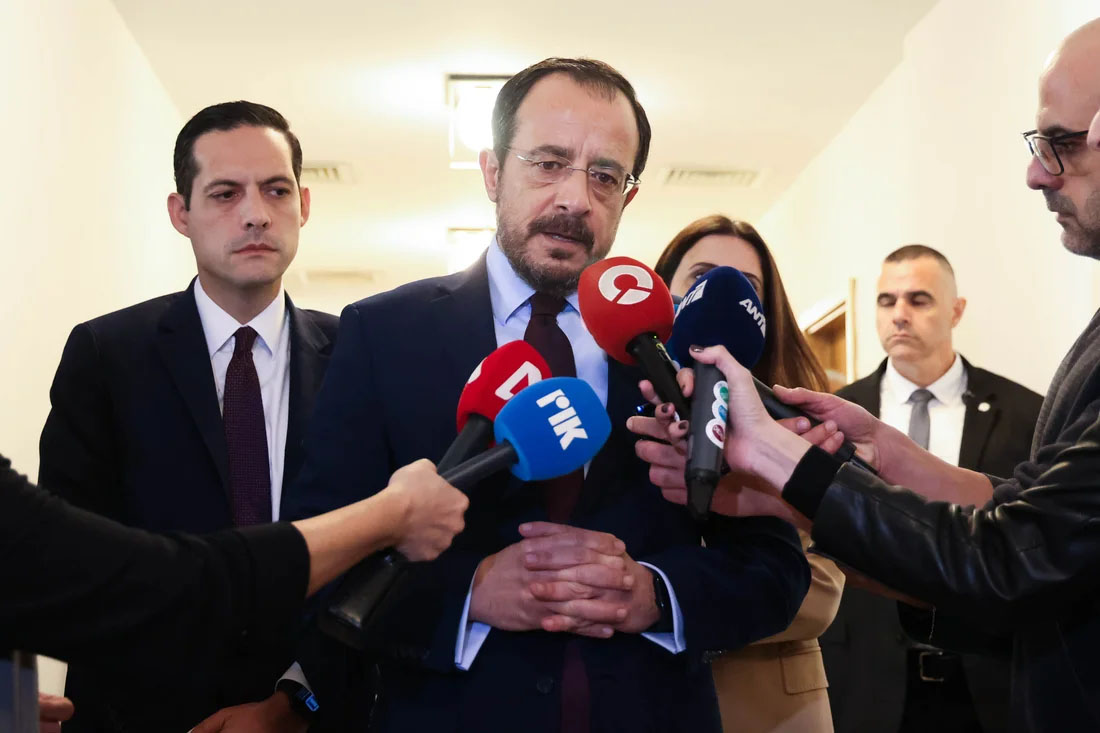
President Nikos Christodoulides never misses an opportunity to declare his readiness for a bizonal, bicommunal federation (BBF) with political equality. He repeats the familiar phrase that talks should resume “from where we left off at Crans-Montana”.
On paper, this places him firmly within the United Nations’ parameters. In substance, however, it increasingly resembles a diplomatic illusion – a carefully crafted rhetorical shield that conceals his unwillingness to do what BBF requires: share power, share sovereignty and share Cyprus’ European voice with the Turkish Cypriot community.
Behind the polished language lies a more sober political calculus. Since 2004, the Republic of Cyprus has benefited from a structural asymmetry: international recognition, EU membership, and a unilateral veto over every European file involving Turkey. That leverage is not shared with Turkish Cypriots, and it would inevitably be diluted in a genuine federation. A real BBF would require rotating presidencies, effective participation and joint decision-making – including on EU positions that are currently controlled exclusively by the Greek Cypriot leadership. No leader has yet admitted this truth to their electorate. Christodoulides is no different.
The contradiction is now impossible to ignore.
Consider first the context that many Cypriots may not fully know: the EU’s Safe defence programme. Safe is the EU’s flagship framework for joint defence procurement – a mechanism offering long-term, low-cost financing to EU member states for major military acquisitions, predominantly from EU sources. Third countries, including Turkey, may participate only if the EU signs a formal security agreement with them, and such an agreement must be approved unanimously by all 27 EU members.
Turkey formally applied, albeit late, to participate in Safe. It waited for the EU to process the request. But the European Commission confirmed that Turkey’s application – like South Korea’s – would miss the deadline for the initial Safe cycle because it had not yet been reviewed and because unanimity (including Cyprus’ consent) was required and not forthcoming. Yet after ensuring no agreement could be reached, President Christodoulides declared publicly that “Turkey excluded itself.”
This was not principled diplomacy; it was strategic distraction. The president preserved Cyprus’ exclusive veto power while presenting Turkey as the obstacle. And this manoeuvre, streamlined and elegant, mirrors his approach to BBF itself. Safe is not an exception. It is the template.
The same posture now extends into the Eastern Mediterranean’s EEZ politics, where the stakes are higher still. Contemporary maps of EastMed gas reserves and maritime zones evoke the unsettling echo of the Treaty of Sèvres, when Allied powers divided Anatolia into colour-coded zones in 1920. Today’s EEZ charts assign clean maritime blocks to Greece, Cyprus, Israel and Egypt, while portraying Turkey – despite having one of the longest Mediterranean coastlines – as a geographic inconvenience. Turkish Cypriots vanish entirely from the frame.
These maps are not decorative. They are blueprints for crisis.
By excluding Turkey from regional energy frameworks, Cyprus and parts of the EU fuel the very dynamics that push Ankara toward consolidating its stance on the two-state solution. The deeper reality is ignored: the RoC behaves as though the Eastern Mediterranean can be organised without accepting the internal power-sharing a real federation will demand. This is an inflammatory strategy, one that courts confrontation, militarisation and even armed conflict. And at the end of such a crisis, division will deepen, leaving Cyprus more vulnerable and divided than ever.
President Christodoulides insists this is Turkey’s fault – because Ankara rejects the BBF. But this narrative obscures the other half of the truth: he cannot accept a real BBF either, because a genuine federation would end the RoC’s exclusive EU veto and require real power-sharing with Turkish Cypriots. Behind every Safe veto, every EEZ claim, every exclusionary map lies the same instinct: protect the asymmetric advantages of the status quo while presenting BBF as an ideal that the “other side” refuses.
A true BBF is what the UN demands. The UN secretary-general has warned that Greek Cypriot willingness to share power must be shown “not only in words but in actions”. Yet the UN continues to treat declaratory support as compliance. If the UN is serious, it must say plainly that one cannot claim BBF while rejecting everything that makes BBF real.
Despite this impasse, a different future remains possible. A functioning Federal Republic of Cyprus would anchor Greek-Turkish rapprochement, stabilise regional security, open corridors for joint energy and climate infrastructure, and position Cyprus as a genuine bridge,not a buffer.
In the analysis of 2024 Nobel Prize-winning MIT economist Daron Acemoglu, whose landmark book Why Nations Fail displays how extractive institutions eventually doom societies to stagnation, Cyprus today, with illusions of progress, also stands perilously close to becoming a textbook case. A real BBF would replace extractive dynamics with inclusive institutions that create stability, investment and long-term shared prosperity. Without such reform, Why Nations Fail will one day serve as the epitaph for Cyprus itself.
And here lies the extraordinary irony.
The president, who insists he acts for “what’s right for Cyprus”, risks being guided by a narrow, nationalistic and ultimately Europeanised illusion of security. Yet he would gain more international stature than any Cypriot leader in living memory if he delivered a federal settlement partnering with Tufan Erhurman’s consistent advocacy for federation – and under the shepherding of the UN secretary-general, the three of them could plausibly be candidates for a shared Nobel Peace Prize, not as symbolism, but because a BBF settlement would reshape the political geometry of the Eastern Mediterranean and end a 60-year conflict.
President Christodoulides now faces a stark choice: does he wish to be remembered as a former president of a permanently divided island – or the first architect of a stable Federal Republic of Cyprus?
The president almost certainly does not see himself as chasing glory. He believes he is acting prudently, guarding Cyprus’ sovereignty, and using every legal and diplomatic tool available to protect “his” state. But that is precisely the problem. His vision of security is trapped in a small-country calculus of vetoes, exclusions, and maps that push the region toward confrontation. What looks, from his vantage point, like responsible caution is, from a broader perspective, an inability to imagine that Cyprus’ survival and prosperity might depend not on holding tighter to unilateral power, but on sharing it.
In Federalist Papers No. 10, defending the proposed US Constitution and the world’s first durable written federal charter, James Madison argued that a Republic succeeds only when it channels the whole public, not one faction, through genuinely representative institutions. In his words, “the public voice, pronounced by the representatives of all the people, will be more consonant to the public good” than the raw power of any transient majority. The entire American experiment and the first ever federal government were built on this intuition: that a large, plural Federal Republic of the United States can discipline factionalism and protect and secure the long-term interests of all its citizens, not just those who happen to hold power at a given moment.
Cyprus now faces a smaller but no less fundamental version of the same question Madison and Alexander Hamilton confronted: can it build a federal republic that truly represents Greeks and Turks, north and south, rather than entrenching one community’s veto over the other’s future? A BBF worthy of the name would do in Nicosia what the US Constitution once did in Philadelphia: move beyond fear of difference toward institutions capable of refining the “public voice” into something closer to the common good. President Christodoulides can cling to a narrow, majoritarian, veto-based vision that Madison himself would have recognised as the path to instability – or he can help Erhurman and all the actors under the auspices of the UN SG co-design a Cypriot federation that finally represents all the island’s citizens.
The choice between those two futures will define not only his legacy, but whether Cyprus becomes a modern example of why federations can succeed – or another cautionary case in a new chapter of Why Nations Fail.




Click here to change your cookie preferences