
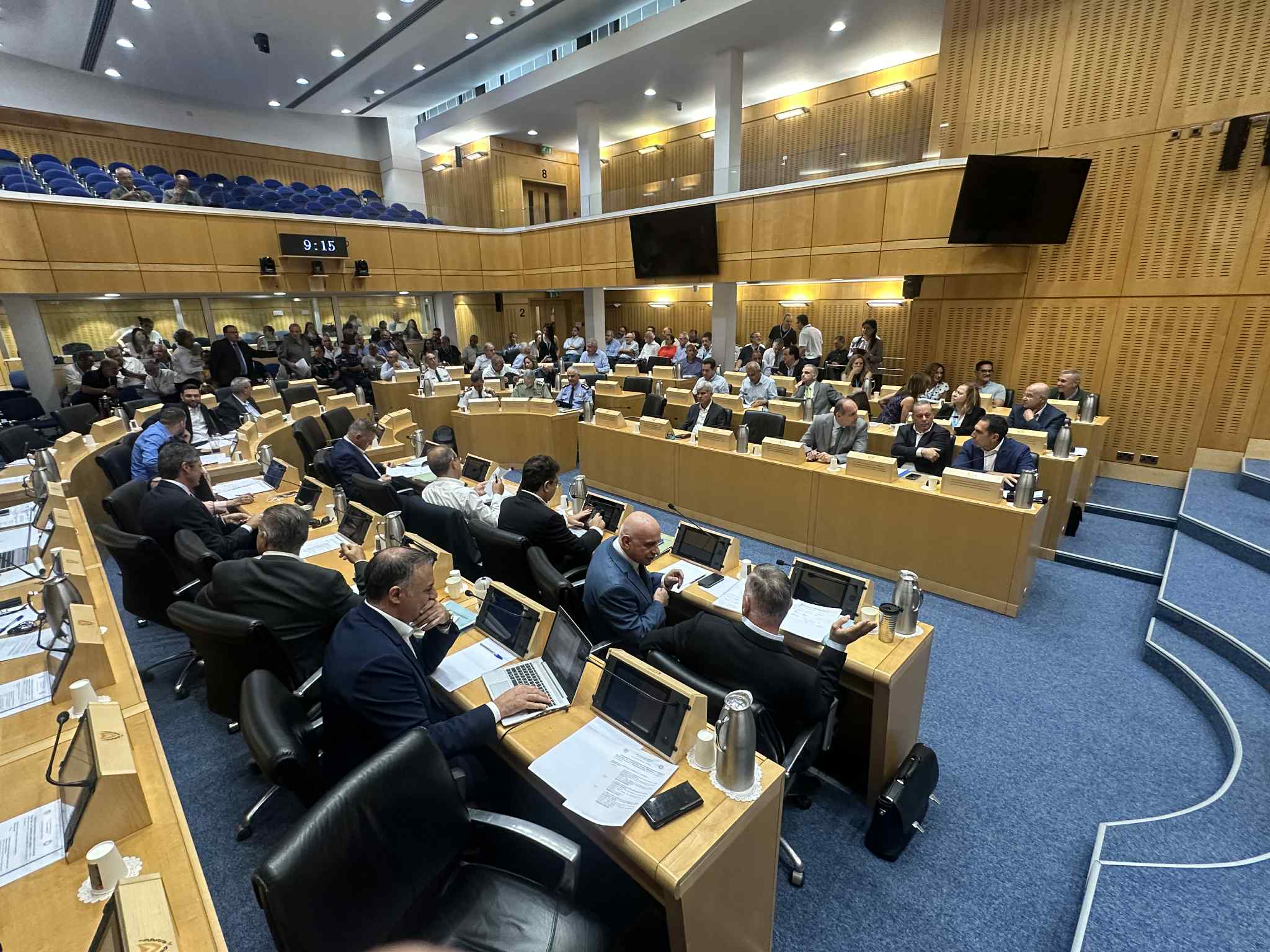
The state budget for 2026 was approved by parliament on Wednesday, with 37 MPs voting in its favour and 19 voting against.
Votes in favour came from MPs from the three parties which officially support the government, Diko, Dipa, and Edek, as well as from Disy, Elam, and independents Andreas Themistokleous, Andreas Apostolou, and Michalis Giakoumi.
Akel, the Ecologists’ Movement, and independents Kostis Efstathiou and Alexandra Attalides, the latter of whom belongs to Volt, voted against the budget.
The budget foresees a total of just shy of €15.4 billion worth of spending over the course of next year, with almost €16.5bn of government revenue is also forecast, maintaining the government’s budget surplus into the new year.
Finance Minister Makis Keravnos said of the budget’s passing that “an important state act has been accomplished” and thanked the House finance committee for its “hard work and close cooperation” in bringing the budget to a plenary vote.
He also thanked those who did not vote for the budget, saying that “we have heard criticism, and criticism is important to us because we always try to see positive suggestions, but also to learn from our experience”.
“I want to express my absolute satisfaction once again because our economy can progress at the known growth rates and the implementation of the government programme of the Nikos Christodoulides government can continue,” he said.
He had said at the outset of parliament’s plenary debate on the budget earlier in the week that he believes the budget is both “balanced” and “developmental”, and that it “provides for any crisis which may arise in a constantly changing economic and political environment”.
Meanwhile, House president Annita Demetriou, who is also the leader of Disy, the legislature’s largest party, said earlier in the week that her party would support the budget as it does not “play with the economy”.
“What is required today is a reliable plan which offers people security for the future, strengthens social cohesion, and restores social stability,” she said, before adding that while her party “wants to correct what bothers us”, it does not wish to “destroy what we achieved”.
“Therefore, despite the wrong priorities set out by the government, Disy will demonstrate responsibility and will vote for the budget,” she said, despite later lamenting that “instead of substantive solutions, measures are being proposed which create more problems than they are supposed to solve”.
Akel leader Stefanos Stefanou, meanwhile, had been in a much less conciliatory mood, promising that his party would vote against the budget, as it had for both of the budgets put forward by President Nikos Christodoulides’ government so far since it entered office in 2023.
This year’s budget, he said, is “like the previous ones, based on the logic of unambiguous fiscal management without a perspective for society”.
“The repeated pattern of the same policy simply confirms that the Christodoulides government is more interested in numbers and not so much interested in people or society,” he said, adding that while the headline numbers of the economy are improving, “the majority of society is living in increasingly difficult circumstances”.
“The budget does not respond to the needs of society, nor does it serve a long-term strategy for a sustainable, resilient, and socially oriented economy, which ensures the future of generations to come. The vision and strategic planning for an effective and socially just development model are absent,” he said.
As the debate drew towards a close on Wednesday, one of the final MPs to have a say was House finance committee chairwoman and Diko MP Christiana Erotokritou, who stressed the “seriousness” and political centrism, as she sees it, of next year’s budget.
“Cyprus will not move forward with easy answers and it cannot stand experiments. It needs seriousness and a steady hand. This serves the centre over time. We operate as a force of responsibility and seriousness, when others choose the easy way. This is how we are approaching the 2026 budget,” she said.
She added that “without healthy, stable public finances, there are no quality schools, or health and social protection”, and that while those “healthy public finances” and budget surpluses are not “immediately paid into people’s pockets”, what she described as “bad public finances” are.


Click here to change your cookie preferences