
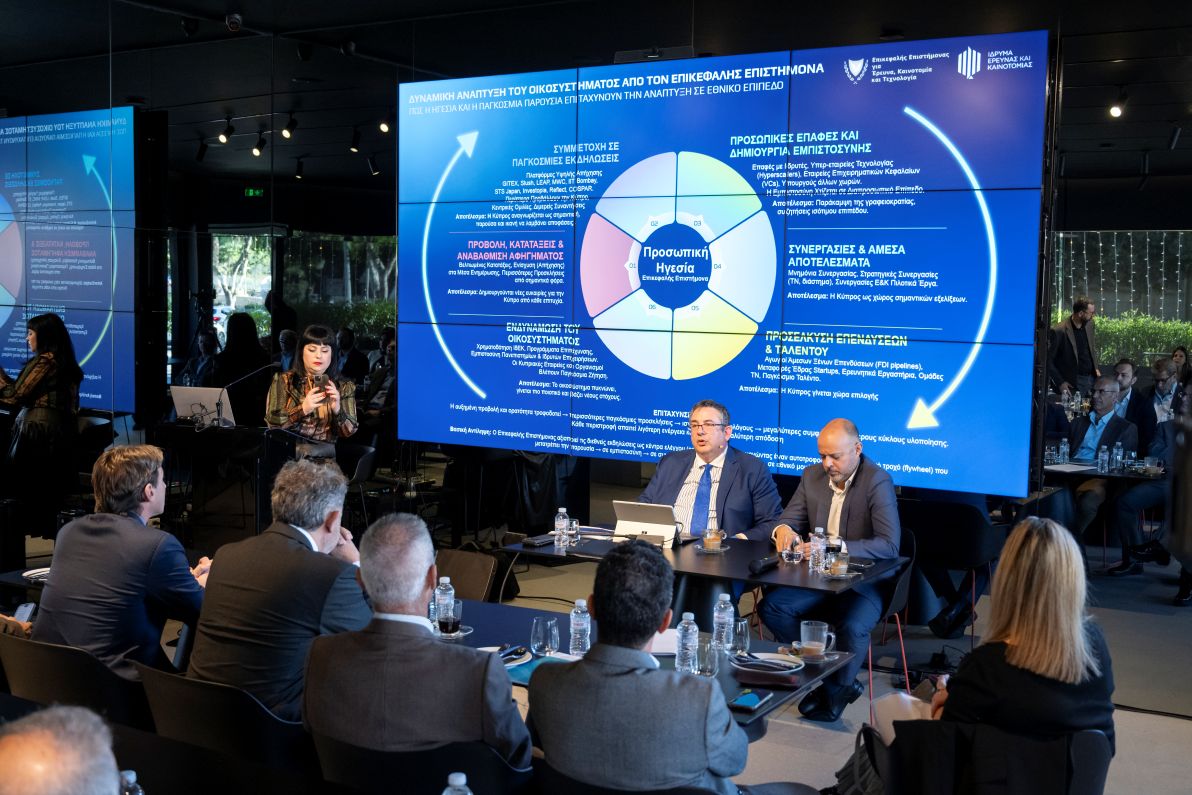
Research and innovation are now central to Cyprus’ economic model, with the country’s ecosystem markedly strengthened over the past two years, according to the Chief Scientist and chairman of the Research and Innovation Foundation (RIF), Demetris Skourides.
Speaking during a briefing with media representatives in Nicosia this week, Skourides said the progress reflected “measurable excellence” and a more outward-looking innovation policy, as Cyprus prepares for its Presidency of the Council of the European Union in 2026.
Reviewing his activities since assuming office in September 2023, Skourides said he had held around 1,700 meetings, both domestically and abroad, aimed at positioning Cyprus as a credible partner for advanced research and innovation.
In this context, he explained that these efforts focused on building structured cooperation with countries such as the US, Japan, Australia, India and Israel, alongside other technologically advanced economies, creating opportunities for Cyprus’ research base and its innovation-driven businesses.
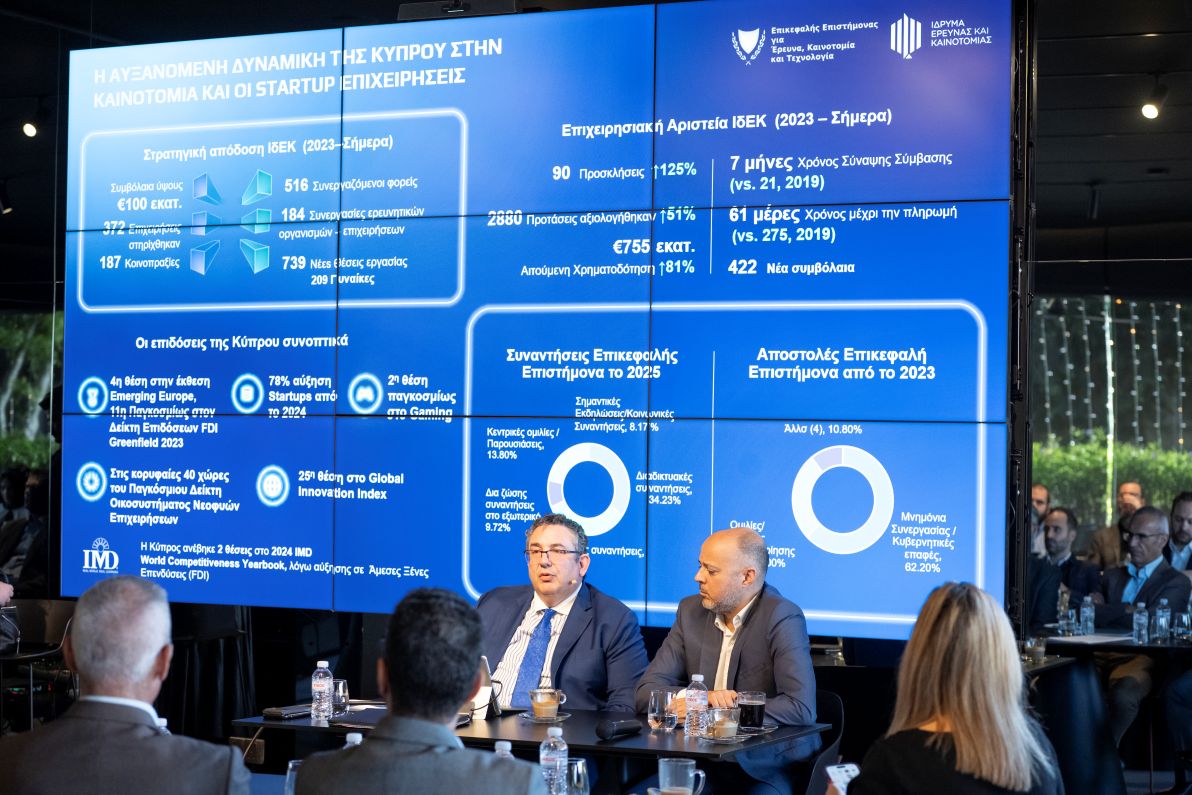
Against this backdrop, Skourides pointed to Cyprus’ improved standing in international rankings, noting that the country now ranks 25th in the Global Innovation Index, while the size of its startup ecosystem has climbed five places, according to StartupBlink.
More broadly, Cyprus, he added, is increasingly recognised as a reliable partner for international collaboration, a development he attributed to what he described as “extroverted innovation diplomacy”.
At the same time, targeted work is under way to map the national artificial intelligence ecosystem and strengthen links between research centres and commercial application.
“Our goal is for Cyprus to evolve into a dynamic and competitive economy, driven by research, scientific excellence, innovation, technological development and entrepreneurship,” Skourides said, adding that government policy and institutional actions were aligned with this direction.
In his role, the Chief Scientist acts as a strategic adviser to the President of the Republic and the Deputy Minister of Research, contributing to the country’s digital transformation and the assessment of emerging technologies.
At the institutional level, he also chairs the RIF, the national AI Task Force and the Committee of Research and Innovation Coordinators, represents Cyprus on the board of the EU’s Joint Research Centre and recently assumed the role of vice-president of the European Science Advisors Forum (ESAF).
International outreach has been a central pillar of his mandate. Working closely with the Deputy Ministry, Skourides helped shape a framework for signing memoranda of cooperation designed to add strategic value to Cyprus’ bilateral relations.
Within this framework, he supported agreements with Japan, India and the United Arab Emirates, including cooperation on artificial intelligence and partnerships with companies such as Khazna.
He also played a role in Cyprus joining the Artemis Accords, in attracting semiconductor firm Tenstorrent to the island and in strengthening cooperation with Invest Cyprus.
Turning to funding programmes, Skourides said RIF initiatives had delivered a tangible impact on both the economy and society.
Between 2023 and 2025, the foundation launched 90 calls for proposals and signed contracts worth €100 million, aligned with the four pillars of the national research and innovation strategy: world-class research and infrastructure, innovation in business, support for the young generation and internationalisation.
As a result, these programmes led to the creation of 739 new jobs in advanced sectors, including 209 held by women. In total, 372 businesses were supported, while 187 collaboration networks were formed, linking companies with research organisations.
In parallel, he emphasised €25 million in RIF investments in strategic research infrastructure, outlining five major facilities that received funding, while also stressing the emphasis placed on giving young researchers early leadership opportunities.
According to Skourides, 48 young scientists are now leading national research projects, supported by targeted schemes such as Vision ERC and ERC Fellowship programmes, which act as a bridge towards European research excellence funding.
Referring to support for high-growth companies, Skourides cited the Disrupt programme, a blended finance initiative through which RIF allocated €10.5m, leveraging a further €12.5m in private venture capital. The seven companies involved now have a combined valuation exceeding €150m and have created 58 new jobs.
“Cyprus’ research and innovation ecosystem has become strong and resilient,” Skourides said, adding that the country is achieving competitive success at European level in attracting funding.
On RIF’s internal performance, he said the foundation has evolved into a more flexible and efficient implementing body for state investment in research and innovation. Contract completion times have been reduced to seven months, from 21 months in 2019, while payment times have fallen to 61 days, from 275 days previously.
Gender equality also featured prominently. Skourides said reforms in postdoctoral funding programmes had significantly increased women’s participation and leadership, with female coordinators accounting for over 61 per cent of submitted proposals and more than 76 per cent of funded projects, compared with much lower rates in earlier calls.
These measures, he noted, are aligned with the European Commission’s AI White Paper and broader EU values.
Artificial intelligence, meanwhile, has been designated a strategic national priority. Skourides said the updated AI strategy would follow a human-centric approach, ensuring ethical and responsible use, while positioning Cyprus as a regional innovation hub.
He chairs the ten-member task force responsible for drafting and implementing the new framework.
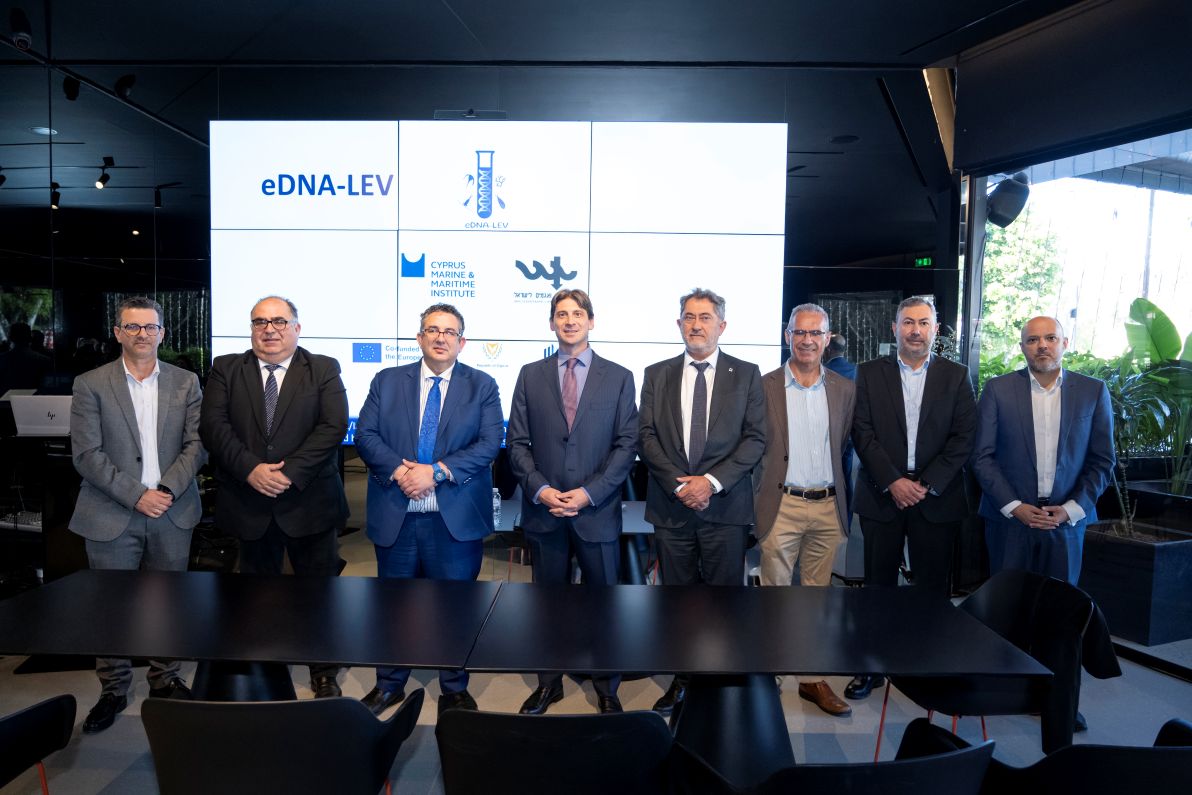
The briefing was attended by leading Cypriot researchers whose work and infrastructure have been supported by RIF.
They presented concrete examples of how national research funding has translated into scientific results, economic impact and Cyprus’ growing contribution to regional and international innovation.





Click here to change your cookie preferences