
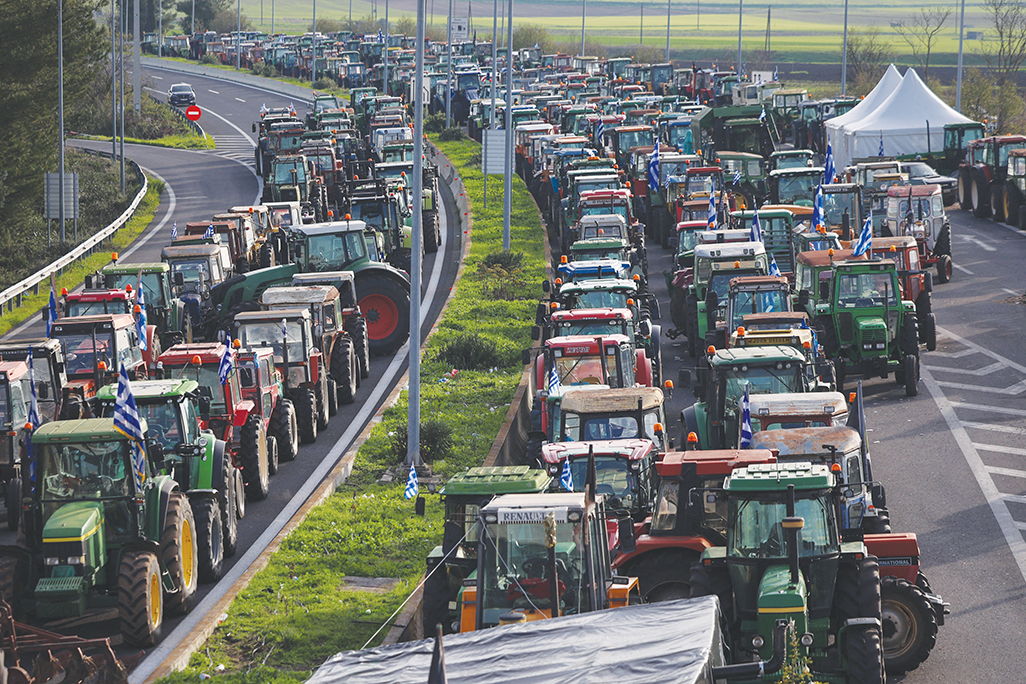
Greece promised farmers cheaper fuel and full compensation for future output losses on Wednesday in a last-ditch effort to persuade them to end demonstrations that have disrupted travel and hit some businesses.
Farmers have stationed thousands of tractors and trucks across Greece since late last year, obstructing major highways and intermittently blocking border crossings to protest high production costs and delays in farm aid payments.
The centre-right government of Prime Minister Kyriakos Mitsotakis, under fire over a farm aid corruption scandal, has urged farmers to halt the blockades and join talks.
But farmers have threatened more action unless their demands, including minimum prices for their products, are met.
Greek ministers admitted that while payments started a month later last year, in November, as EU approval was needed following the farm aid scandal, farmers got 3.82 billion euros ($4.46 billion) in aid and other payments, a 13% rise over 2024.
Agriculture Minister Kostas Tsiaras announced cheaper agricultural diesel and 160 million euros in additional aid to stock breeders and cotton and wheat producers this year.
“The government is exhausting any available means, is fixing decade-long ills and is introducing transparency rules to reboot the primary sector,” Tsiaras said.
Athens also promised quick amendment of rules to allow full compensation for any future damage to crops or livestock.
Greece’s neighbour Bulgaria said on Wednesday it has filed an official complaint over the blocking of border crossings which has caused “serious economic difficulties for Bulgarian transport companies, exporters and citizens” and violated EU rules for the free movement of people and goods.
EU agriculture ministers are meanwhile meeting in Brussels to discuss a free trade deal with South American bloc Mercosur.
The European Commission, backed by countries including Germany and Spain, needs a majority of 15 members representing 65% of the EU population to authorise the bloc to sign the deal, which would still need European Parliament approval.
Tsiaras said the deal should come with “clear and practical safeguard clauses” and fair play rules.





Click here to change your cookie preferences