
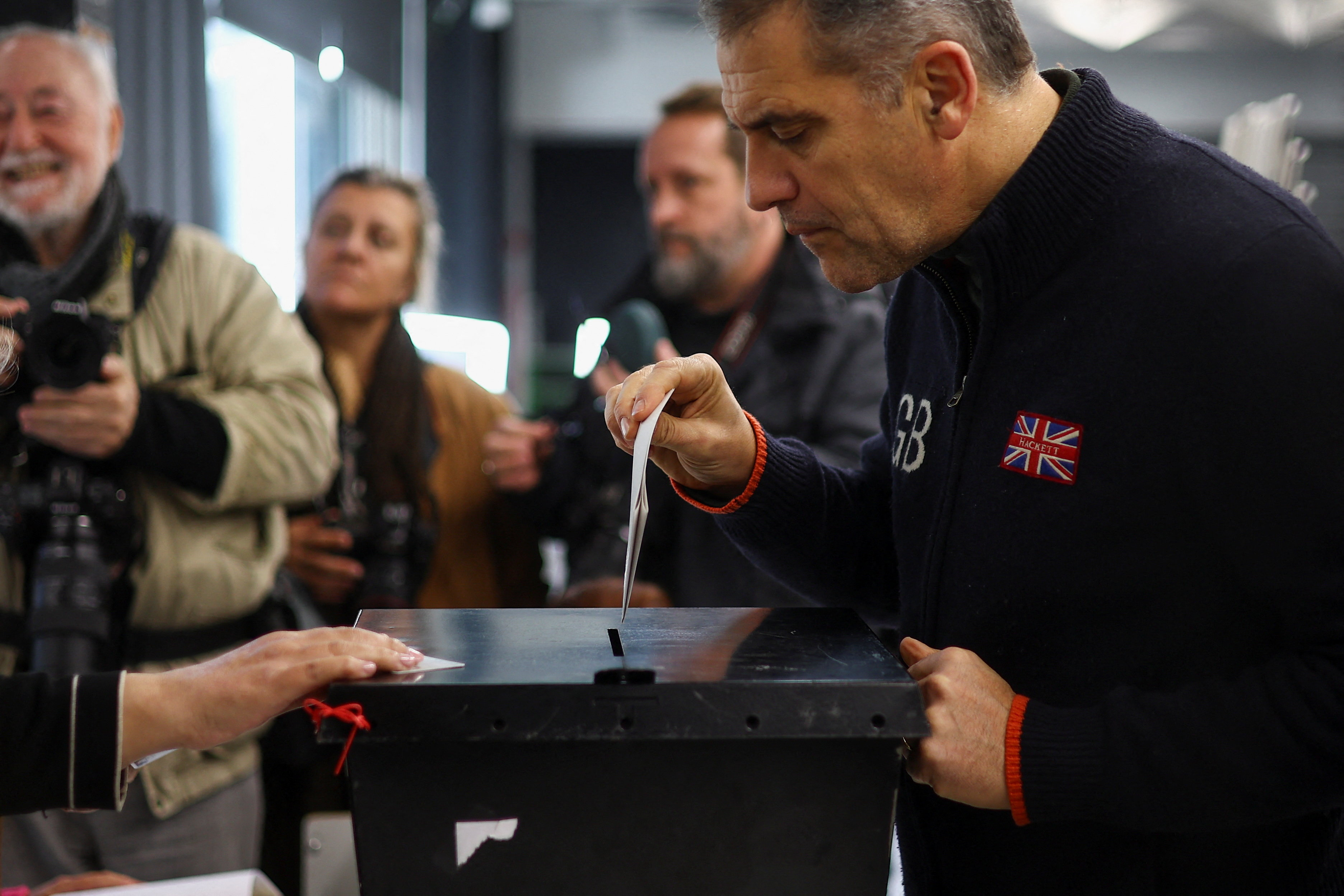
Portuguese voters queued at polling stations on Sunday to elect a new president, with opinion surveys showing three candidates, including the leader of the far-right Chega party, nearly tied for a spot in a likely top-two runoff.
In the five decades since Portugal threw off its fascist dictatorship, a presidential election has only once before – in 1986 – required a runoff, highlighting how fragmented the political landscape has become with the rise of the far-right and voter disenchantment with mainstream parties.
The presidency is a largely ceremonial role in Portugal but wields some key powers, including in some circumstances to dissolve parliament, to call a snap parliamentary election, and to veto legislation.
Around 11 million voters are eligible to cast ballots. Polling stations will close at 7 p.m. (1900 GMT), with exit polls expected at 8 p.m. and results released during the night.
The last pre-election opinion survey released on Friday by Pitagorica pollsters put Socialist Antonio Jose Seguro on 25.1%, followed by Chega leader Andre Ventura on 23%, and JoaoCotrim de Figueiredo, a member of the European Parliament from the right-wing, pro-business Liberal Initiative party, on 22.3%.
Last May, the anti-establishment, anti-immigration Chega, founded just about seven years ago, became the main opposition party in a parliamentary election, winning 22.8% of the vote.
Some other polls over the past week showed Ventura slightly ahead, but always within the margin of error, and all runoff projections point to him losing due to his high rejection rate of more than 60% of voters.
The Economist Intelligence Unit said in a recent note a Seguro-Ventura runoff “would be more straightforward given his (Ventura’s) limited appeal beyond his core base” while a clash involving Cotrim Figueiredo would be more finely balanced and harder to predict.
“While the presidency is largely symbolic, Ventura is the only candidate signalling a more interventionist approach, though EIU sees this as unlikely to translate into victory,” it said.
There are another eight contenders, including Luis Marques Mendes backed by the ruling centre-right Social Democrats and retired Admiral Henrique Gouveia e Melo who led the country’s Covid-19 vaccination campaign, each with more than 11%.

Click here to change your cookie preferences