
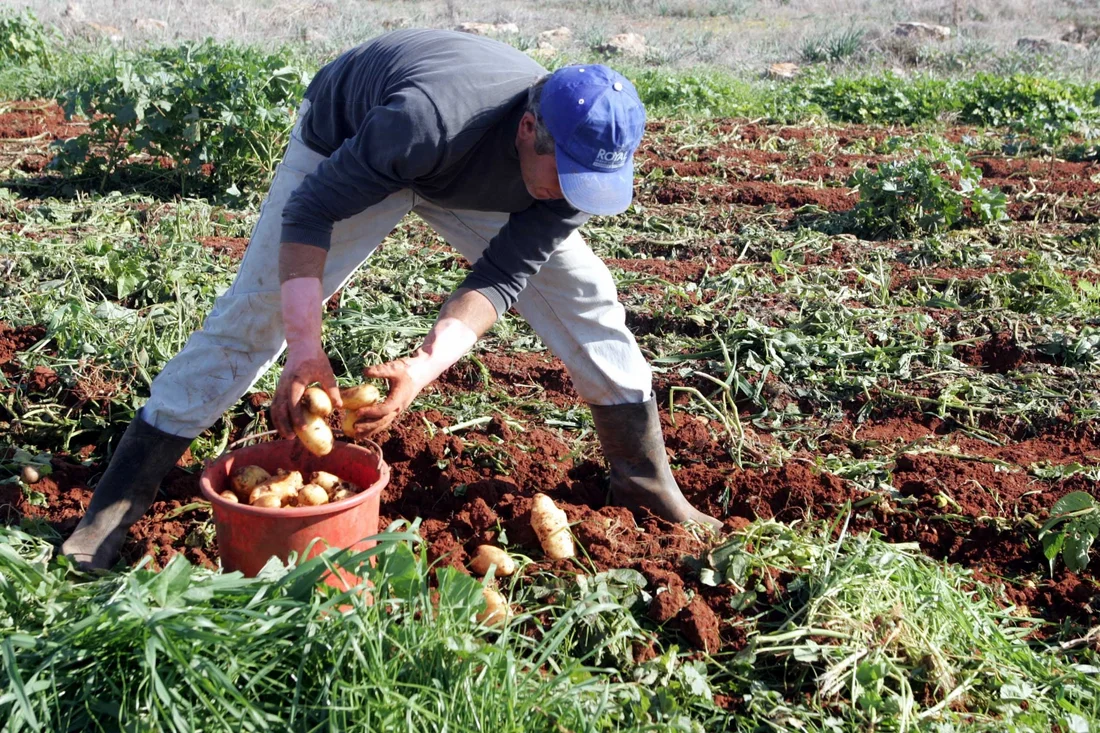
The Cypriot government did not carry out any impact study before agreeing to the trade deal signed last weekend between the European Union and South American trade bloc Mercosur, Trade Minister Michael Damianos said on Tuesday.
He told the House agriculture committee that the EU itself “has conducted studies”, but that regarding Cyprus itself, “the data set is small, and the impact does not seem to be great”.
This point was countered by Ecologists’ Movement MP Charalambos Theopemptou, who said that countries including Ireland, Belgium, the Netherlands, France and Austria all carried out impact studies of their own, and that “other countries are in the process of preparing such a study”.
Committee chairman and Akel MP Yiannakis Gavriel said that at previous committee meetings held to discuss the deal, “a common finding of everyone except the executive branch [was] that this agreement, for the state of Cyprus, is, if not disastrous, to the detriment of the primary sector”.
He then asked why Cyprus elected to vote in the agreement’s favour, saying that the island “does not export heavy industrial products” and pointing out that halloumi’s status as a product of protected designation of origin (PDO) was not referenced in the deal’s text.
Damianos replied that the agreement is “strategic” for the EU as a whole and that it “broadens the horizons of Cypriot businesses in a large market”.
“Cypriot consumers will benefit from imports with reduced tariffs, while the shipping, pharmaceutical and agricultural sectors will benefit from exports. Most imports from [Mercosur] countries concern soybean oil, concentrated juice, coffee and animal feed. Lower tariffs will benefit consumers,” he said.
He then added that the amount of trade between Cyprus and Mercosur states is “very limited”, and that “if the market is disrupted for any reason, there are economic and trade safeguard clauses which can act quickly”.
Gavriel then asked again about the existence of an impact study, and Damianos said that “the EU has the data for Cyprus and says how it will be affected”.
“Impact studies are not conducted for such agreements. The EU has conducted studies,” he said.
Gavriel warned that Cypriot farmers “will be faced with unfair competition from Latin America”, with Damianos replying that the deal “is an agreement that, no matter what the position of the Republic of Cyprus would be, would have passed”, before saying that “broader benefits are expected for the Cypriot consumer” as a result.
After the meeting, Gavriel said that “unfortunately, we found that without an impact study, Nikos Christodoulides’ government stood in favour of the agreement and against consumers, against the primary sector”.
“The government put a nail in the coffin of the primary sector and will supply us with products of dubious quality from Latin America,” he said.
Disy MP Charalambos Pazaros, meanwhile, said he had left the day’s session with doubts about “what the government intends to do to protect halloumi, peaches, kiwis and cotton”.
“Is there a protection net against unfair competition? How will public health be ensured? The agreement brings back pesticides which had been banned in the EU,” he said.
Diko MP Christos Orphanides took a somewhat different line, saying that the deal “ensures benefits to Germany’s failed economy”.
“Everything is done for the interests of Germany and the failed economies of the EU. They are using all of us to play their game,” he said, before also making reference to the issue of pesticides and warning that Cypriot producers in some sectors may be undercut.
“The market will be flooded with cheap honey, for example, with which local producers will not be able to compete. Local production will be hit in terms of both animal and plant products,” he said.


Click here to change your cookie preferences