
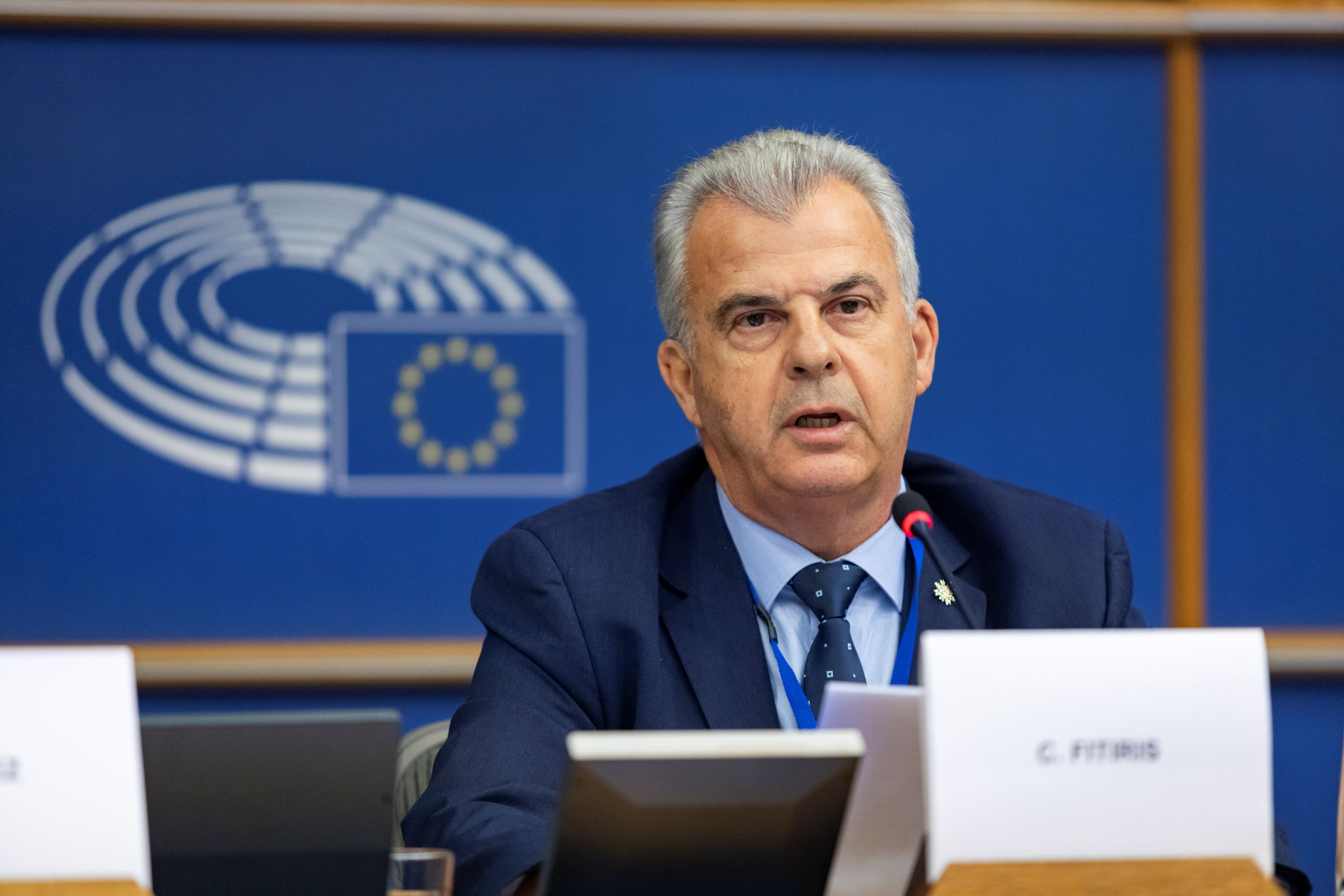
Tackling organised crime will be a central priority of Cyprus’s EU council presidency, justice minister Costas Fitiris told the European Parliament on Tuesday, warning that criminal networks are evolving at an unprecedented pace.
Presenting the presidency’s priorities to the parliament’s justice committee, Fitiris said Cyprus was assuming the role “with pride but also a high sense of responsibility”, at a time of growing social instability across Europe.
“Organised crime is evolving at an unprecedented pace and requires an equally dynamic response,” he said, stressing the need for “a comprehensive, multi sectoral strategy capable of adapting to the changing nature of criminal networks”.
Fitiris said the presidency would push for concrete action through operational cooperation and legislative initiatives, while strengthening collaboration with third countries and the private sector.
“Without strong international and cross sectoral cooperation, we cannot be one step ahead of criminal networks,” he said.
A key focus will be the recovery and confiscation of illicit assets, which the minister described as one of the most effective tools against organised crime.
“The most effective way to combat organised crime is to target the financial pillars of criminal networks,” he said, adding that asset recovery measures strike “at the seeds of crime”.
He warned that criminal groups are increasingly infiltrating the legitimate economy and using sophisticated money laundering methods, describing the EU’s asset recovery and confiscation directive as “a powerful tool in the hands of authorities”.
He said its progression into national law must be completed by November 2026.
Fitiris underlined the importance of Europol, saying the Cyprus presidency would work to ensure the upcoming review of the agency’s mandate is “well documented and responds to the real operational needs of member states”.
Turning to drug policy, Fitiris said an effective approach must combine action against trafficking with measures to reduce use and harm.
Referring to domestic drug policy, he said “detention must remain a measure of last resort”, particularly for minors and young users, adding that diversion towards health services and treatment can deliver positive results for society.
He also said the presidency would work towards a swift political agreement on legislation to prevent and combat child sexual abuse, warning that delays risk undermining protection for children.
Fitiris said restoring a fully functional Schengen area without internal border controls depends on the rapid implementation of agreed measures.
He warned that violent extremism continues to pose a serious threat, pointing to a rise in radicalisation and recruitment of minors, with ‘jihadism’ remaining the main concern for member states.
He added that new technologies, including artificial intelligence and the internet, are reshaping the threat landscape.
“The threat is changing and we must constantly adapt our tools and policies,” he said.
Concluding, Fitiris said “security, justice and human rights are not conflicting goals, they are interrelated conditions for a strong and democratic Europe”.





Click here to change your cookie preferences