
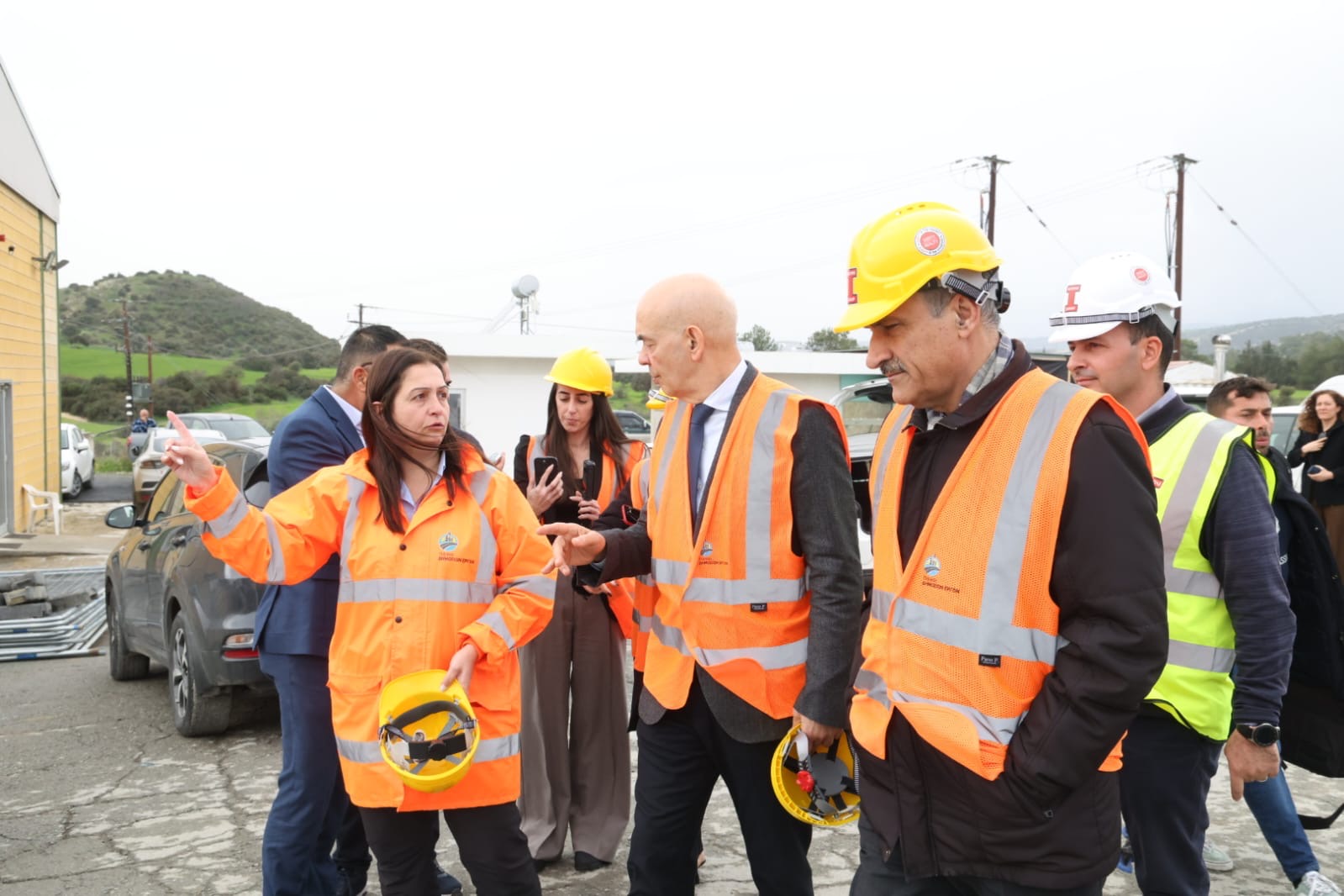
The first phase of the Limnes migrant centre was completed, as announced by Transport Minister Alexis Vafeades during a site visit on Friday.
Speaking after touring the facility, Vafeades said the Limnes centre, together with supporting infrastructure, forms a key part of the state’s migration management framework.
“The centre is a project that will support the country’s efforts to manage migration in a practical way,” he said.
He described the project as one of the largest public works currently underway in Cyprus, with a total cost of about €85 million.
“Very few projects of this size are being implemented in Cyprus,” he said, adding that construction began in August 2023 and had progressed according to the revised timetable.
The second phase is expected to be completed in April, with the final phase scheduled for September.
Vafeades credited the department of public works for delivering the first phase on time, citing coordination with state services and the local community.
“This is an achievement that required close cooperation. We are moving forward so the project can be delivered fully and serve the needs of the country,” he said.
He confirmed that the first phase will become operational immediately, albeit with limited capacity.
“The structure is being staffed, there is an administrative framework and a small number of residents,” he said, adding that capacity would increase significantly once the second and third phases are completed.
By September, the centre is expected to be fully operational.
The minister was met at the site by community leaders from Anglisides and Menoyia.
The visit prompted criticism from Anglisides community leader Elena Sakkada, who said she had received no warning of Vafeades’ visit and had instead been informed through social media.
“I am here to express my indignation and sadness that our community continues to be ignored,” she said.
“We were promised compensatory projects, but we have seen nothing, even though the work is nearing completion.”
“The safety of residents is non-negotiable for us,” she said, adding that the community would continue to press authorities on the issue.
Responding to the criticism, Vafeades retorted that compensatory projects do not fall under the remit of the transport ministry.
“I have explained that this is not my responsibility,” he said, while assuring the community council that he would examine where delays had occurred and how issues could be addressed.
He also said he would raise concerns over safety measures with the competent authorities.
“It is essential that residents feel secure and that all necessary measures are taken,” he affirmed.
The migrant centre will have a total capacity of around 1,800 people once fully completed.
Approximately 800 places will be allocated to individuals whose applications for international protection have been rejected at second instance and who are awaiting repatriation, as well as those who have voluntarily requested return.
A further 1,000 places will accommodate applicants whose claims have been rejected at first instance.
The centre includes shared service areas, spaces for activities, sports facilities, places of worship, communal gardens, a playground and parking areas.
It is co-financed by the state as well as the EU’s asylum and migration fund.
“The creation of infrastructure like this is a practical expression of the state’s commitment to managing asylum and migration more effectively,” Vafeades remarked, adding that the remaining phases are progressing according to schedule.



Click here to change your cookie preferences