
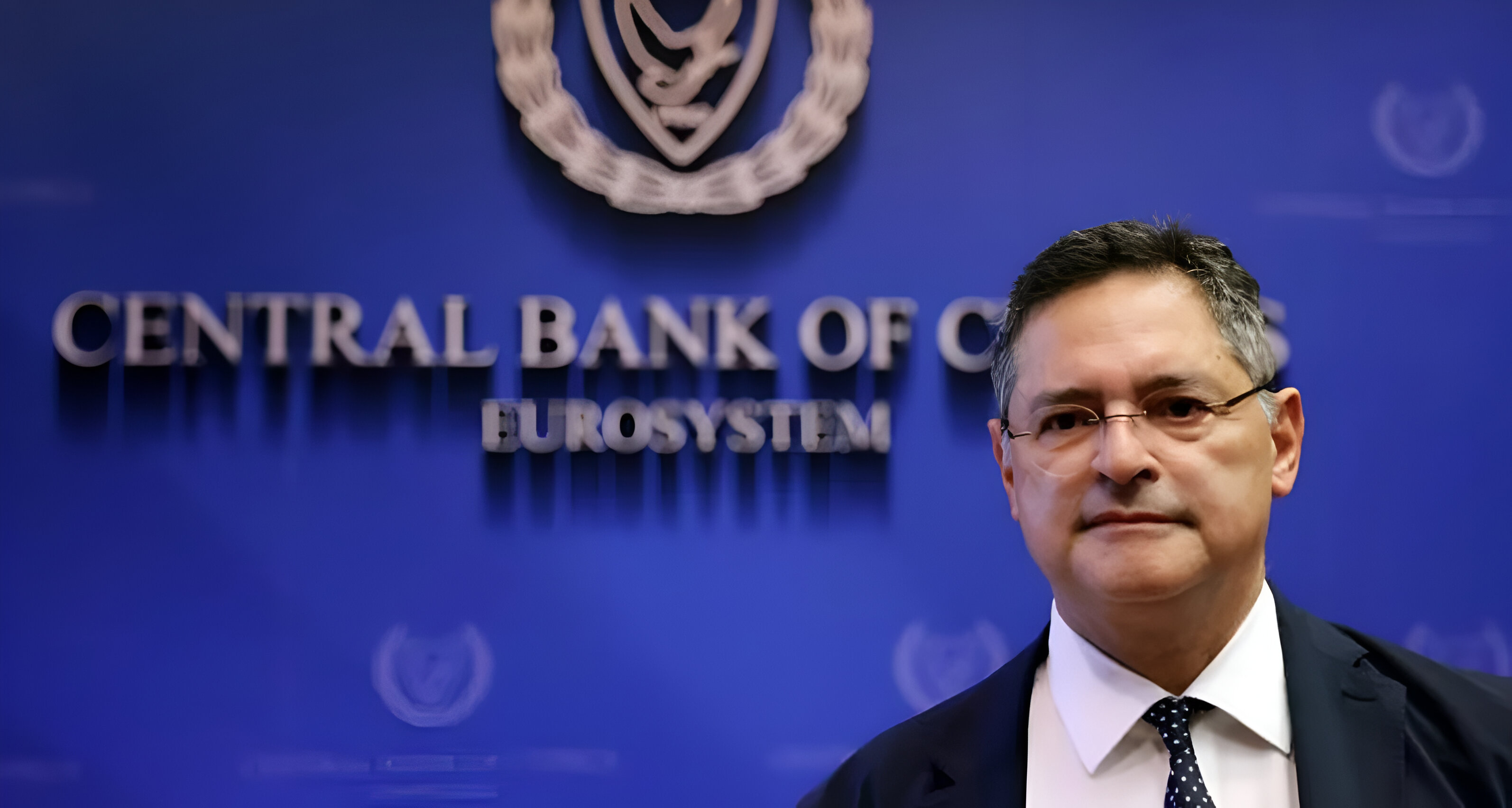
Central Bank of Cyprus (CBC) governor Christodoulos Patsalides on Tuesday argued that productivity must be placed at the heart of every reform as Cyprus and Europe confront slowing growth and persistent structural pressures.
Speaking during a conference of European Independent Fiscal Institutions held in Nicosia, the governor underlined that productivity gains strengthen growth potential.
In addition, he emphasised that reforms lacking a productivity focus risk falling short of delivering durable economic outcomes.
Addressing the conference, titled “Fiscal management in times of change: initial responses”, he mentioned that Europe has endured an exceptional sequence of shocks in recent years.
He recalled that the European Central Bank’s (ECB) decisive interest rate increases to curb inflation had carried a cost, warning that “increased debt and reduced fiscal space are emerging at a time when Europe urgently needs investment in defence, technology and the green transition”.
“High debt and strained public finances could trigger a repricing of sovereign risk and create pressure in global bond markets,” Patsalides cautioned.
Moreover, he acknowledged that European economies have demonstrated resilience, yet stressed that growth remains subdued and structural challenges persist.
The CBC chief pointed out that the current environment is exerting further strain on Europe’s growth model, heightening the urgency of policy choices.
“How should fiscal policy respond to these challenges,” he asked, before asserting that the answer is already well understood.
“Governments should prioritise productivity-enhancing investments, targeted spending in areas that improve competitiveness, support potential output and strategic priorities, while at the same time consolidating their public finances,” he maintained.
He further highlighted that the necessary instruments are already in place, referring to the new EU economic governance framework and the bloc’s updated fiscal rules.
He explained that these rules allow member states to extend fiscal adjustment periods by up to seven years, provided they commit to public investment and structural reforms that reinforce productivity and long-term growth.
“Studies have shown that increasing spending on infrastructure and education, while keeping overall public expenditure at stable levels, could lead to significant long-term growth benefits,” Patsalides stted.
He added that such measures are also relevant for central banks, as a low-growth environment can complicate their task.
“It is argued that reforms which raise potential output not only facilitate debt reduction but also reduce inflationary pressures in the long run,” he emphasised.
He urged Europe to collectively confront structural barriers to growth and advance initiatives capable of unlocking development potential.
“In this direction, it is time to complete the Banking Union, advance the Savings and Investments Union and strengthen the single market, including through the integration of financial markets,” he asserted.
Furthermore, Patsalides said that removing barriers would allow new technologies to scale up, citing the International Monetary Fund, according to which internal barriers within the single market are equivalent to a 45 per cent tariff on goods and 110 per cent on services.
He contended that the so-called 28th regime should instead be implemented, enabling innovative companies to operate, trade and raise financing seamlessly across the EU, as occurs across the Atlantic.
Turning to Cyprus, he stated that stronger GDP growth and sizeable fiscal surpluses have placed public debt on a steadily declining trajectory.
“The authorities should make use of the favourable fiscal position to channel investments that enhance productivity and long-term growth,” he urged.
“Every reform should place productivity at its core, as productivity gains strengthen growth potential,” Patsalides reiterated.
He added that Cyprus has an additional incentive to maintain adequate fiscal buffers, as it is a small, open economy vulnerable to external shocks.
Additionally, he stressed that fiscal discipline on its own is not sufficient.
“We should maintain fiscal buffers for adverse times, but spend more intelligently, invest in the green and digital transition and promote reforms that strengthen productivity and long-term growth,” he advocated.
“We need to strike a balance between preserving fiscal buffers and not stifling growth,” he continued.
“Otherwise, we risk what has been described as fiscal stagnation, namely prioritising the accumulation of buffers at the expense of productive investment,” Patsalides warned.
The governor concluded by pointing out that fiscal councils have a role to play by identifying vulnerabilities and strengthening transparency and accountability in fiscal planning.





Click here to change your cookie preferences