
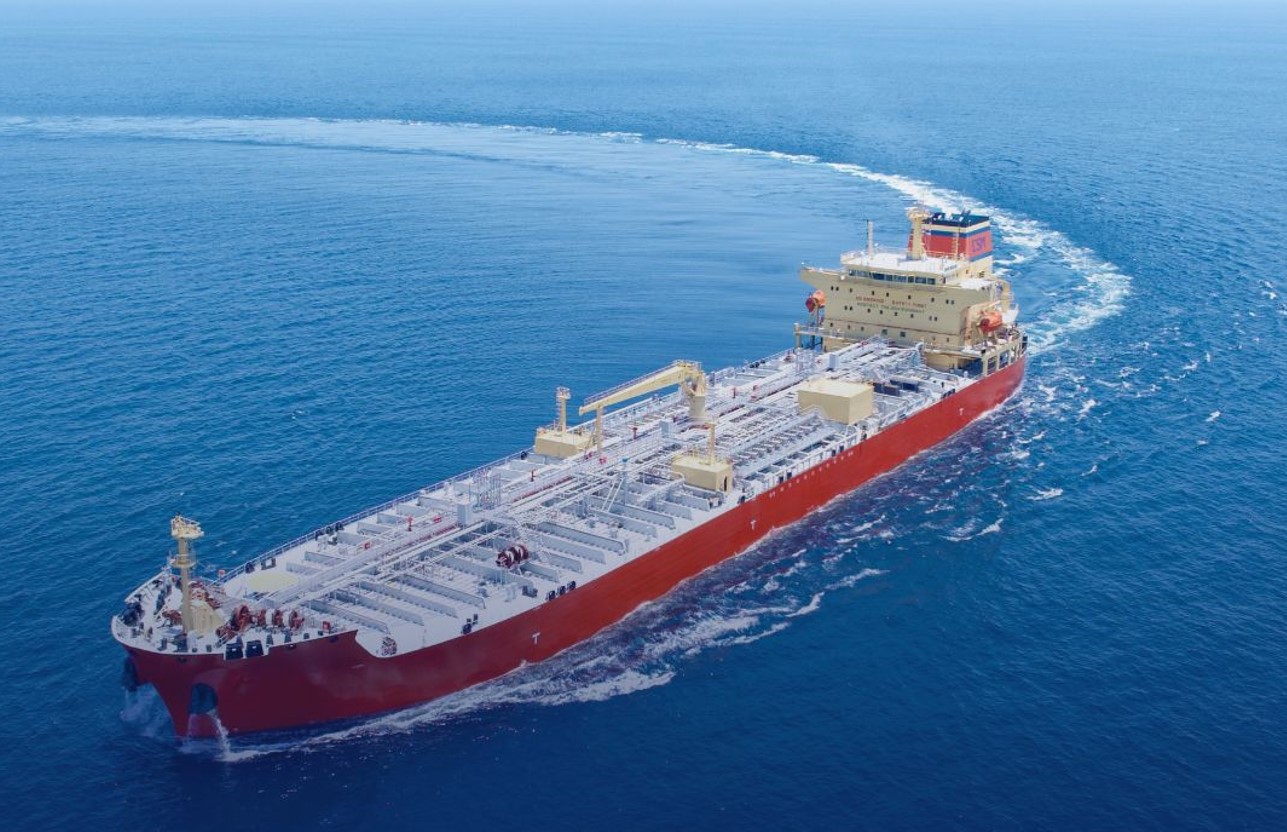
Columbia Group president and chief executive Mark O’Neil said in Athens this week that the cost of creating ‘smart vessels’ has fallen dramatically in recent years, making digitalisation a financially viable and operationally compelling option for shipowners and managers.
Speaking at a Capital Link conference in Athens, he said one of the biggest barriers to digital adoption in shipping today is no longer technology itself, but a lingering misconception around cost.
“There is still a perception in the market that digitalisation is expensive,” O’Neil said, adding that “that may have been true in the past, but it is not true today. The economics have changed completely.”
According to its statement, advances in sensors, cameras and optimisation software have significantly reduced the cost of making vessels fully digital.
Where similar upgrades once required investments of around $50,000 per vessel, comparable systems can now be installed for closer to $5,000, while also delivering higher-quality data and greater functionality.
“You can now make a vessel totally smart for a fraction of what it used to cost,” he said, noting that “in many cases, the return on investment can be achieved in weeks through fuel savings and operational efficiencies alone.”
Despite this, outdated cost assumptions continue to slow adoption across parts of the industry, although perceptions often shift once owners see the current economics.
Beyond cost, he also identified training and system complexity as key challenges, explaining that early digitalisation efforts produced fragmented solutions requiring separate platforms and training programmes.
“Our people are extremely busy,” he said, adding that “they want integrated platforms with a common interface, where you train once and deploy multiple tools. Standardisation is critical if digital solutions are to be used effectively.”
Meanwhile, he emphasised the role of smart-vessel technology in decarbonisation, particularly as the industry reassesses the pace and practicality of alternative fuels. While alternative fuels will play a role, very few vessels currently operate on them as a single fuel source.
“What we are seeing instead is a strong focus on optimisation,” he said, adding that “using existing assets more intelligently can deliver carbon reductions of up to 30 percent or more, regardless of fuel type”.
In that context, optimisation technologies such as the OneLink platform provide a realistic and scalable pathway to emissions reduction while also preparing the ground for future solutions such as carbon capture, he said, noting that stronger governance frameworks are still required to manage data and operational risk.
“Shipping will always be a people business,” O’Neil concluded, adding that “technology should support decision-making, not replace it. With today’s economics smart vessels are no longer a future ambition, they are a viable reality.”





Click here to change your cookie preferences