
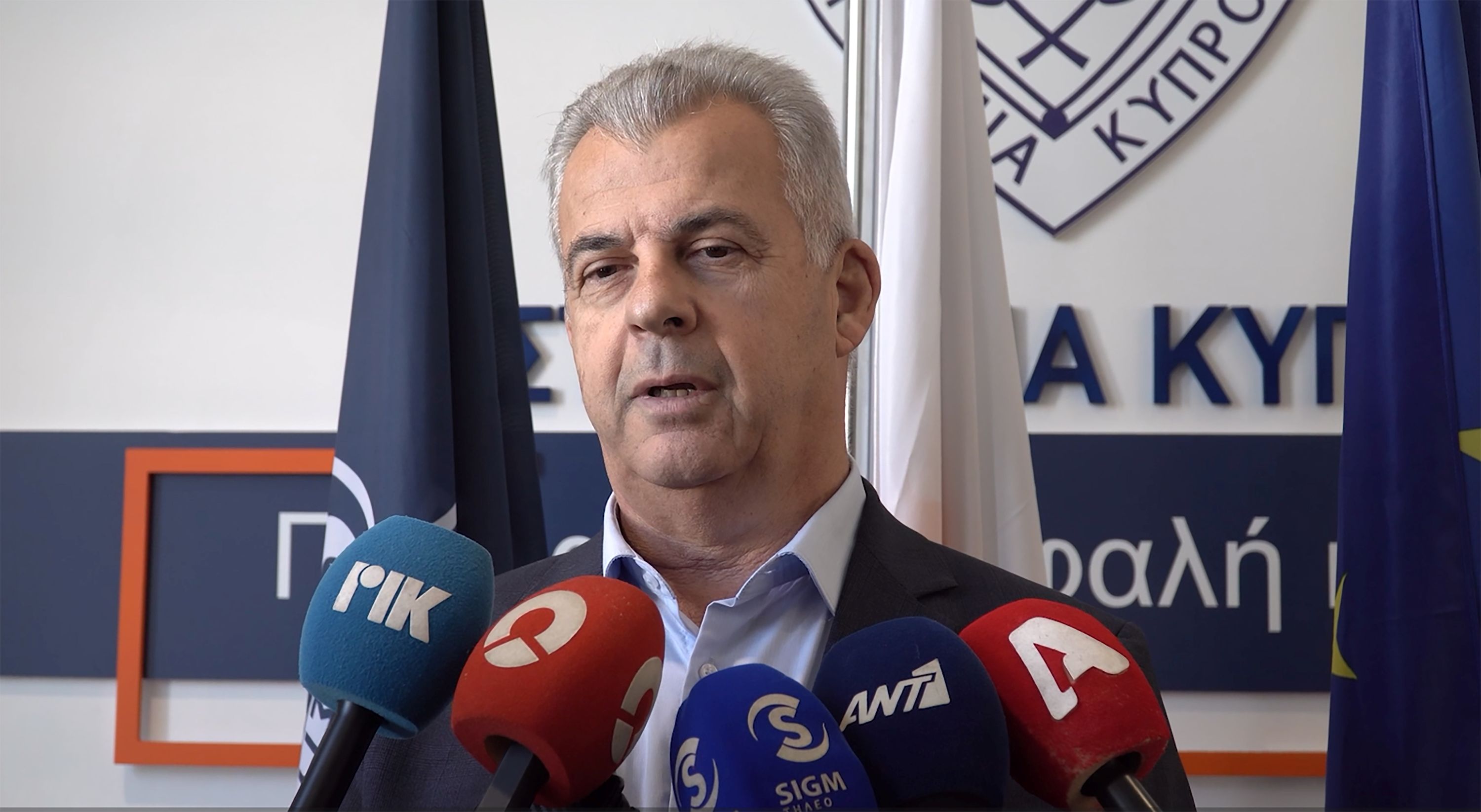
Justice Minister Costas Fitiris has said authorities are focusing their efforts on dismantling the leadership of organised crime groups, stressing that law enforcement knows who they are and is applying sustained pressure.
“Our target is the heads of the gangs,” he said in an interview with Kathimerini.
“They know how to protect themselves, which is why they use others to do all the dirty work, leaving themselves out of the firing line. But we know who they are, we are exerting constant pressure and we are waiting for them.”
Fitiris said his primary priority as justice minister is to strengthen peoples’ sense of safety and uphold the rule of law, adding that this requires tackling organised crime and all forms of delinquent behaviour.
Responding to questions about whether there is any police cover-up, the minister described the police as the “bastion protecting society and the Republic”, insisting there can be no “back doors or traitors”.
He acknowledged that isolated incidents of corruption may occur but said they do not reflect the overall picture of the force.
He added that organised crime seeks to build connections within state services, including the land registry and the tax department, noting that the state must apply monitoring mechanisms to address such issues.
The minister also revealed that a special task force comprised of senior police officers and officials from competent state departments responsible for auditing assets and financial data, has been set up.
The unit follows a “follow the money” methodology, he said, and will play a key role in combating organised crime and money laundering.
According to the minister, the task force has the authority to seize assets and “ill-gotten gains” that cannot be legally explained or justified by their owners declared income.
The service will also be responsible for collecting and analysing intelligence, carrying out lawful surveillance once relevant legislation is passed and cooperating with other services and international bodies.
Its official operation is expected to begin in March, he added.
Asked about the transfer of Simon Aykut to Israel, Fitiris said the move will take place under a multilateral international agreement to which the Republic of Cyprus, Israel and other states are parties.
A crucial condition for approval, he said, is the full acceptance of the sentence by the receiving state. The Republic has received written confirmation from Israel’s justice ministry that Aykut will indeed serve the remainder of his sentence there.
Regarding the case of social media personality Ioanna Photiou – better known by her alias ‘Annie Alexui’ – the minister said that an “institutionally appropriate procedure” is being sought to collect the evidence she claims to possess, in order for investigative processes to be launched into all related matters.
Earlier in the week, Fitiris said that there are “ways to get around” the arrest warrants put out in her name, so as to allow her to make a statement to the police regarding accusations she has made against public figures.
The most notable of the accusations made by Photiou relate to suspended Paphos mayor Phedonas Phedonos, whom she has accused of domestic abuse.





Click here to change your cookie preferences