
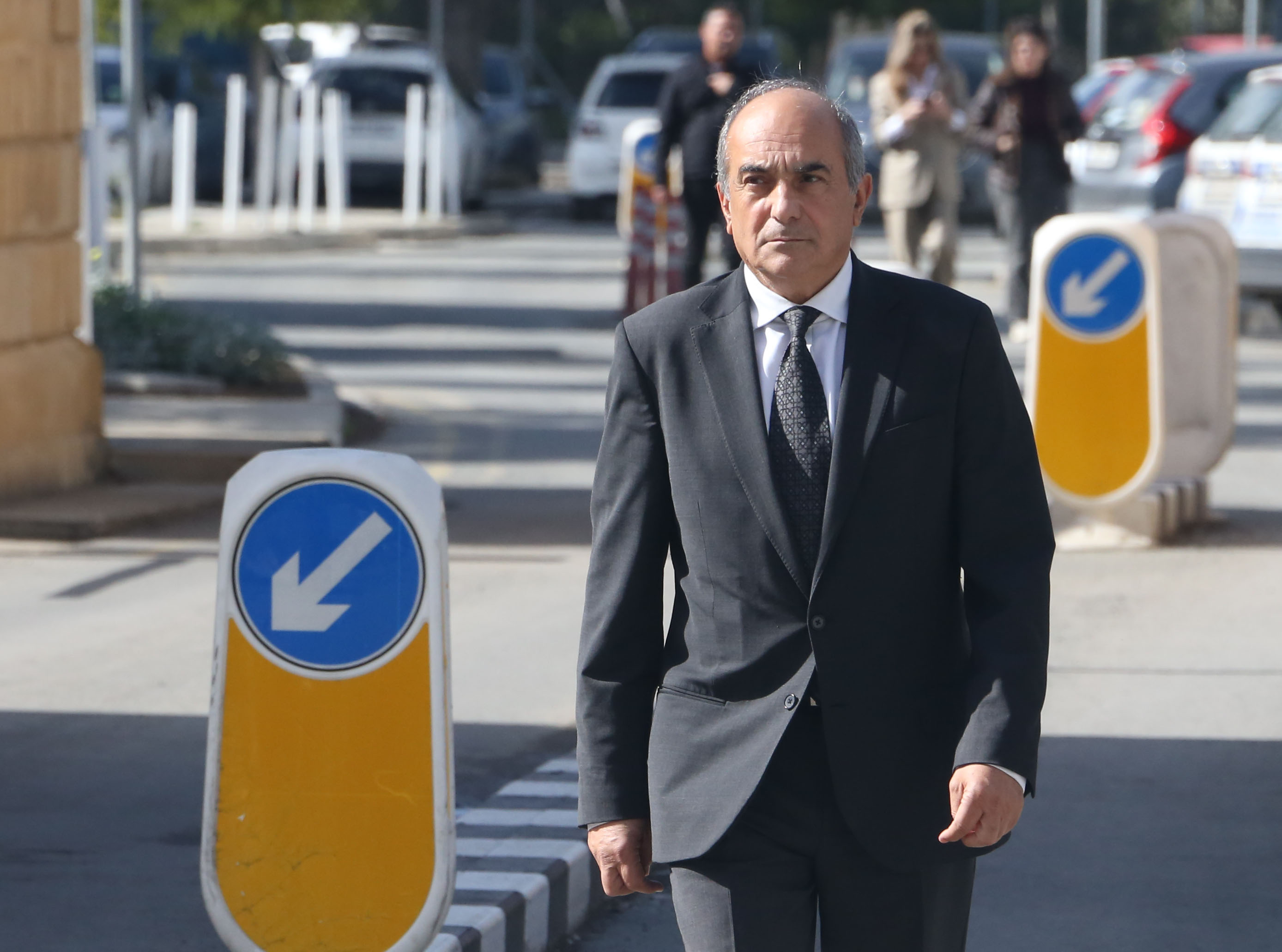
The legal service said on Tuesday it would decide within days how to proceed following the acquittal of former house president Demetris Syllouris and former MP Christakis Giovannis in the high-profile Al Jazeera golden passports case.
“Both the majority and the minority verdict will be studied and within the next few days we will make our decisions,” a legal service official said.
The court, by a 2-1 majority, acquitted both men of all charges linked to alleged corruption in naturalisations under the Cyprus investment programme, which came under international scrutiny after an undercover investigation by Al Jazeera in 2020.
The ruling prompted fierce outrage, with Volt describing the outcome as an “institutional failure” and calling on attorney general George Savvides and his deputy Savvas Angelides to assume responsibility and resign.
The acquittals mark the end of criminal proceedings that followed the broadcast, which showed senior figures apparently willing to assist a proxy for a fictitious investor with a criminal background to obtain Cypriot citizenship.
The broadcast triggered an inquiry and ultimately the withdrawal of the investment-for-citizenship scheme.
It also led to a criminal investigation ordered by the attorney-general, lasting more than a year and extending abroad, before charges were filed in 2022.
In its majority decision, the three-judge panel found that none of the three charges brought against Syllouris and Giovannis had been proven beyond reasonable doubt.
Presiding judge Nikolaos Georgiades made clear at the outset that the Al Jazeera video itself was not part of the evidence before the court.
Due to the fact that the documentary was never formally submitted, its content was not taken into account in deciding the case, with the court stressing that it could rule only on admissible testimony and documents.
The charges related to alleged trading in influence and conspiracy to defraud the republic in connection with two naturalisation cases.
In the first, involving the naturalisation of Zeyne Armous, daughter of investor Ali Armous, the prosecution alleged that the defendants accepted or sought a financial benefit in return for exerting improper influence over public officials.
The court rejected this, finding no evidence of corrupt intent or improper benefit.
The second charge, conspiracy to defraud the republic, was also dismissed.
The third charge, which produced the lone dissenting opinion, concerned allegations that the defendants sought to influence officials in the interior ministry in relation to an investor named Nikolai Gornovski, including claims about exemptions from residence requirements and the handling of a property transaction.
The majority found that the evidence raised significant queries but did not cross the threshold for criminal liability.



Click here to change your cookie preferences