
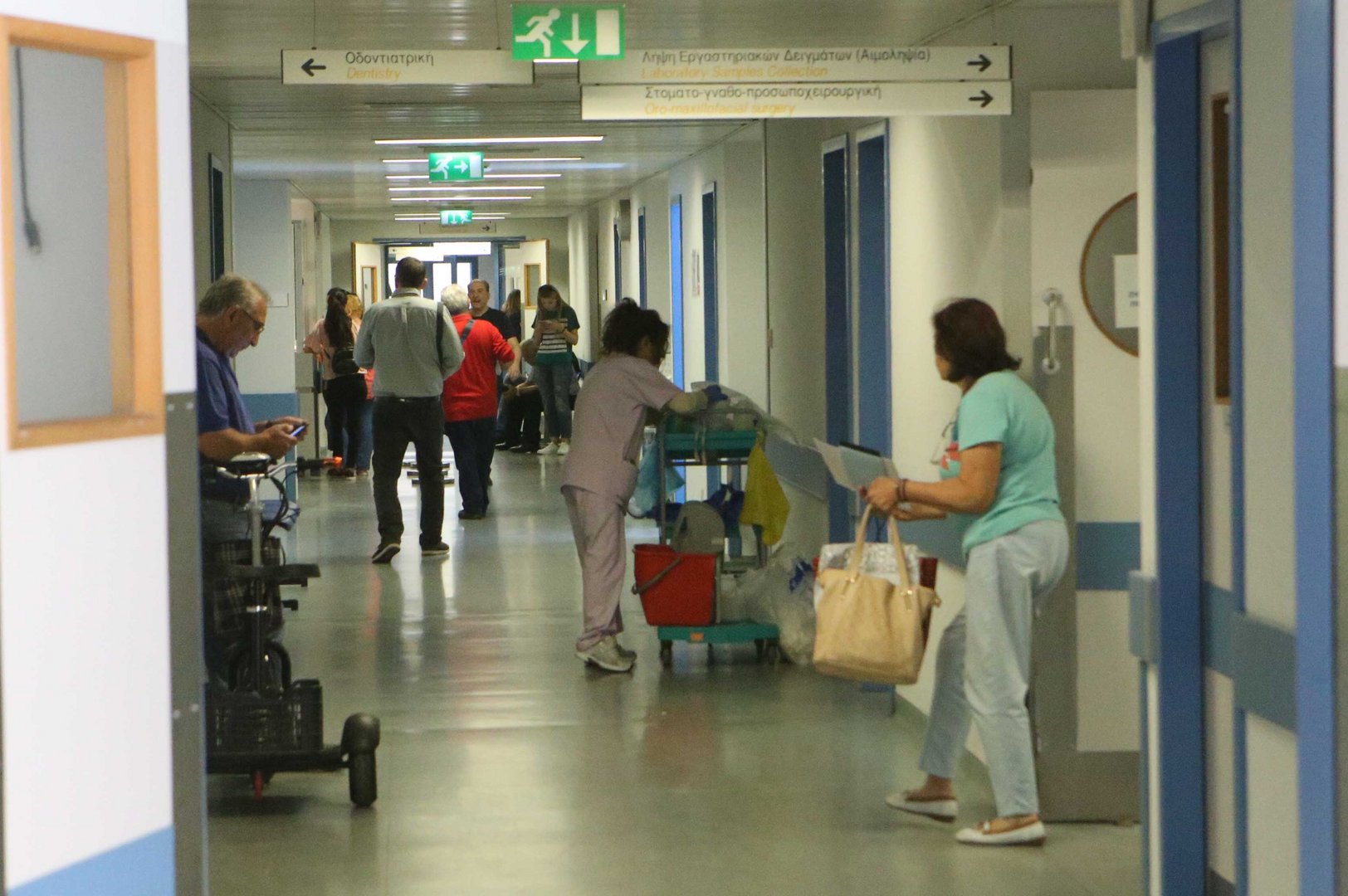
MPs on Thursday passed the 2026 budget for the Health Insurance Organisation (HIO) but still grumbled about the state of public healthcare.
The HIO is the agency administering Gesy – the national, single-payer healthcare system.
For this year, the HIO’s budget is balanced at €2.13 billion. Cash reserves as at January 1 came to €652 million.
Of the €2.13 billion in expenditures, €2 billion concern Gesy.
The budget bill passed by a unanimous vote in the House.
In remarks before the vote, Diko MP Panicos Leonidou noted the steady increase in the HIO’s balance sheet throughout the years. This growth, he stressed, should go hand in hand with a commensurate upgrade in the services provided.
However, public healthcare still experiences problems – long waiting times for patients, sub-par preventative medicine, as well as over-charging for some services.
Edek’s Marinos Sizopoulos said that in the space of a decade, the HIO’s budget has more than doubled – but the quality of services has not kept up.
Greens MP Charalambos Theopemptou highlighted the lack of transparency in payments. Contrary to EU-wide guidelines and practices regarding transparency in the public sector, to this day the HIO does not publish data “on who is getting paid, where the money goes, and when”.
Disy’s Savia Orfanidou said the accumulated €650 million cash buffer might appear substantial, but in reality it covers needs for just a few months.
A recent ‘risk report’ described 24 major risks to Gesy.
One potential risk related to funding, although the report found that the cash reserve was satisfactory. The amount is sufficient to cover needs for about four-and-a-half months – assuming no contributions –compared to the internationally accepted threshold of three months.
According to an actuarial report, Gesy will continue to post robust cash reserves up until the year 2032.
Another risk identified related to the payment of compensation to Gesy healthcare providers – chiefly personal doctors – for beneficiaries who may not be residing in the Republic.
All persons with their usual residence in Cyprus and contributing to Gesy via their salaries are beneficiaries.
The compensation to personal doctors is calculated based on how many patients are enrolled with them.
However, the report identified a blind spot – the HIO does not have updated data on persons departing Cyprus and who therefore should no longer be Gesy beneficiaries.
In addition, the software system used by the HIO is problematic – it is too slow to process prescriptions, often leaving patients in the lurch.




Click here to change your cookie preferences