
Authorities have placed large swathes of the Larnaca district under strict quarantine after veterinary services confirmed that the epicentre of a foot-and-mouth disease outbreak lies in Oroklini, with linked infections in nearby Livadia.
Laboratory results confirmed that two large sheep and goat units in Oroklini are at the centre of the outbreak, prompting the immediate activation of containment protocols.
Veterinary services said clinical findings indicate the virus had been present in the Oroklini units for at least two weeks before the first confirmed case was detected at a cattle farm in Livadia.
All livestock at the affected Livadia unit, totalling about 300 animals, are being culled under prescribed sanitary procedures, with carcasses to be either buried or cremated at designated sites once preparations are completed.
All products from the farm, including milk and meat, have been seized.
Authorities said any additional positive case detected within the three-kilometre protection zone would automatically lead to the culling of all animals at that premises.
“The protocols were activated immediately to prevent any further spread,” a veterinary services official said, describing the incident as “serious but manageable”.
Twenty-three livestock premises within the containment zone have been placed under strict quarantine, with daily sampling and inspections under way.
The movement of animals and animal products is prohibited without special authorisation, while roads leading to livestock areas in Livadia and Oroklini have been closed with police roadblocks.
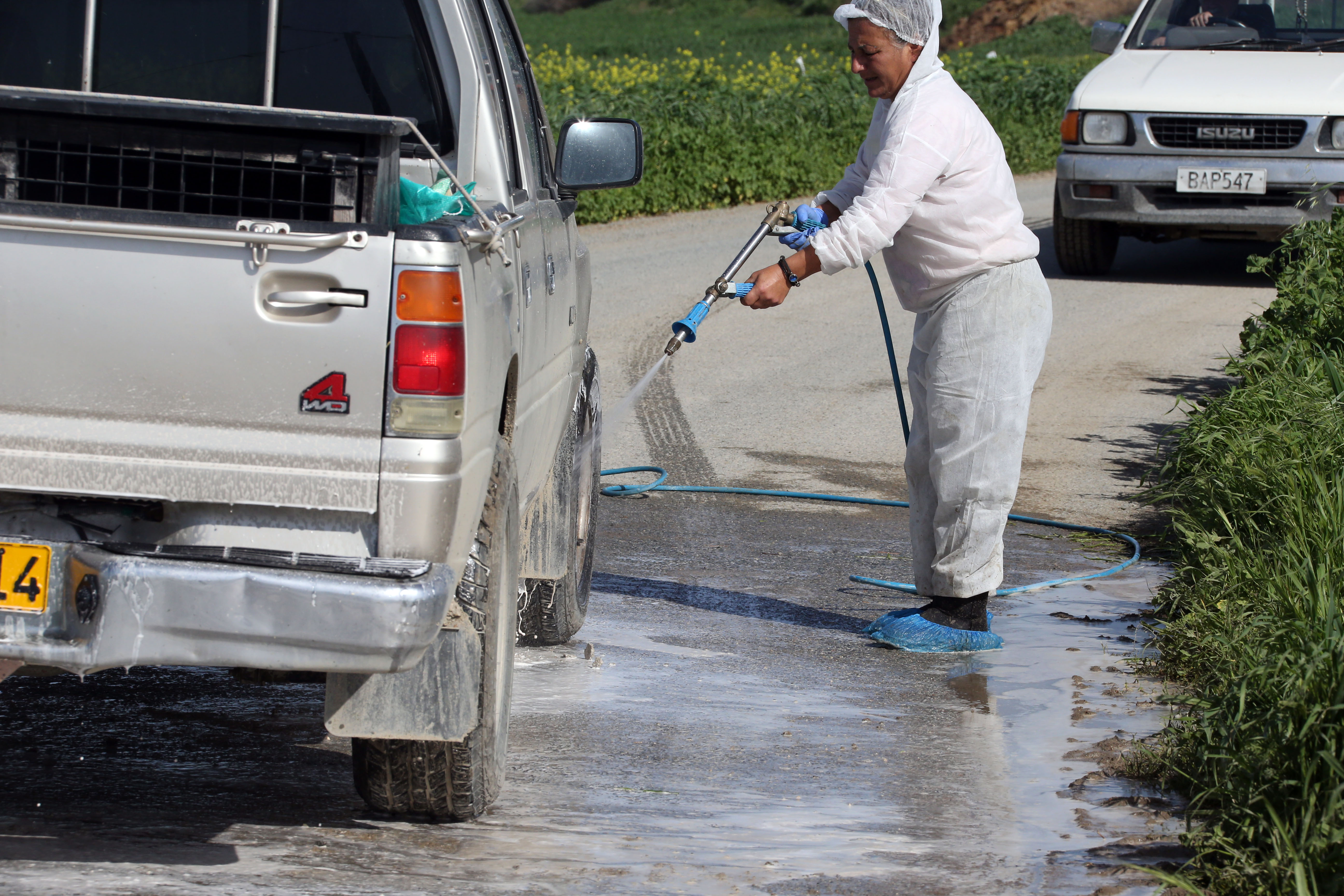
Vehicles leaving the restricted zone are being disinfected and police patrols have been reinforced.
Veterinary services are strengthening their response by cancelling staff leave, transferring veterinarians from other districts to Larnaca and recruiting private veterinarians to support tracing and on-site inspections.
The organisation also rejected reports of insufficient information for affected farmers, confirming that owners of positive units were promptly informed and instructed not to allow anyone to enter or leave until procedures are completed.
“The contracting company responsible for animal by-products has been informed to proceed with transport and disinfection according to protocol,” the veterinary services assured, remarking that compliance with biosecurity measures is “a permanent and elementary obligation of all livestock farmers.”
Epidemiological investigations are examining all possible transmission routes, including the movement of animal feed.
Speaking on CyBC, veterinary services director, Christodoulos Pipis, said one scenario under investigation is whether the virus entered the Livadia unit through animal feed originating from the north.
“Animal feed is a very serious pathway for the spread of pathogens such as foot-and-mouth disease,” he said, adding that all components and scenarios are being examined as part of the investigation.
Pipis said compensation would be paid to the owner of the affected unit, provided compliance with EU biosecurity and disinfection regulations is confirmed.
He added that any decision on vaccination would depend on the extent of spread in neighbouring farms and other susceptible animals.
Authorities reiterated that foot-and-mouth disease affects only cloven-hoofed animals and poses no risk to humans.
“There is absolutely no danger to consumers,” veterinary services affirmed, stressing that pasteurised milk, halloumi and other animal products remain safe.
Officials said that if no further cases are detected, restrictive measures could begin to be eased after 21 days.
Pipis urged livestock farmers and others in the sector to act responsibly, warning that the situation remains critical as efforts continue to contain the outbreak and prevent wider spread.


Click here to change your cookie preferences