
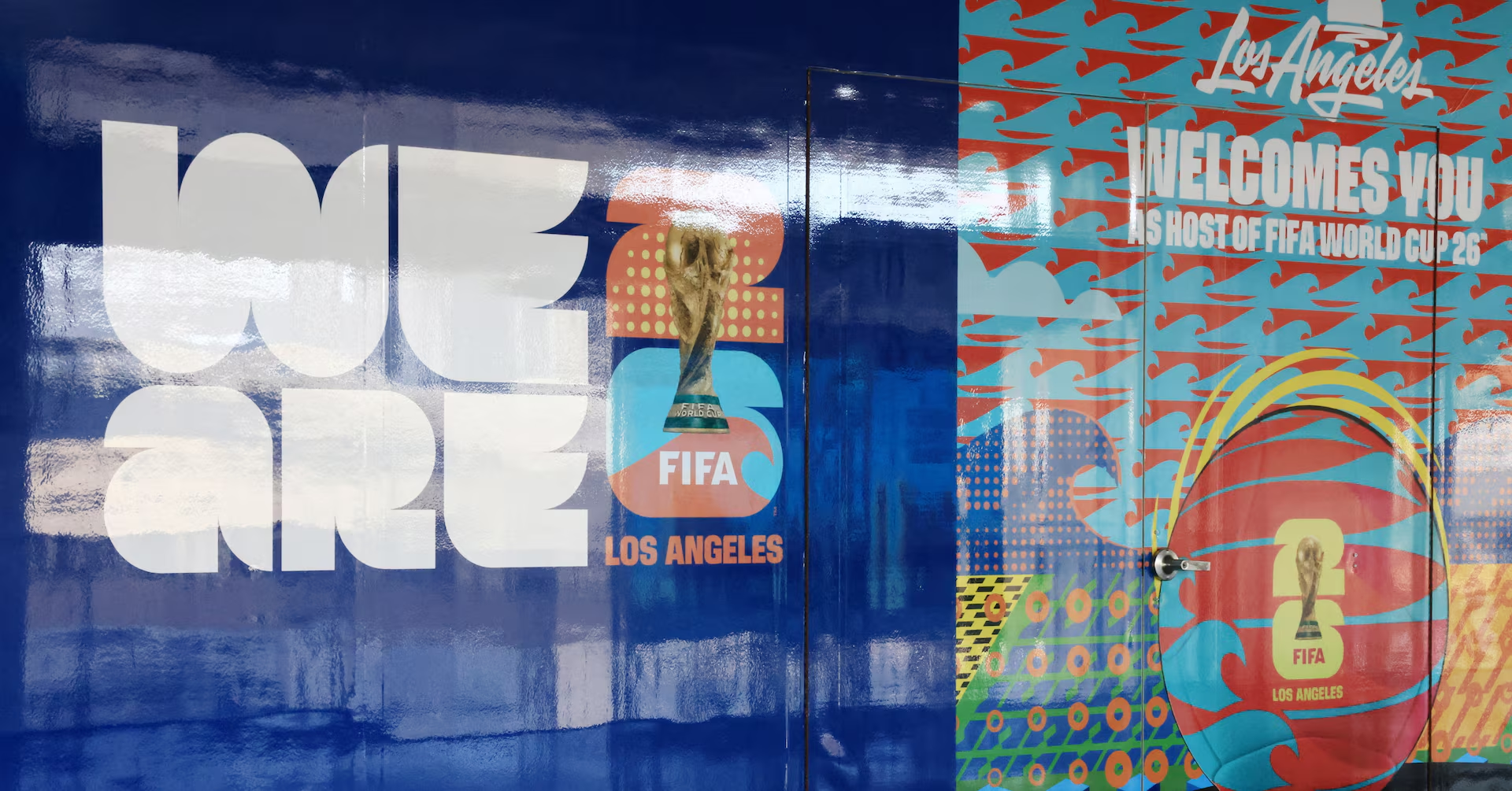
Representatives from cities hosting the FIFA World Cup later this summer testified before a congressional committee on Tuesday, laying out their concerns over potentially “catastrophic” problems with security as the event nears.
Speaking at a House Homeland Security Committee hearing, witnesses pointed at two primary reasons why security preparations are far behind where they need to be with little more than 100 days before the World Cup kicks off: the freezing of FEMA funds earmarked for World Cup security and a lack of coordination between local entities and the federal government.
With the federal government currently in a shutdown, FEMA on Sunday announced it was scaling back to “bare-minimum, life-saving operations.” That meant the freezing of all funds not fitting that description, among which is nearly $900 million set aside for World Cup host cities.
As part of the One Big Beautiful Bill Act, FEMA in November launched the FIFA World Cup Grant Program, which provided $625 million to host cities to “carry out the extensive security activities required to protect players, staff, attendees, venues, and critical infrastructure across the host cities, strengthening them against potential terrorist attacks.”
In December, the agency awarded another $250 million to the 11 host states, helping them to “strengthen their ability to detect, identify, track, or mitigate unmanned aircraft systems (drones).”
“I feel that if we’d been having this conversation two years ago, we’d be in better shape,” Mike Sena, president of the National Fusion Center Association, said during the hearing, before continuing, “but today, as we’re approaching these games, we’re nowhere near the capability we need.”
Ray Martinez, the COO of the Miami World Cup Host Committee, was more specific about his needs and concerns.
“We’re 107 days out from the tournament but, more importantly, we’re about 70-something days out from starting to build the Fan Fest,” he said, adding that if organizers don’t get the $70 million they applied for by the end of March, they will start cancelling events, starting with the Fan Fest.
“These decisions have to be made,” he added. “Without receiving this money, it could be catastrophic for our planning and coordination.”
Officials in Foxboro, Mass., have alluded to pulling out of hosting the seven matches scheduled for Gillette Stadium if the funding does not come through.
Kansas City Deputy Chief of Police Joseph Mabin said his department does not currently have enough staff to cover all of the city’s security needs, and called funding critical for the city’s ability to hire more personnel.
The World Cup, which is being co-hosted by the United States, Mexico and Canada, officially kicks off June 11 with Mexico playing South Africa in Mexico City and South Korea playing an opponent to be determined near Guadalajara. The first match to be played in the U.S. will come a day later, with the United States playing Paraguay in Los Angeles.
The 11 host cities in the United States are Atlanta, Boston, Dallas, Houston, Kansas City, Los Angeles, Miami, New York/New Jersey, Philadelphia, San Francisco Bay Area and Seattle.




Click here to change your cookie preferences