
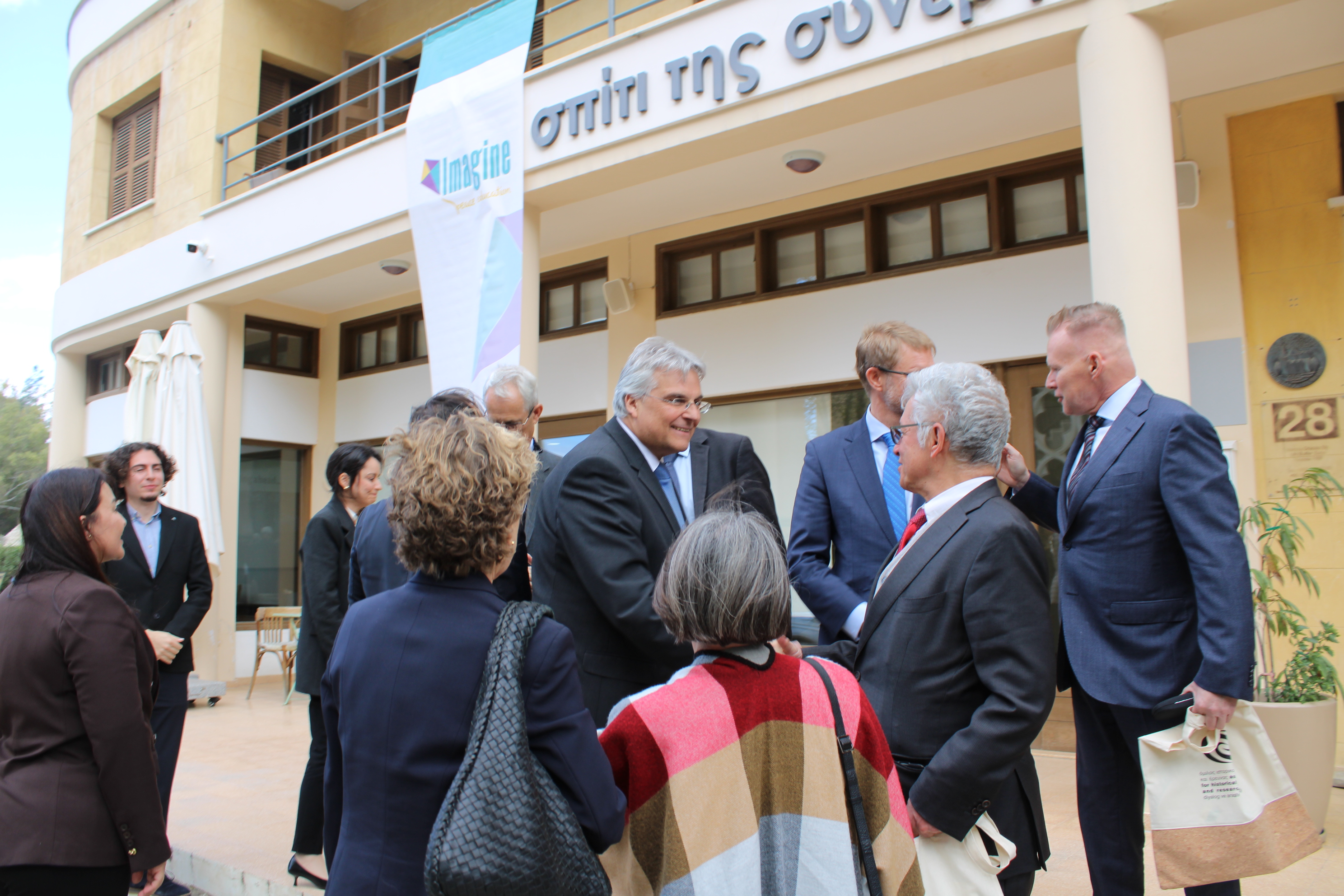
Education was presented as a practical confidence-building measure during a diplomatic briefing held this week at the Home for Cooperation in Nicosia, bringing together ambassadors and representatives from a range of foreign missions.
The event, hosted by the German ambassador Hans Peter-Jugel and the director of the association for historical dialogue and research (AHDR) Loizos Loukaide, focused on the role of education in fostering trust and dialogue, with particular emphasis on the bicommunal peace education programme Imagine.
The German ambassador described Imagine as “confidence-building in action”, stressing that its impact lies not in symbolism but in sustained engagement.
He said the programme’s strength is rooted in “the trust AHDR has built across communities, even during politically challenging periods”, adding that “by working together, we can ensure this programme continues to contribute meaningfully to trust-building and to the long-term prospects of peace on this island”.
The briefing provided an update on the current status, achievements and future direction of Imagine, which brings together Greek Cypriot and Turkish Cypriot students through workshops on peace education, anti-racism and human rights.
The programme operates under the auspices of the technical educational committee and is funded by the German federal foreign office.
AHDR co-president Kyriakos Pachoulides told participants that civil society must remain “at the forefront of change, especially when things get stalled”, arguing that Imagine persists despite political obstacles because “its role is to create bottom-up opportunities to build bridges through education”.
His co-president, Hale Silifkeli, highlighted the central role of teachers, saying their sustained participation has been crucial in keeping the programme alive over the years.
Earlier this month, the education ministry issued long-delayed circulars to public schools outlining procedures for participation, after assuring that the information would be released in January.
The UN office of the high commissioner for human rights has criticised the lack of progress, describing Imagine as “the only mechanism in Cyprus that has successfully brought together more than 8,200 students and 2,560 teachers from both communities”.
The briefing concluded with an open discussion and questions from diplomats, with participants agreeing that education remains one of the few functioning channels for dialogue on the island.


Click here to change your cookie preferences