
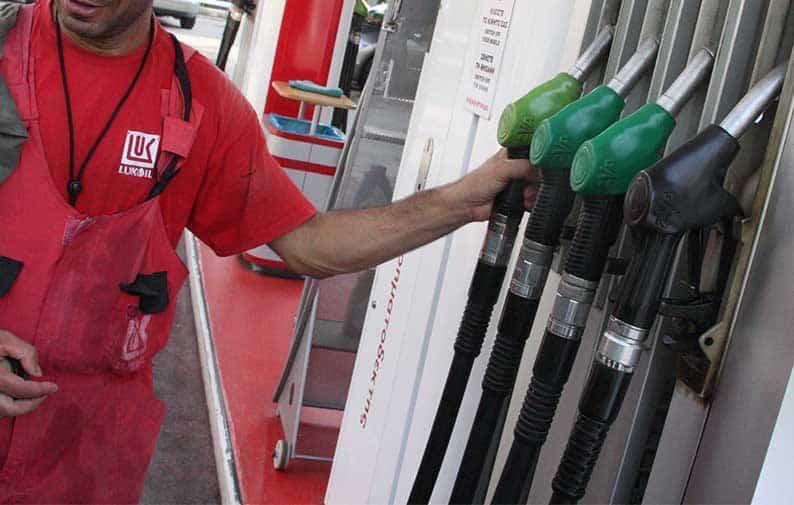
Fuel prices in Cyprus are expected to rise significantly in the coming days, with authorities warning on Thursday that new cargoes arriving on the island will likely push pump prices up as global oil markets react to the escalating US-Israeli conflict with Iran.
Drone and missile attacks across the Persian Gulf, combined with growing navigation concerns in the Strait of Hormuz, have triggered sharp increases in international fuel prices.
The strait carries roughly one fifth of the world’s crude oil and liquefied natural gas supplies, making any disruption a major concern for global energy markets.
Between February 27 and March 3, the cost of refined fuels at international refineries rose steeply.
The price of unleaded petrol increased by 14 per cent, diesel surged by 35 per cent and heating oil rose by 32 per cent.
These increases are expected to be reflected in the national market once higher priced shipments reach the island.
Fuel imports typically arrive every three to four days, meaning the impact at the pumps will depend largely on how quickly existing stocks are depleted.
According to Phileleftheros, retail prices have already begun to climb over the past month, with the average price of unleaded petrol rising from €1.314 per litre on February 4 to €1.326 by March 4.
Diesel climbed more sharply, rising by 4.4 cents from €1.384 to €1.428 per litre over the same period.
Heating oil also increased from €0.929 to €0.960 per litre.
Further increases have already begun to filter through the market.
Esso raised prices by 1.5 cents per litre on Wednesday, with other suppliers expected to follow within the next 24 hours.
Cyprus relies mainly on fuel imports from Greece, Algeria and Israel, with the cost of supplies largely determined by S&P benchmark prices rather than crude oil alone.
In the past two days, benchmark prices for petrol have increased by around 10 per cent, while diesel has risen by about 20 per cent.
Beyond the cost of crude, final pump prices are influenced by several additional factors including currency exchange rates, developments in the region and rising insurance premiums for vessels transporting fuel through increasingly volatile shipping routes.
Rising oil prices are also expected to place upward pressure on electricity costs, given Cyprus’ heavy reliance on oil for power generation.
Subsidies for vulnerable households remain in place until the end of the year, although earlier broad measures such as a temporary reduction in VAT on electricity from 19 per cent to 9 per cent were later replaced with more targeted support.
While global oil prices briefly dipped below 80 dollars per barrel on Wednesday evening, analysts caution that sustained volatility in the region could quickly reverse the trend.





Click here to change your cookie preferences