
A group digitally preserving the island’s fragile musical heritage and Cypriot culture asks what role music has had in society
Let’s take, for instance, the ‘poiitarides’ – or ‘itinerant poets’, as Nicoletta Demetriou calls them.
‘Poiitarika’ (the category name for their works) were “long narrative songs,” she explains, “the closest thing in English might be ‘ballads’” – like the old broadsheet ballads of the Anglo-American world, printed on a single piece of paper and easily disseminated.
Printing came to Cyprus in 1878 (the same year as the British, though that’s actually a coincidence) and the ‘poiitarika’ soon followed, songs on politics or current affairs, often inspired by some local news like a murder or an accident.
The poet might go from one village coffeeshop to another, plying his wares – or might set up shop at a village fair, what Nicoletta calls “the improvised mall of that time”, selling songs among the various traders selling sausages or fabrics or soutzoukos.
The itinerant poet would find a good spot – somewhere high up, so everyone could see him – and start to declaim. The business model, though (because “it was a profession,” she says), was that he wouldn’t sing the entire song, leaving the audience on a cliffhanger. Those who wanted to know the denouement had to buy the printed version of the song – and of course share it with those who couldn’t read.
The most surprising part, however, says Nicoletta, sitting in the tiny office of the Cyprus Music Archive (CMA) in old Nicosia, is how durable ‘poiitarides’ as a profession turned out to be.
“The last itinerant poet we had – who made a living out of this, whose job it was – was Andreas Mappouras from Aradippou, who died in 1997!”
Nicoletta is the CMA’s director, so she’s paid to know stuff like this – though in fact that’s a little unfair. She’s an enthusiast, not some civil servant or official functionary – and the Archive, though it sounds very official, is actually a labour of love, a non-profit founded by a small team in 2022 and staffed partly by unpaid volunteers as it seeks to create a digital archive of traditional Cyprus music.
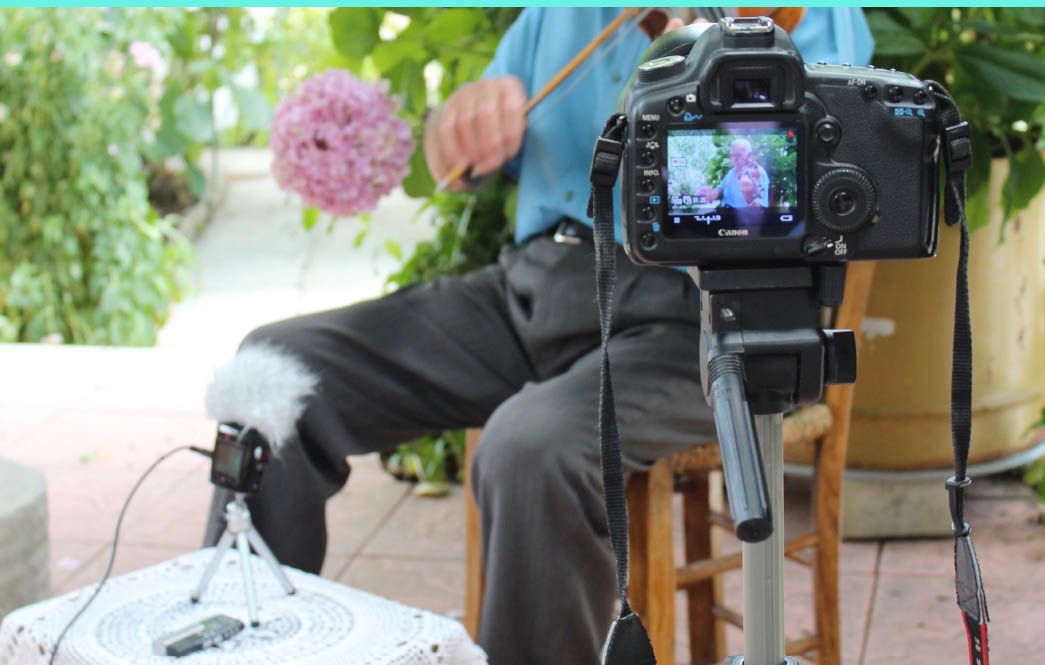
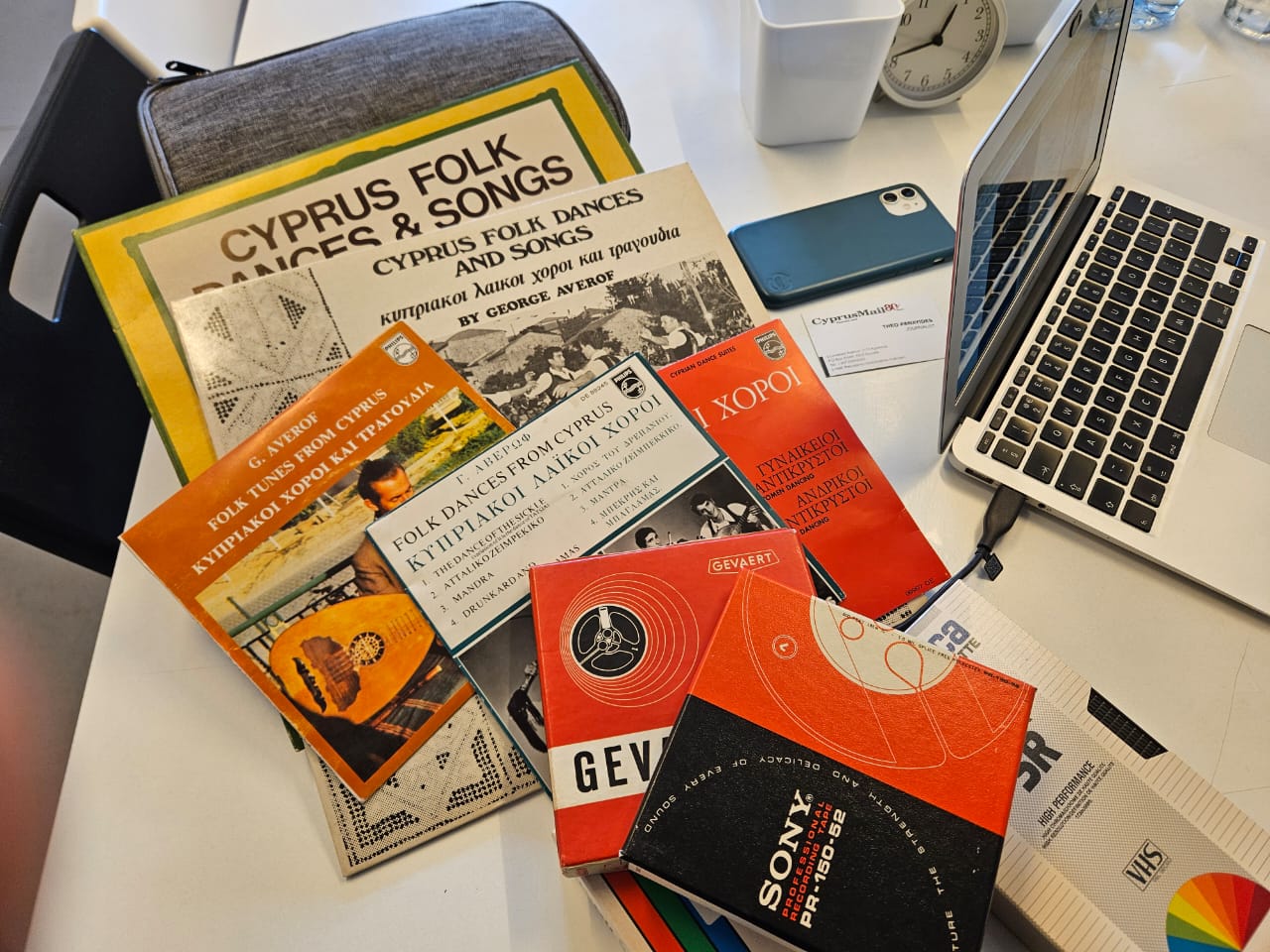
The CMA website is already up, but the bulk of the work – the online library of songs and interviews – is coming soon. The plan, she says, is to put up a first tranche in the next few months, hoping that people will see it and “be like, ‘Oh wait, I have 10 cassettes that belonged to my grandfather too’” – the eternal problem being that so much of our musical heritage keeps getting lost.
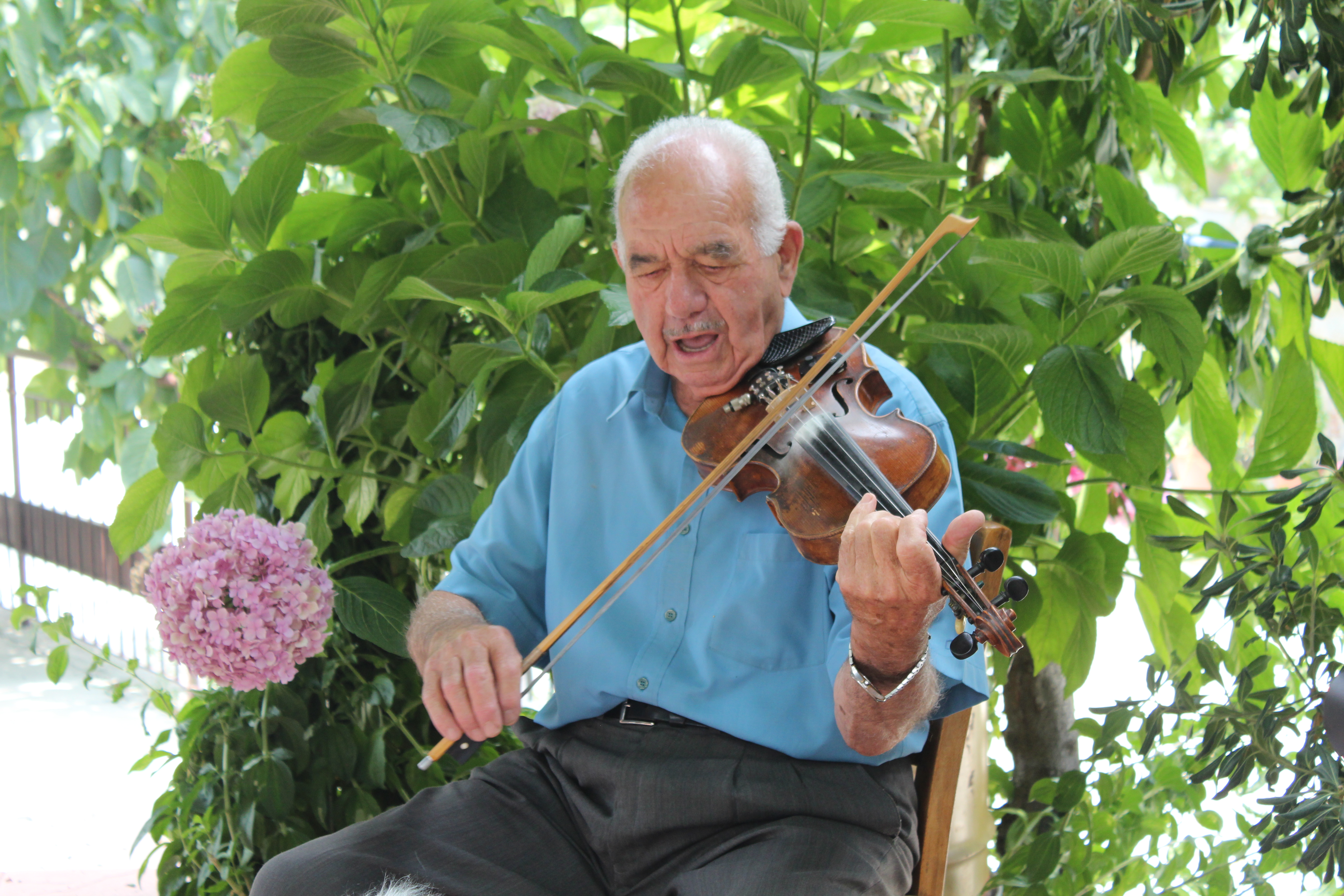
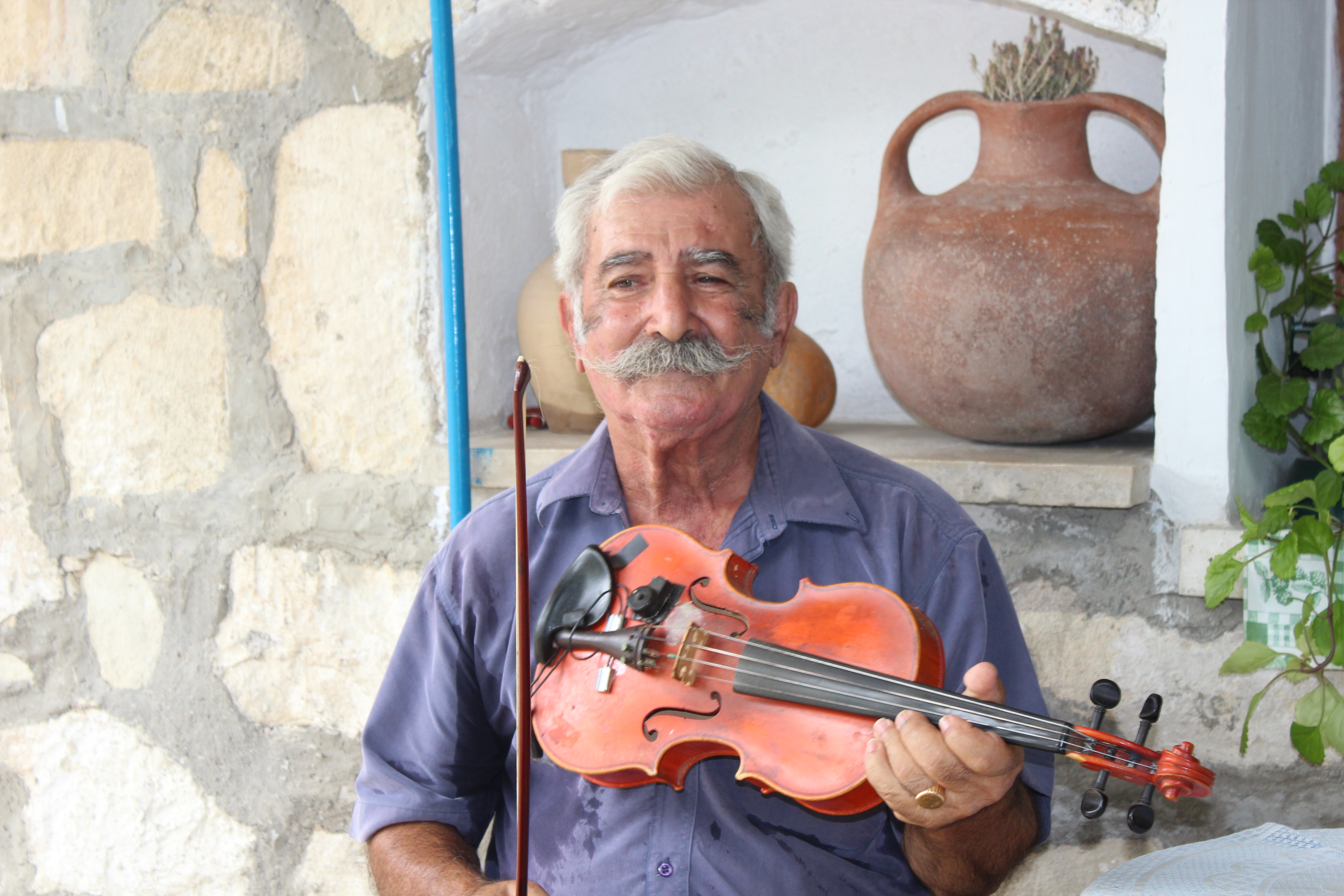
Partly that’s because it’s so fragile. Cypriot music was predominantly wedding music, played on the signature combo of fiddle and laouto – plus sometimes zournas (a double-reed woodwind instrument) and davul (a drum), played by Turkish Cypriots and Maronites.
For most of our history, though, those instruments weren’t widely available, and people were too poor to have lavish weddings. At best, there might be some singing, or banging the tamboutsia – a frame drum that was only there because it was used primarily as a household item, as a sieve for threshing wheat or cleaning pulses. Sometimes a lone shepherd might play an air on his pithkiavli.
It was only later, with the approach of the 20th century, that music as we know it was played at weddings. And even then, of course, it wasn’t recorded.
In the 1920s, says Nicoletta, representatives from a record company met with musicians at Mavrophilippos’ coffee shop in Nicosia, and showed them the miracle of recorded music. Alas, things didn’t go as planned. After the reps had gone, the musicians held their own meeting and agreed that “no-one would record any songs, and if anyone dared he’d be named and shamed by his colleagues”. After all, went the thinking, what if people stopped hiring musicians for weddings, and just played the recordings instead?
The first commercial discs of Cypriot music only came out in 1934, and the first recordings from fieldwork in 1953 – soon after which, of course, came independence, then the invasion, then a whole new Cyprus.
When Nicoletta was singing traditional songs, as a 12-year-old in the early 90s (more on this later), the music was already deeply unfashionable. By the mid-00s, doing research at folklore associations and festivals, the audience she saw was comprised solely of very old people and very young children, obviously dragged there by their grandparents.
The upshot is that there was only quite a brief window when musicians and aficionados were recording music – and when such people died, says Nicoletta, “the recordings, their personal archive, would be left in a drawer. At best, [their descendants] left it there. At worst, they threw it out”.
This, in a nutshell, is where CMA comes in, trying to collect and digitally preserve such archives – not just songs but also interviews, some carried out by Nicoletta herself who’s both an ethnomusicologist and a specialist in ‘life writing’, the craft of writing about people’s lives. Her biggest project prior to CMA was The Cypriot Fiddler, a book and documentary (winner of this year’s European Heritage award) chronicling the experience of many elderly – some now deceased – musicians.
The aim of the Archive is to give a flavour not just of music, but a whole era. “What did it mean to be a musician in Cyprus in the first half of the 20th century? What was the role of music in that society? Why was it important, if indeed it was?”
How important was it, actually?
Very, she replies – “because musicians didn’t just provide music for entertainment. They enabled a series of rituals”. There was a particular melody “to wash the resi [a traditional porridge at weddings] – actually to wash the wheat for making the resi. Then a different song to ‘sew the bed’, a different one to ‘bind the bride’,” i.e. tie a red scarf – “a symbol of fertility and virginity” – to the bride.
These were all rituals; “they meant something”. Now, on the other hand, people do them because they enjoy them, she adds – and quotes the title of a 1982 book by Victor Turner: From Ritual to Theatre.
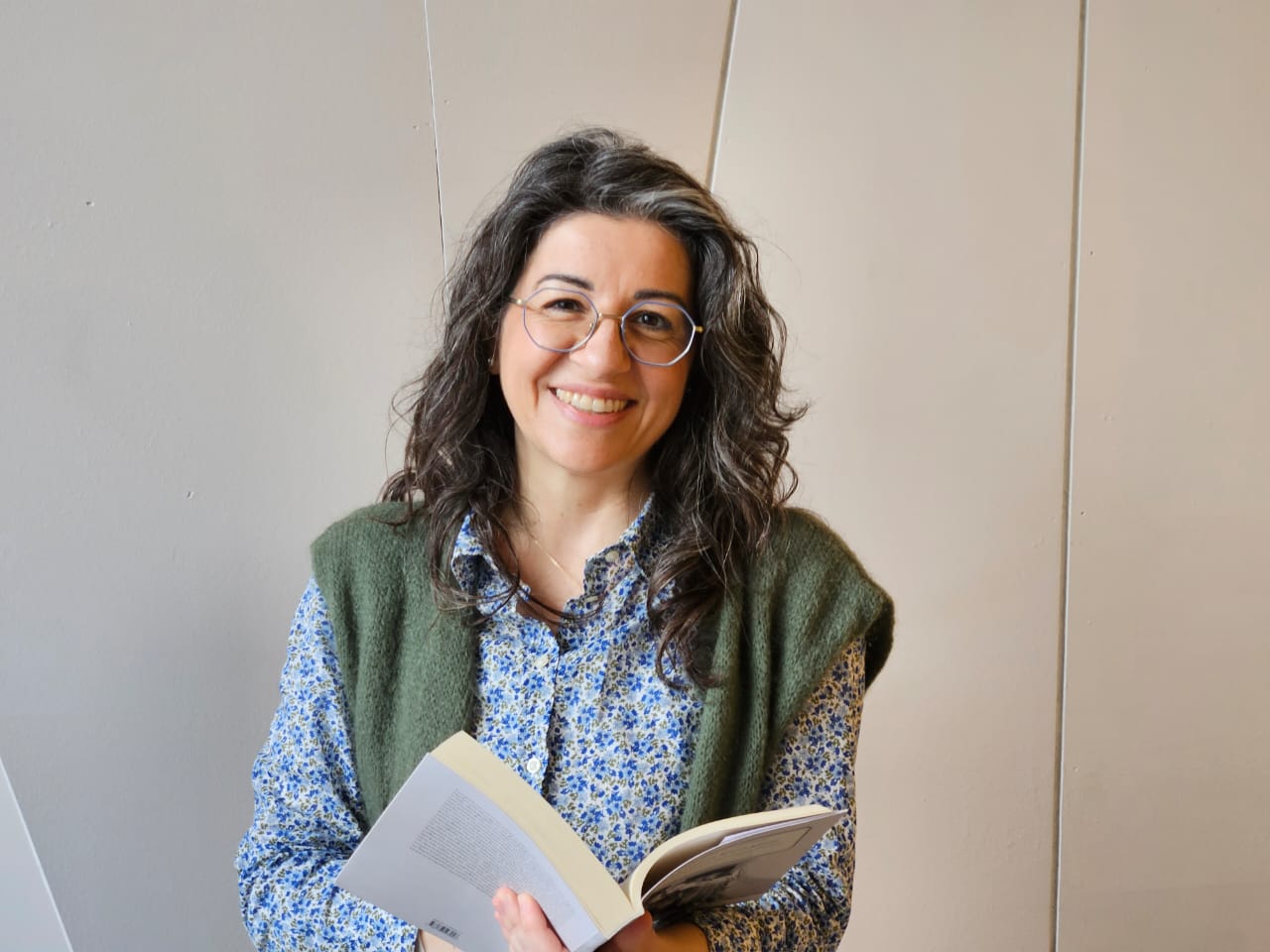
The fact that she cites an academic text (even knowing, without having to check, that it came out in 1982) typifies the great paradox in her personal story. Nicoletta’s spent her entire adult life deeply immersed in Cyprus, and traditional Cypriot culture – yet she also spent two decades living abroad, as a student and academic researcher, from Oxford to Princeton, from Vienna to SOAS in London.
She began as a 12-year-old singer, as already mentioned, her repertoire prompting eyerolls from more trendy classmates. The family came from Famagusta but lived in refugee housing in Latsia – and Nicoletta, the youngest of three, born after the invasion, may have sensed traditional music as a kind of link to the occupied Cyprus recalled by her parents.
Maybe she could feel the refugees’ memories slipping away, as one Cyprus blurred into another. Or perhaps she experienced what many young people feel now, she says – when the music is making a comeback, and iconic figures like her old friend Michalis Terlikkas are doing guest spots at Fengaros and being mobbed by selfie-hunters: “A new desire to know who we are, after all, and what culture we actually have”.
The time seems ripe for a Cyprus Music Archive, part of the new revived interest in Cypriot culture and Cypriot dialect. Yet there’s so much that’s lost, or slid into obscurity, or slipped through the cracks.
What younger person knows Theodoulos Kallinikos, for instance – lead cantor at the Archbishopric for 69 years, and the man who first recorded classics like ‘Tylirkotissa’ and ‘Eyia Kochini’? Nicoletta heard him chanting in church almost at the end of his life, his voice still clear and musical at the age of 99 (he died soon after, aged 100 years and five days). Who now recalls the ‘poiitarides’? Most Cypriot teens will probably have seen more rap battles by hip-hop artists on YouTube than they’ve seen ‘tsiattista’, the Cypriot equivalent of the same “poetic duelling”.
There’s no shortage of material to digitise for the CMA. The problem, she admits, “is to make it sustainable. Because right now, the money we have will buy us the server space for about three years. After that the money will run out, and we’ll have to find other funding”.
You’d expect something so culture-specific to find backers easily, but apparently not. Funding hasn’t come from the obvious sources. Nicoletta is a Fulbright alumna – part of her many academic peregrinations; she won a Fulbright fellowship in 2017, research and teaching at the Interdisciplinary Center for Hellenic Studies in Stockton, New Jersey – and initially found some funding through a US embassy programme, though the money dried up after Trump’s election.
It’s only in the past year that the deputy ministry of culture has become involved – though admittedly they always helped with the educational side, the courses Nicoletta teaches in the CMA’s tiny headquarters, ranging from Cypriot Traditional Music 101 to why we eat flaounes at Easter. Every penny helps, as the library slowly takes shape.
It’s almost ironic that most of these old songs (“Nine out of ten,” she confirms with a laugh) speak of love, “especially unrequited love” – since her project, too, is a labour of love, and doesn’t always seem to be appreciated. Still, she’s far from melancholy, beaming with scholarly excitement as she plays various samples from the work-in-progress library.
Music unites, on an island with so many fractures. Nicoletta tells me of her first meeting with Aziz Kahraman (she even included him in The Cypriot Fiddler, even though he’s a davul player) – part of the Greek-speaking Turkish Cypriot community in Karpasia, those who grew up speaking Greek as their first language then remained in a linguistic bubble for 30 years, from 1974 till the opening of the checkpoints.
“Bravo, you speak Greek really nicely,” said Aziz with a straight face – but of course he meant ‘his’ Greek, the antiquated dialect preserved over 30 years in seclusion, so unlike the bastardised jumble he’d hear when he crossed the Green Line.
Language changes, but the songs keep something timeless and true. I nod along, and think back to her explanation of why Gen Z have started listening again. “A new desire to know who we are, after all, and what culture we actually have.”

Click here to change your cookie preferences