
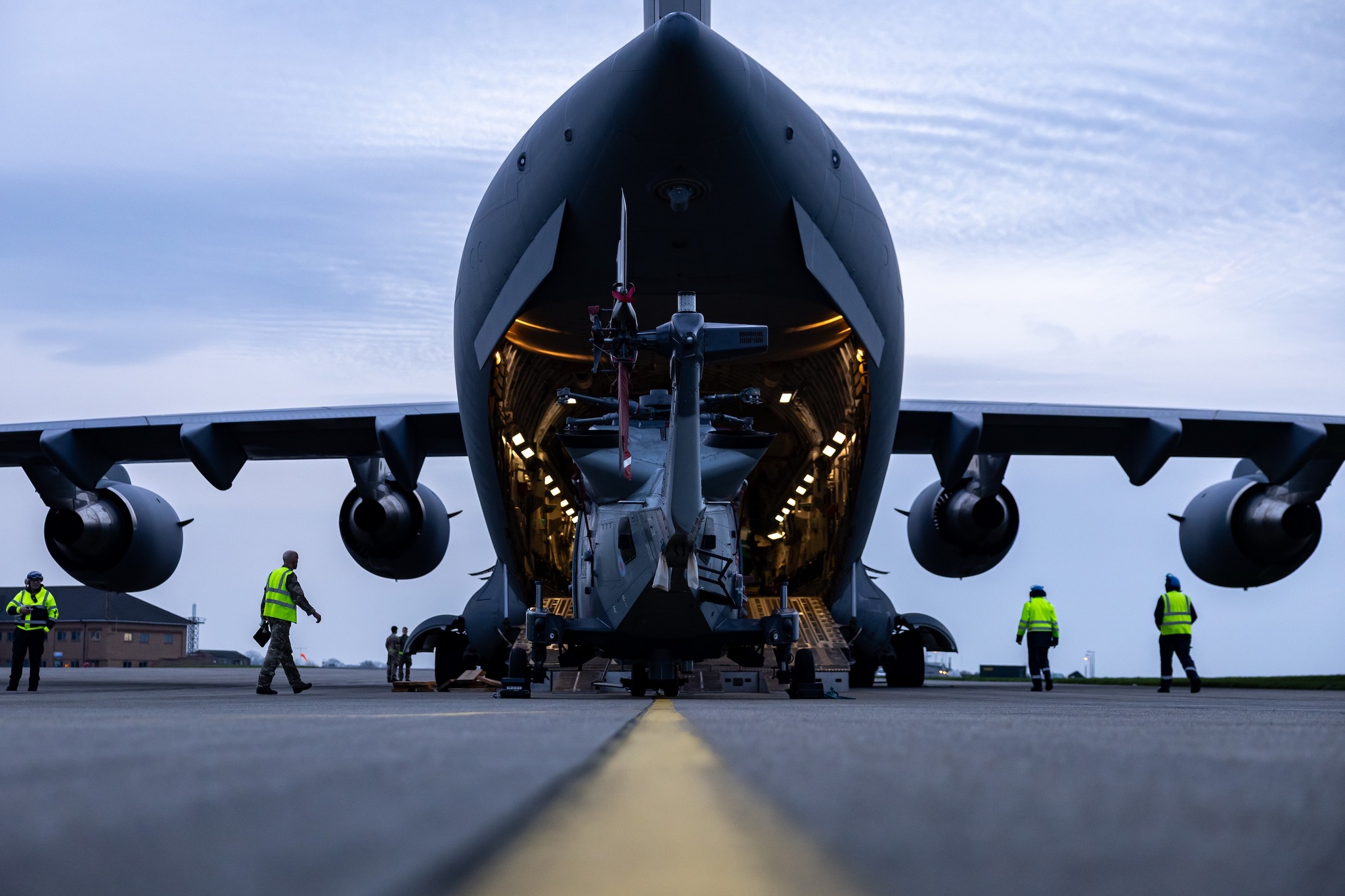
The British bases in Cyprus should not be used in any unlawful war contrary to Cyprus’ interests
No one believes that Iran was planning to attack the US and Israel imminently on Saturday a week ago, justifying the pre-emptive attack on Iran while negotiations were in progress between the US and Iran.
US foreign minister and national security adviser Marko Rubio put forward a convoluted case that the US attack was lawful, pre-emptive self defence. He claimed the Israelis had decided to go it alone, which meant that US forces in the region were bound to be attacked by Iran in retaliation, which forced America’s hand.
Rubio justified the US attack as self defence against imminent attack within the president’s role as commander-in-chief and not a war within the jurisdiction of the US Congress under the constitutional doctrine of the separation of powers.
The War Powers Resolution that enables a US president to go to war without congressional approval permits him to order military action but only if it is in self defence against imminent attack and then only for 60 to 90 days.
The problem with the US embarking on unlawful wars is not only that it is unconstitutional but because no European ally can support an unlawful war.
The US Supreme Court ruled last year that an American president is not criminally liable for his official acts, but that is not the position of the political and military leaders in Europe. They can be prosecuted in the International Criminal Court (ICC) for war crimes committed as part of policy in illegal wars,and may also be criminally liable in their own countries.
The late General Sir Michael Jackson, former UK Chief of General Staff, insisted on receiving written advice from UK Attorney General Lord Goldsmith confirming the legality of the 2003 Iraq invasion before committing British forces because, as he said, he owed it to his men not to lay them open to prosecution.
So it was not surprising that neither the UK nor Spain were prepared to join the US in an aggressive act that would have made them complicit in an attack they knew was not in self defence.
Spain is adamant that the US attack was unlawful and is not prepared to kowtow to Trump any more, let alone his loudmouth bloodthirsty war minister Pete Hegseth. The UK was more pragmatic: when the facts change one changes with the facts, and conveniently the facts changed when Iran retaliated by attacking regional allies in the Gulf where some 300,000 British citizens reside.
The Attorney General published a summary of his advice on the new facts, which was that the inherent right to individual and collective self defence preserved in the UN Charter entitles the UK to use force in defence of its citizens and its regional allies under armed attack if it is the only feasible means to defend them and if the force used is necessary and proportionate.
UK fighter jets could, he said, lawfully intercept drones and missiles targeting non-combatant regional allies and the US could use British bases to strike at missile and drone facilities in Iran involved in launching attacks on regional allies – although how this was to be supervised is not clear.
The UK government informed the UN Security Council of this limited deployment as it is supposed to under the UN Charter and that its decision included permission for the US to use British bases to also defend Gulf allies.
The fall-out in Cyprus from the change in UK policy was not so much that the UK failed to defend Cyprus from the drones fired in its direction, but that it did not make it clear that it was not the British airbase at Akrotiri in Cyprus but the British base at Diego Garcia in the Indian Ocean that the US was allowed to use to attack Iran.
The problem was compounded by the fact that the change in UK policy to allow US use of British bases was announced on the Sunday at 9pm UK time. The drone that got through struck Akrotiri one hour later at 12.03am on Monday Cyprus time and it looked as though the announcement had provoked the drone attack on Cyprus. On close analysis of distance and drone speed, however, that seems unlikely.
What is fascinating about the initial UK refusal of the US request to use Diego Garcia in an unlawful attack is that it is the mirror image of how Cypriots feel about the UK’s use of the Akrotiri airbase in Cyprus. Just as the UK was not prepared to agree for Diego Garcia to be used by the US in an unlawful war, the British bases in Cyprus should not be used in any unlawful war contrary to Cyprus’ interests. The Cypriot foreign minister reflected this feeling when he hinted on BBC Newsnight last Friday that the status of the British bases in Cyprus may have to be reviewed after the Iran war.
Diego Garcia was also part of the Chagos islands that the International Court of Justice (ICJ) held in an advisory opinion in 2019 was unlawfully retained by UK for use as a military base after the decolonisation of Mauritius in 1968.
The ICJ held that UK ownership of Diego Garcia must end as soon as possible as its retention for use as a British base was not the free and genuine expression of the will of the people concerned in the exercise of their right to self-determination.
The UK was accorded the right to have bases in Cyprus under the treaty of establishment of the RoC in 1960 on the explicit understanding it would consult and cooperate with the RoC in the common defence of Cyprus, which successive British governments have honoured, including the rescue of President Makarios in 1974.
The Chagos islands case, however, raises the same fundamental question in Cyprus too, namely: whether as a colonial power the UK could have lawfully retained sovereignty over two military areas of the island of Cyprus to which it purported to grant independence or whether, uniquely, Cyprus was in a class of its own.



Click here to change your cookie preferences