
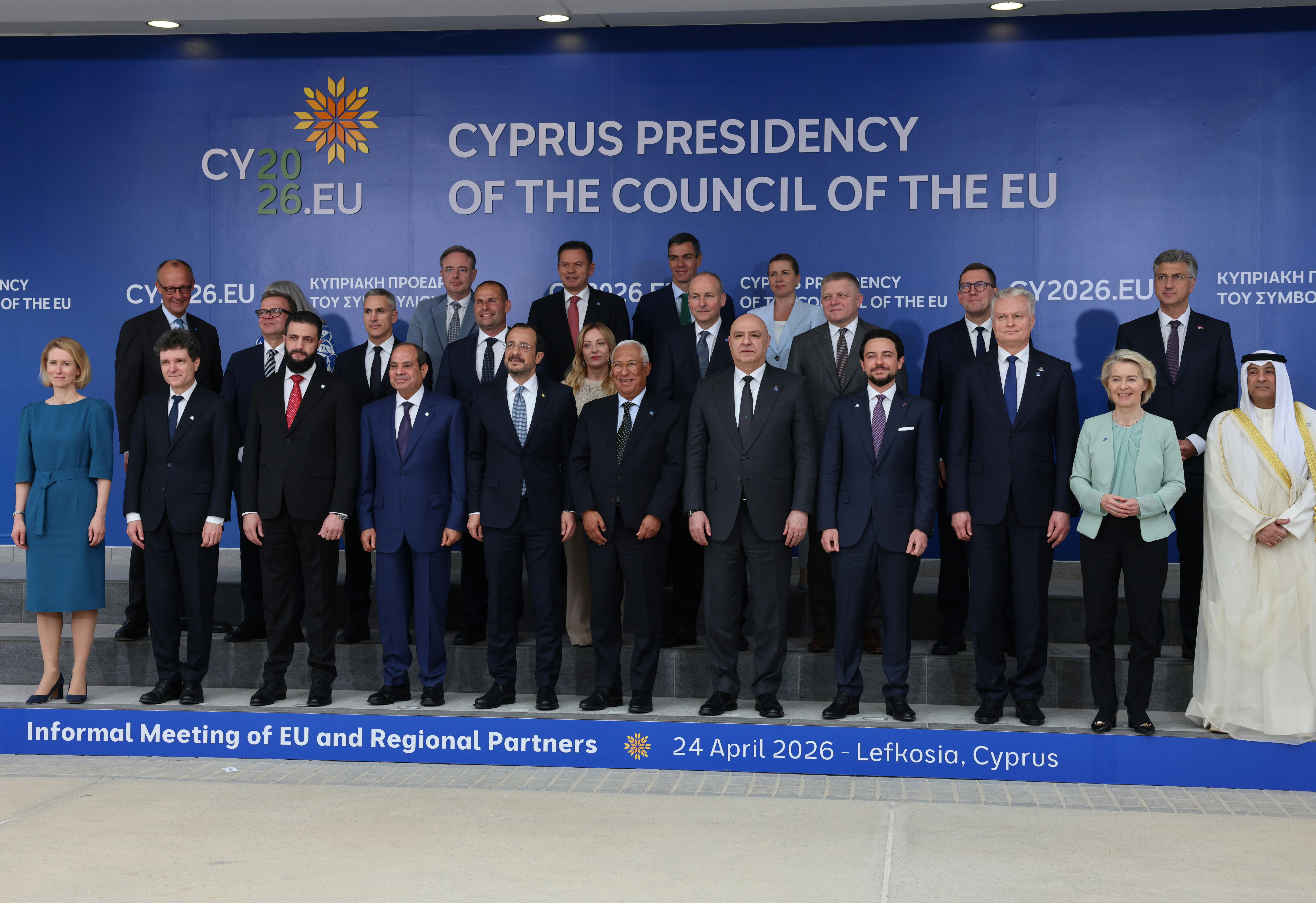
The leaders of the European Union’s 27 member states on Friday resolved to demand the creation of a defence “playbook” at the day’s European Council summit in Nicosia, though Cypriot government sources lamented that “nothing has been done” in the decade since the first and only time that the bloc’s mutual defence clause has been activated.
It was France which triggered Article 42.7 of the Treaty of the European Union, better known as the Lisbon Treaty, after Paris was hit by a series of terrorist attacks in November 2015.
While the text of the treaty states that “if a member state is the victim of armed aggression on its territory, the other member states shall have towards it an obligation of aid and assistance by all the means in their power”, it is not attached to any formal operational plans or international military structures.
Other EU member states did step in to contribute to international military missions in 2015, allowing France to redeploy its own troops domestically, though the European external action service (EEAS) nonetheless released a “lessons learned” paper in 2022 with the aim of shoring up and formalising the EU’s mutual defence infrastructure.
However, government sources told the Cyprus Mail that despite that paper being produced, “nothing has been done” to advance the matter.
The sources lamented that at present, “there is no clear picture of procedures, capabilities, or response times across member states”, as well as what they described as a lack of clarity regarding the types of support which can be requested, what each member state may provide, and how quickly assistance can be delivered.
Additionally, they highlighted potential pitfalls regarding a lack of coordination at present, given that EU institutions have no given role following the clause’s triggering, unless the state which triggers it specifically requests it.
They also stressed that if a member state triggers Article 42.7, assistance must not be optional.
“It is a legal obligation, not a political choice,” they said, before adding that “member states cannot question the reasons” behind the triggering of the clause if it is triggered, provided that an armed attack has taken place.
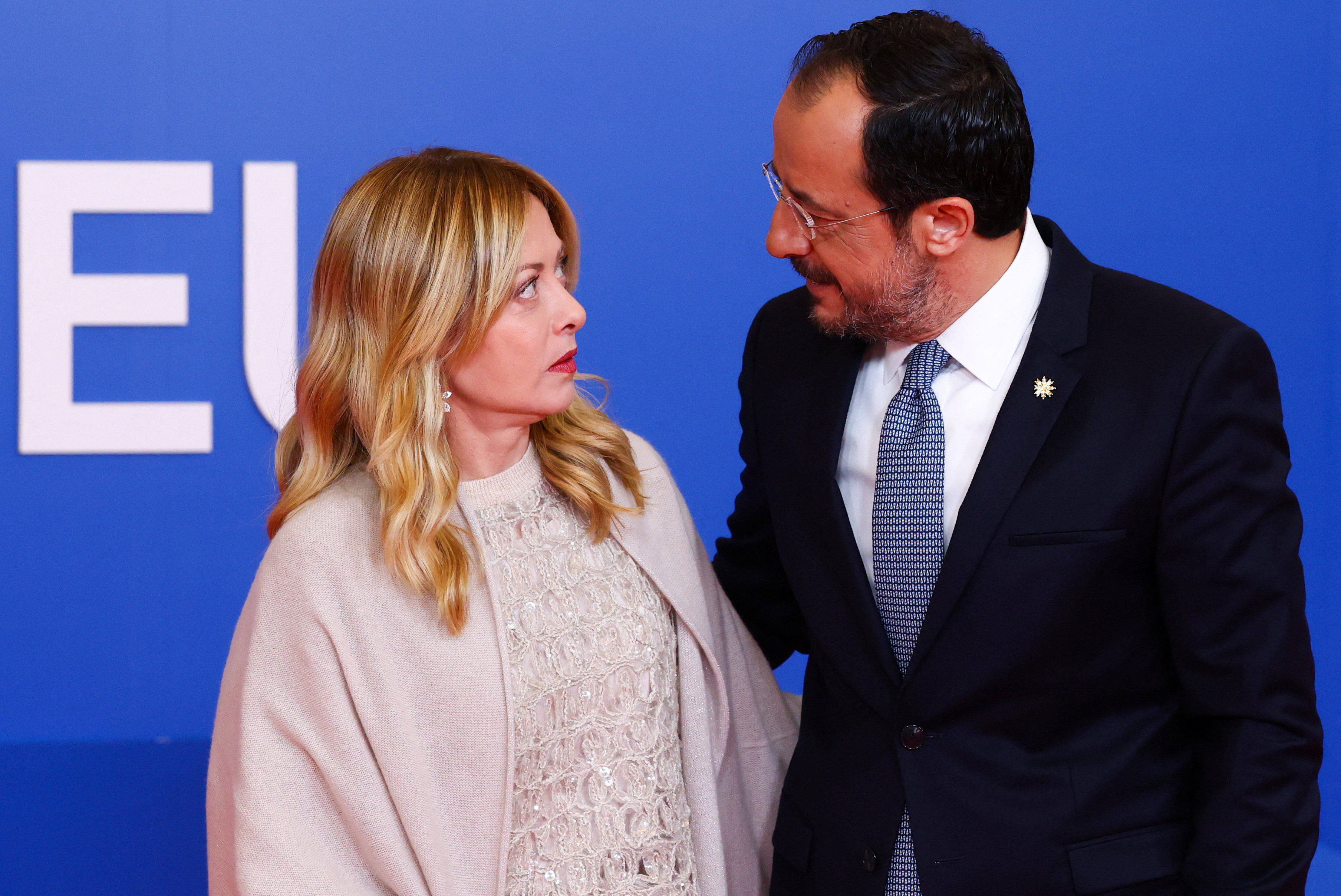
Earlier, President Nikos Christodoulides had confirmed that leaders of the bloc’s member states had struck an agreement with the European Commission at the summit in Ayia Napa on Thursday night for the commission to “prepare a blueprint on how we respond in case a member state triggers Article 42.7”.
The debate comes as cracks appear in Nato, with the transatlantic military alliance’s Article Five having formed the bedrock of mutual European defence for more than half a century.
Exactly 24 of the EU’s 27 member states – all except Austria, Cyprus, and Ireland – are also Nato members, but the ironclad nature of the pact has been called into question in recent months, with the United States appearing at odds with Europe over Iran and Greenland, among other international affairs.
After US President Donald Trump met Nato Secretary-General Mark Rutte last month, he wrote in a post on social media that “Nato wasn’t there when we needed them, and they won’t be there if we need them again”. Rutte, meanwhile, only went as far as describing the meeting as “very frank” during an appearance on CNN.
Earlier in the year, relations between the US and Europe had soured after Trump demanded that sovereignty over Greenland, held solely by Denmark since the Treaty of Kiel of 1812, be handed over to the US, though he did back down on that front.
Most recently, arrivals at Friday’s summit were overshadowed after Reuters published content from an email warning of punishment for Nato member states which failed to provide what the US considered to be adequate support for the war in Iran.
The email suggested suspending Spain from the alliance, after the Spanish government had refused to allow American warplanes to overfly its airspace to carry out bombing raids on Iran launched from the Fairford airbase in the United Kingdom.
Additionally, it called for a reduction of “the sense of entitlement on the part of the Europeans”.
In response, a Nato official told the Anadolu Agency that “Nato’s founding treaty does not foresee any provision for suspension of membership or expulsion”.
Spanish Prime Minister Pedro Sanchez was asked about the email upon his arrival in Nicosia on Friday and said simply that he has “no worries”, before adding, “we are fulfilling our obligations toward Nato”.
“The Spanish government’s position is clear: absolute cooperation with our allies, but always within the framework of international law,” he added.
Italian Prime Minister Giorgia Meloni, too, was distinctly unimpressed with the situation upon her arrival in Nicosia.
“I do not see tensions over Nato as positive … I believe we need to work to strengthen Nato, to strengthen the European pillar of the alliance,” she said.


Click here to change your cookie preferences