

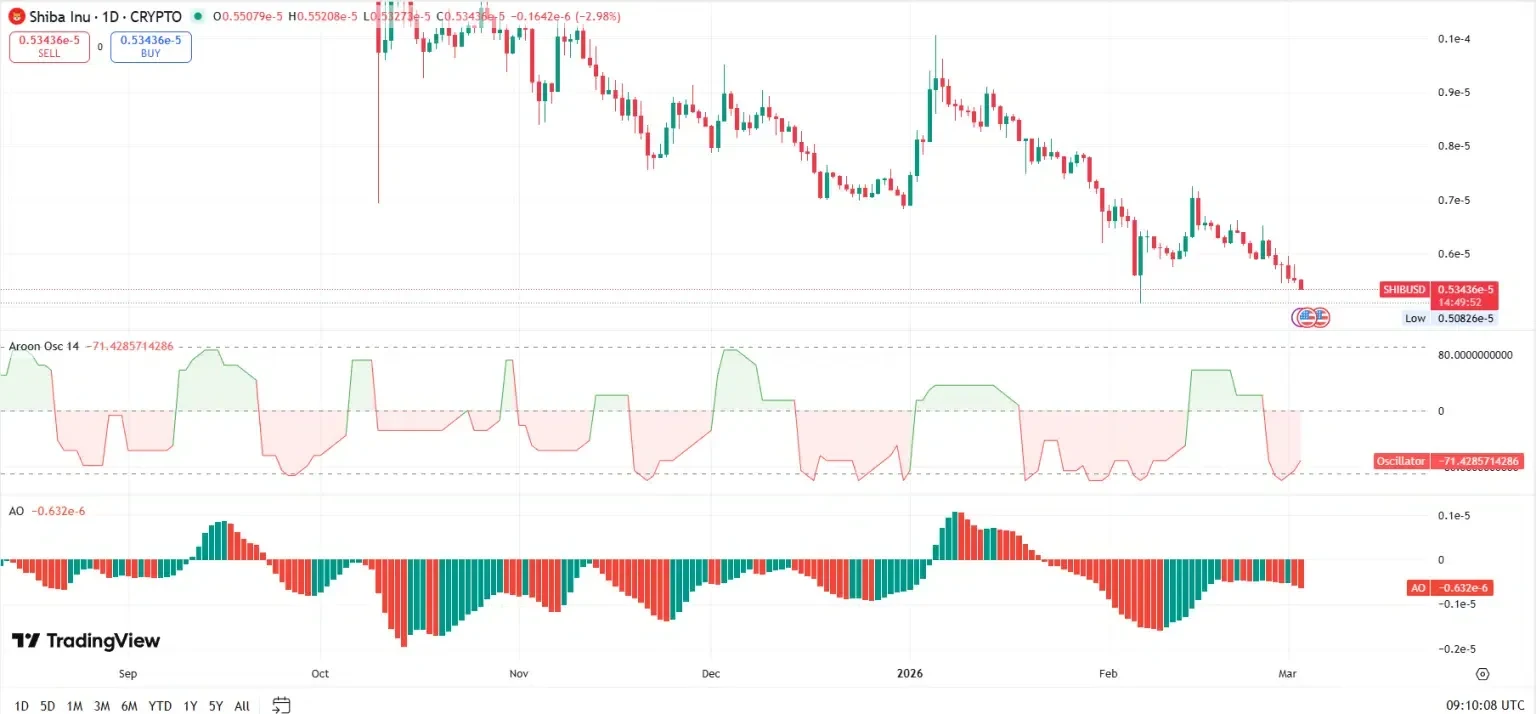
With a circulating supply in the hundreds of trillions, Shiba Inu would require market capitalization exceeding $40 trillion for each token to reach one dollar, a figure dwarfing the entire global economy. Recent on-chain data shows 414 billion SHIB tokens moving off exchanges, suggesting holders are transferring assets to cold storage. Meanwhile, Mutuum Finance (MUTM) is building its DeFi protocol with a focus on non-custodial lending and borrowing.
Shiba Inu reality check
SHIB holders have waited through multiple market cycles for the promised $1 breakout that simple multiplication proves impossible. The token’s massive circulating supply means even significant burns barely dent the total available. When 414 billion tokens exit exchange wallets, it typically signals long-term storage, but in this case, it reflects exhausted traders moving holdings offline rather than selling at current prices.
Without real utility, SHIB remains dependent on new buyers entering the market. This overdependence on speculative hype has stalled SHIB’s potential. While Shiba Inu’s $1 dream fades, Mutuum Finance is positioning itself in the DeFi market.
Mutuum Finance yield engine
Mutuum Finance (MUTM) is an Ethereum-based protocol that generates returns through lending and borrowing activity. The protocol is non-custodial, meaning users are in full control of their assets. They can supply assets to liquidity pools and earn yields paid by borrowers, creating sustainable revenue streams. The protocol has attained more than $20.75 million in funding. Mutuum Finance’s native token, MUTM, on the other hand, has reached 19,070 holders. The token’s current price is $0.04.
Mutuum Finance includes a buyback-and-redistribute mechanism that directly rewards stakeholders. A portion of all fees generated from lending activity goes toward purchasing MUTM tokens on the open market. These acquired tokens are then redistributed to stakers within the Mutuum Finance safety module. This transforms platform usage into tangible returns. When borrowers pay interest to access liquidity, a percentage of that fee flows back to protocol participants who help maintain protocol health through staking. The more activity grows on the lending platform, the more fee revenue accumulates for buybacks and distributions. This way, MUTM holders receive real yield generated by actual protocol activity, unlike meme coins, where value depends entirely on finding someone willing to pay more.
Automated yield through mtToken design
Supplying assets to Mutuum Finance automatically generates passive income through the mtToken system. When a user deposits $8,000 in USDT into the protocol, they receive 8,000 mtUSDT in return. These tokens function as interest-bearing receipts that accrue value over time based on pool utilization and borrowing demand.
If the USDT pool maintains an average APY of around 8% annually, those mtUSDT tokens would redeem for approximately $8,640 after twelve months, representing $640 in passive income. The yield accumulates automatically within the token itself. Lenders can withdraw principal plus accrued interest at any time, maintaining full liquidity while their assets generate returns.
The actual APY fluctuates based on how much borrowing demand exists in each pool. Higher utilization means borrowers compete for available liquidity, driving rates up for lenders. Lower utilization reduces rates but also indicates more available capital for borrowers. This ensures rates reflect genuine supply and demand rather than arbitrary protocol decisions.
Development path
With V1 Protocol already launched on the Sepolia testnet and the project’s lending and borrowing smart contracts audited by Halborn Security, Mutuum Finance continues executing its roadmap. The protocol’s ability to generate sustainable yields through lending activity stands in contrast to meme coins dependent on endless new buyers. As Shiba Inu holders give up on immediate price upside and the potential to hit $1, Mutuum Finance’s lending protocol with operational revenue mechanisms continues development, advancing toward mainnet deployment.
DISCLAIMER – “Views Expressed Disclaimer – The information provided in this content is intended for general informational purposes only and should not be considered financial, investment, legal, tax, or health advice, nor relied upon as a substitute for professional guidance tailored to your personal circumstances. The opinions expressed are solely those of the author and do not necessarily represent the views of any other individual, organization, agency, employer, or company, including NEO CYMED PUBLISHING LIMITED (operating under the name Cyprus-Mail).





Click here to change your cookie preferences