
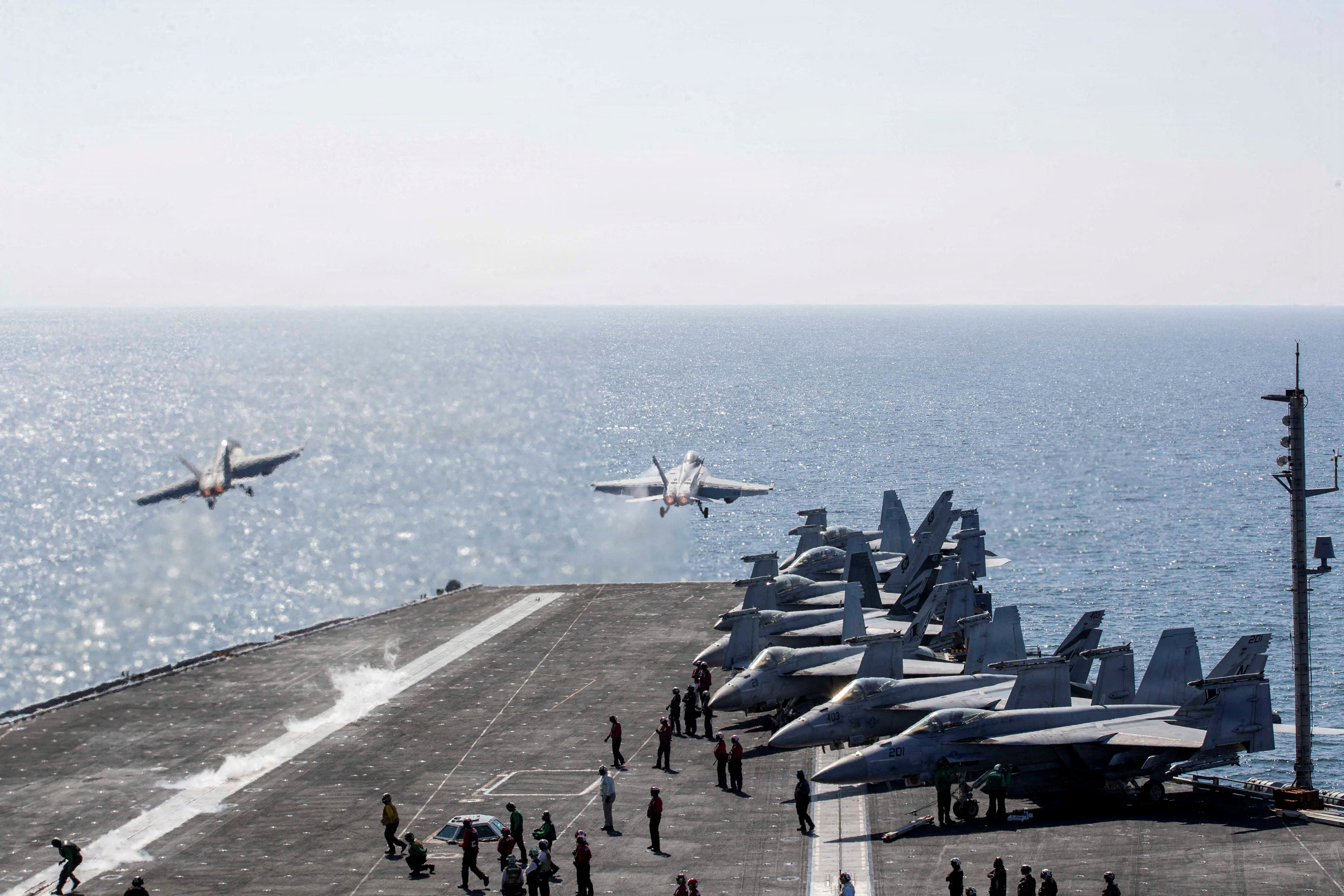
As the conflict unfolds, it is becoming clearer that war with Iran will not be a quick, surgical operation as initially expected. Instead, it signifies a deeper struggle and a fundamental shift in the balance of global power. The targeted killing of Supreme Leader Ayatollah Ali Khamenei was meant as a ‘decapitation strike’ to topple and reshape the regime; however, it has sparked a firestorm that risks consuming the current international order.
Once again, it is tragic to see the lack of strategic foresight that accompanies the American decision for war. There is a recurring pattern where the American president can start hostilities against the principles of international law and the limits of his own constitution with surprising ease. However, the main issue of this war is not just its illegality but also the seriousness of its possible consequences. For the most part, the West remains dangerously unaware of how big this upheaval could be. This war will not be measured in days or weeks. It will likely last for months or even years, involving the entire Middle East and possibly pulling the world’s major powers — the United States, China, and Russia — into a disastrous conflict.
The Mirage of Decapitation
A strategy of ‘decapitation’ — removing a nation’s leadership to force regime change — seldom produces the desired results, especially in a deeply ideological country. In Iran, for instance, killing the Supreme Leader would likely be seen as martyrdom, uniting the population and their regional allies. After such an event, the conflict would shift from a conventional war to a religious struggle against the United States and its allies.
Importantly, the attack happened during negotiations, undermining a possible peaceful resolution. Reports from the Omani foreign minister indicated that Iran had agreed to unprecedented restrictions, including disposing of all its enriched uranium to demonstrate it was not seeking nuclear weapons. By choosing to strike instead, the coalition signaled that regime change was always the goal. This underscores the importance of controlling the world’s oil trade as a key geopolitical issue.
The strategic vulnerability of Cyprus
For smaller nations in the region, such as Cyprus, the consequences are serious. When this crisis ends, the global order will have fundamentally shifted, and each part’s reality will be different from what it is now. Relying on the stability of the current regional power dynamics could be disastrous. Cyprus is in this position today. The war has officially crossed regional borders, with Cyprus becoming the first European area to experience a direct kinetic strike. After the decision to allow offensive operations from the Sovereign Base Areas, the drone strike on RAF Akrotiri confirmed the warning that any country hosting US ‘launch platforms’ is involved in the conflict. Cyprus now finds itself at the center of a ‘convergence of crises,’ where its historic status as a ‘safe haven’ has been lost due to its role in the coalition’s logistical framework.
The GCC as a keystone of the American Empire
As the conflict intensifies, Iran’s retaliation has strategically targeted the Gulf Cooperation Council (GCC) countries: Bahrain, Kuwait, Oman, Qatar, Saudi Arabia, and the United Arab Emirates. These nations serve as the main hosts for American influence in the region. Bahrain, in particular, is a vital naval hub, home to the US Navy’s Fifth Fleet — crucial for protecting the Persian Gulf and the Strait of Hormuz.
By striking these countries, Iran is not just targeting military assets but also attacking their core economic systems. These regimes rely heavily on stability, foreign investments, and the steady export of energy. By turning the Gulf into a conflict zone, Iran is pushing these nations into simultaneous religious and economic crises.
Additionally, the GCC is a crucial pillar of the ‘petrodollar’ system. All oil surpluses are recycled back into the United States as reserves, helping to cover U.S. deficits and keep global interest rates low. Disrupting this cycle — whether through physical attacks or political shifts — would significantly harm the U.S.’s financial position.
The Strait of Hormuz and the global logistics crisis
At the center of this geography is the Strait of Hormuz. About 20 per cent of the world’s total oil supply passes through this narrow chokepoint. A long-term closure would lead to steadily rising oil prices, inevitably pushing the global economy into a deep and lasting recession. We are already seeing a widespread shutdown of the global supply chain. Maritime throughput has dropped sharply, and major carriers like Maersk have implemented ‘Emergency Freight Increases.’ As insurance rates become unaffordable, shipping costs are becoming a major driver of global inflation.
Attrition, asymmetry, and the ‘Water War’
The conflict also serves as a case study in radical asymmetry. While the United States manages a global empire with unmatched technology, Iran has innovated in ways that counter traditional American advantages. The development of the Shahed drone, costing less than $50,000, results in a financially unsustainable war of attrition for the U.S., which must defend itself with multi-million-dollar Patriot and THAAD interceptors. Iran’s mountainous terrain further acts as a natural fortress, shielding mobile missile launchers and drone bases from ‘shock and awe’ air campaigns.
Perhaps the most brutal part of this conflict is the ‘Water War.’ While the coalition targets Iran’s water supply in an effort to cause internal collapse, the GCC countries are even more vulnerable. They depend almost entirely on desalination for their survival. If Iran succeeds in destroying the Gulf’s water and energy infrastructure, the region could become unlivable. The foreign workforce would flee, and the ‘economic miracle’ of the desert could vanish overnight. The ultimate goal appears to be the fragmentation of Iran into ethnic enclaves, while Iran aims to ignite a global Shia jihad to overthrow the current regional order.
Escalation toward global confrontation
The danger of this war turning into a worldwide conflict is very real. Europe is in a delicate situation: having cut off Russian energy supplies, it now depends entirely on the GCC. If Gulf exports stop, Europe will completely collapse. As a result, France, Germany, and Britain are being pushed to consider military action to secure their survival.
However, Russia and China cannot allow Iran to fall. For Moscow, Iran is the last buffer before the West fully turns its focus on Russia. For Beijing, the Middle East is the energy core of the Belt and Road Initiative. The current ‘credibility floor’ of these powers is under threat. If they allow the dismantling of the Eurasian land bridge, the idea of a multipolar alternative to Western dominance will vanish. We are witnessing a clash of energy demands, financial systems, and religious fervor that will impact every corner of the globe.
Conclusion: The birth of a new world order
We are witnessing the end of an era. The Iranians’ strategy is to destabilise the GCC and challenge dollar dominance. The American approach is to use ‘shock and awe’ tactics to achieve regime change. This standoff involves other powers — Russia and China — and increases the risk of conflict.
As the petrodollar system faces pressure and global trade slows, the world economy will suffer greatly. For countries on the edges of this turmoil, like Cyprus, it’s crucial to realise that the old rules no longer apply. The world is being reshaped; the outcomes of this war will shape the 21st century.




Click here to change your cookie preferences