
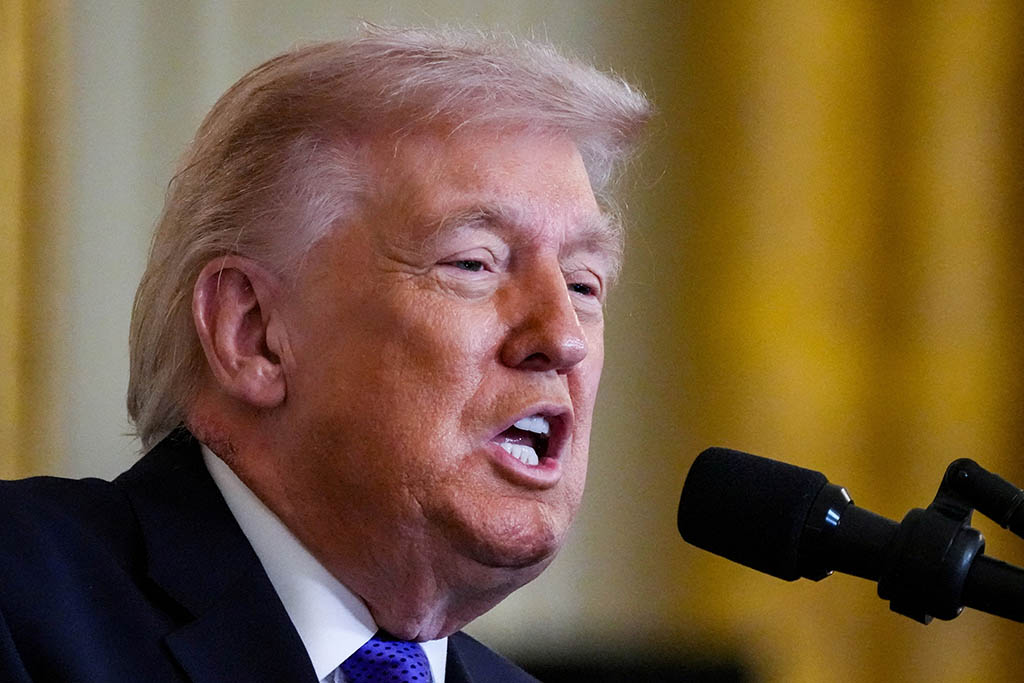
The current war with a stated aim to prevent Iran acquiring nuclear weapons may just push more and more states seeking to obtain them
The events in Iran last week mark another milestone in the US presidency of Donald Trump. Once again, the pursuit of causes that appear on the surface to resonate with what the wider public would regard as worthy objectives has given the president an opportunity to claim that he has gone where no president has gone before.
Like the capture of Nicolas Maduro in Venezuela, the killing of Ayatollah Ali Khamenei, Iran’s Supreme Leader, would not have many people shedding tears myself included. For Trump, this would potentially become another entry on his list of political victories, relieving pressure from his domestic problems: from the reversal of his tariff policies, recently ruled unconstitutional by the Supreme Court, to the killing of civilians on the streets of Minnesota, and the continuing complaints about the cost of living. It may, just possibly, reverse the negative trend in his popularity ahead of the congressional elections in November.
Whether the killing of Khamenei will trigger regime change in Iran remains to be seen. At the moment the war has resulted in a chaotic situation in the wider Middle East, even drawing in the British bases here in Cyprus. What is clear is that the motivation and strategic objectives of the war initiated by Israel and the United States are deeply confused. They appear to change depending on when and who is speaking: Trump, Netanyahu, Pete Hegseth, or Marco Rubio.
Beyond the universally desirable goal that Iran should not possess nuclear weapons, we hear shifting and conflicting justifications – regime change and the restoration of power to the people, the destruction of Iran’s missile and naval capabilities, or the claim that Israel was going to strike anyway and the United States was therefore safer acting first.
All this leaves a bitter taste that the widely shared desire to prevent Iran from acquiring nuclear weapons is becoming another smokescreen, reminiscent of the chemical weapons narrative that led to the Iraq war. The removal of Saddam Hussein and later Muammar Gaddafi in Libya offered brief hope, but ultimately ushered in new eras of suffering for the people in these countries. The latest twist in the tale is reportedly that Trump has demanded that he will personally have a say in the choice of any new leader in Iran. But as Afghanistan has demonstrated, that is also not a guarantee of giving Iran a solution to its problems.
The diplomatic route to constrain Iran’s nuclear programme was effectively abandoned in 2018, when the United States, under Trump, withdrew from the Joint Comprehensive Plan of Action, negotiated in 2015 by Barack Obama. Since then, the route to war was always the most likely outcome. Obama had won the Nobel Peace Prize in 2009 for promoting nuclear non-proliferation and a new climate in international relations, particularly with the Muslim world. Trump’s arrival changed all that.
Iran may well have sought nuclear weapons during the JCPOA period, but the agreement at least placed verifiable constraints on its programme. The door was flung open after Trump’s withdrawal, despite European efforts to prevent it. Later attempts at diplomacy were undermined repeatedly, most notably when Israeli strikes on Iranian facilities made negotiations politically impossible. In June 2025, Israel – with US assistance – bombed Iran’s nuclear infrastructure, allegedly obliterating its nuclear capability, and has now done so again. The Omani foreign minister, acting as mediator, was reportedly devastated that negotiations were cut short before they could bear fruit.
The consequence of Trump’s policies is that nuclear non-proliferation has been gravely weakened. The risks of Iran and North Korea possessing nuclear weapons are clear for everyone to see, but one can hardly dispute the logic. So, it seems, are a number of countries concluding that international law offers little protection in an age of “might is right.” Ironically, the current war with a stated aim to prevent Iran acquiring nuclear weapons may just push more and more states seeking to obtain them. On Monday – not coincidentally – France announced its intention to extend its nuclear umbrella to additional European countries. President Emmanuel Macron confirmed that discussions had already taken place with Germany, Poland, the Netherlands, Belgium, Denmark, Greece and Sweden in developing a new concept ‘forward deterrence’ as he termed it.
Strange and bittersweet as it is to say, I find myself welcoming Europe’s belated move toward an independent nuclear deterrent – something I argued for in the Sunday Mail in January 2025. Such a deterrent will require nuclear weapons to be stationed in various locations within Europe. I was thinking about that when reading about the alleged use (or not) of the UK bases in Cyprus for such a purpose.
The struggle to achieve nuclear non-proliferation illustrates what Rana Foroohar recently wrote in the Financial Times: that Trump is a bad answer to good questions. Not only on nuclear proliferation but also on immigration, the impact of globalisation, and the cost of the green transition. She observed that “Trump came to power by illuminating the hypocrisies of our system, even as he embodies them. We still need answers to the questions he has raised.”
Until we find those answers, Trump will continue exploiting every available loophole to maintain his grip on power – even war. Ironically, this is precisely what he accused Obama of contemplating. Consider his own words during the Obama presidency: “In order to get elected, @BarackObama will start a war with Iran.” (Tweet, 30 November 2011)
“Now that Obama’s poll numbers are in a tailspin – watch for him to launch a strike in Libya or Iran. He is desperate.” (Tweet, 10 October 2012)
In a 2011 video, Trump alluded: “Our president will start a war with Iran because he has absolutely no ability to negotiate… The only way he figures he can get re-elected is to start a war with Iran.”
Whether war with Iran will deliver Trump the political boost he seeks remains uncertain. What is hopeful is that more people are finding the courage to resist him. The question is though, how far is he willing to go to ensure that power remains within his grasp. If January 6 2020 is any indication, the answer is as frightening as the war currently unfolding before us.




Click here to change your cookie preferences