
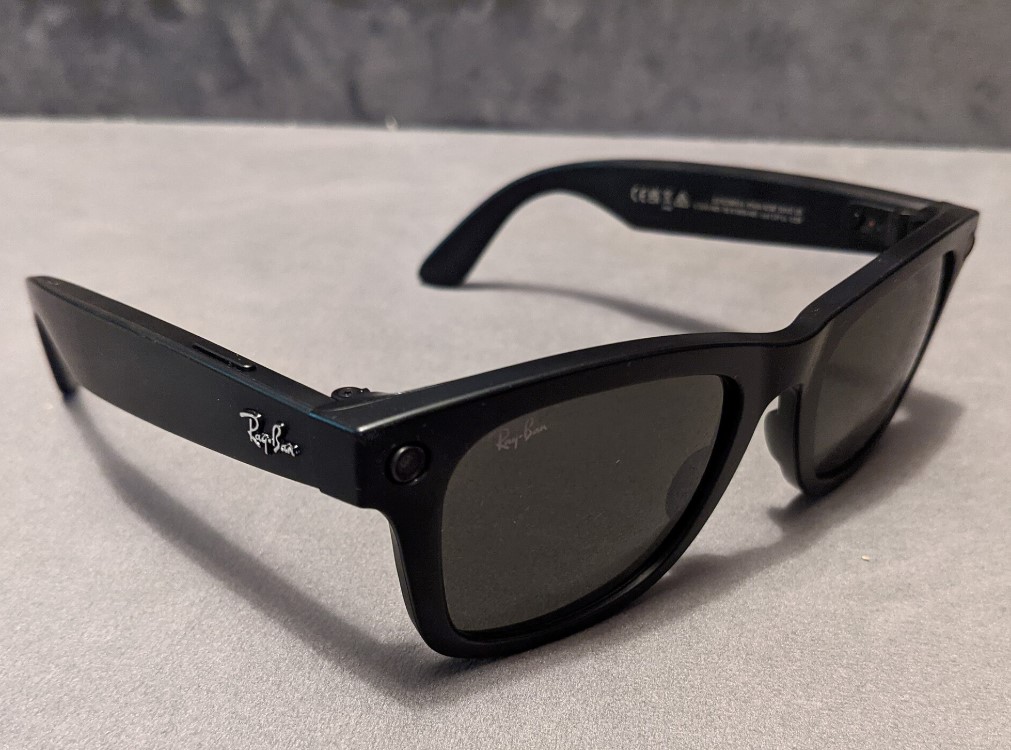
Global shipments of AI glasses reached 8.7 million units in 2025, marking a dramatic 322 per cent increase, according to the latest estimates released by market analysts Omdia.
The surge reflects rapidly rising interest in this emerging device category as technology companies accelerate development and market expansion.
Meta retained its position as the dominant force in the global market, capturing an 85.2 per cent market share of worldwide shipments.
The company shipped 7.4 million units of AI glasses during the year, representing growth of 281.3 per cent.
This expansion was driven by strong demand for Oakley and second-generation Ray-Ban-branded AI glasses, alongside the company’s continued efforts to enter new markets.
Meta has actively expanded distribution into countries including India, Mexico and Brazil, further strengthening its global footprint.
In Mainland China, where Meta does not have a direct presence, domestic device manufacturers and technology companies are rapidly reshaping the competitive landscape.
The Chinese market has quickly become the fastest-growing market globally for AI glasses, driven by frequent product launches, a wave of new entrants and aggressive pricing strategies.
Mainland China captured a 10.9 per cent share of the global AI glasses market, with shipments approaching one million units.
This made the country the second-largest AI glasses market by volume, behind only the United States.
Chinese vendor Rokid and smartphone manufacturer Xiaomi have rapidly climbed the rankings to become the second and third largest vendors globally.
“Rokid has emerged as a dark horse contender in the AI glasses race,” said Qiran Ju, Senior Analyst at Omdia.
“It could effectively compete in Mainland China while also expanding globally through an open approach, providing flexibility and AI assistant choice for consumers,” Ju added.
The share of AI glasses equipped with displays increased significantly during the year.
The proportion rose from 3.3 per cent in 2024 to 8.4 per cent in 2025, with total shipments reaching 730,000 units.
Chinese companies including Rokid, Alibaba and Even Realities dominated this segment, accounting for 71 per cent of display-equipped AI glasses shipments.
Meta’s Ray-Ban Display glasses integrate advanced display technology and recorded shipments of 84,000 units.
Demand for these display-based devices exceeded available supply.
The display-driven design allows deeper integration of AI assistants, representing a form of ambient AI in which intelligence is embedded directly into the user’s field of vision.
This approach enables users to interact with AI services in a more subtle and context-aware manner without interrupting natural interactions.
“Chinese vendors tend to design AI glasses with displays supported by a differentiated go-to-market strategy,” said Ju.
“The integration of displays opens new applications that resonate with consumer habits, as vendors craft products for global appeal, driving swift expansion,” Ju added.
The entry of smartphone and automotive manufacturers, including Xiaomi and Li Auto, reflects a broader shift in how the industry positions AI glasses within the wider technology ecosystem.
According to Omdia, the competitive landscape is expected to consolidate around companies capable of delivering strong ecosystem value beyond the standalone device.
The research firm forecasts that global shipments of AI glasses will surpass 15 million units in 2026.
This growth is expected to be supported by major device vendors and technology giants entering the market, Meta increasing production and expanding into additional regions, and the emergence of local players in India, Japan and South Korea.
As more companies enter the sector, the competitive dynamic is shifting away from simple market entry toward achieving meaningful differentiation and scale.
Omdia indicated that the next phase of industry development will depend on continued improvements in AI glasses hardware technologies.
This includes strengthening collaboration between visual display and interaction systems and high-performance system-on-chip processors, while also optimising power consumption to extend battery life.
“The competitive battleground is shifting rapidly,” said Jason Low, Research Director at Omdia.
“Meta’s early lead was built on brand partnerships and deep AI integration,” Low added.
“As more players enter the fray, ecosystem integration will become a crucial differentiator,” Low continued.
“The winners will be those who can seamlessly integrate AI glasses into broader device ecosystems – connecting glasses with intelligent devices, user environments and services in ways that deliver genuine utility in users’ connected lives,” Low explained.
“Vendors that successfully harness AI agents within AI glasses could transform work communication, daily assistance, and health monitoring while forging exciting new pathways for commercialization,” Low concluded.




Click here to change your cookie preferences