
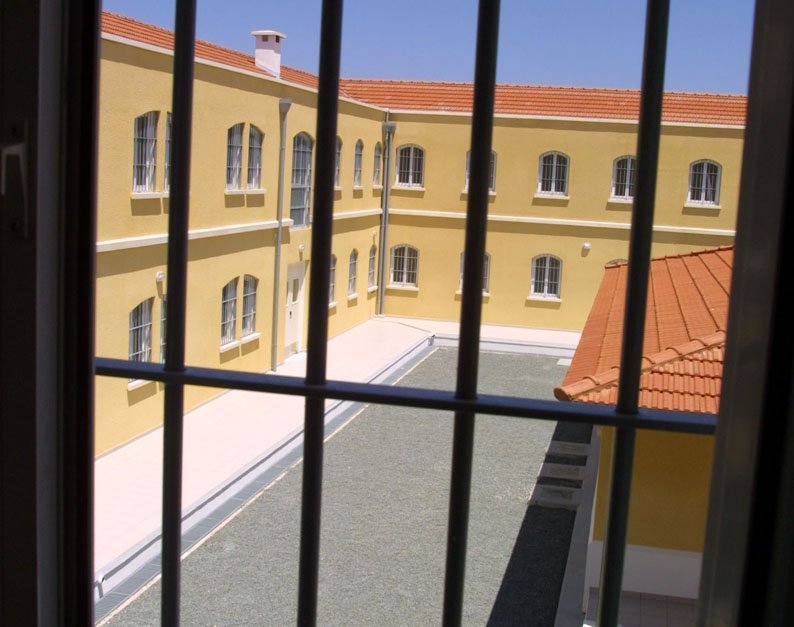
Serious irregularities in sick leave, overtime payments and operational procedures within the prison system were highlighted on Tuesday in a report by the audit office covering the last two years.
The report, presented by auditor-general Andreas Papaconstantinou, describes a system under pressure marked by organisational gaps and weak internal controls that “cannot be considered operationally functional”.
Among the most striking findings is the case of a prison guard who was absent for more than 200 days a year in both 2024 and 2025, submitting 111 medical certificates while only six visits were recorded in the national health scheme (Gesy) database.
The audit found that about 95 per cent of the certificates were issued by two specific doctors, raising questions about the legitimacy of the documentation.
“The above creates serious suspicions of collusion between doctors and prison guards, with the aim of creating and submitting false representations and, by extension, defrauding the state,” Papaconstantinou said.
According to the report, the audit office intends to refer the matter to competent authorities for further investigation.
The audit also identified inconsistencies between submitted medical certificates and records in the general health system, including cases where doctors issued certificates without corresponding recorded visits and situations where diagnoses differed from those registered in the health database.
In one instance, a prisons department officer returned to work for a single day in January 2025 after 488 days of continuous sick leave.
Another employee was absent for a total of 544 days over recent years due to prolonged medical leave, while remaining in a senior position.
Beyond sick leave issues, the report describes serious operational weaknesses within the prison system, including the absence of formal protocols for many administrative and emergency procedures.
Apart from procedures introduced after the escape of an inmate during a hospital visit, the audit found that no comprehensive protocols exist for handling incidents such as prison escapes, violence or riots.
This lack of structured procedures raises concerns about the ability of authorities to respond effectively during critical incidents and maintain security within facilities.
Significant irregularities were also discovered in the recording of staff working hours and overtime.
Many prison guards recorded entry to work using electronic cards but failed to register their departure, creating discrepancies between multiple attendance systems used to calculate overtime payments.
The report said the inconsistencies indicate weak internal oversight and create an increased risk of incorrect payments.
Attendance and overtime monitoring are inconsistent, with 21 per cent of guards failing to use the electronic system and 31 per cent not recording departure times in handwritten logs.
Only 54 per cent of personnel fully record their presence in both systems, undermining verification of hours worked and overtime payments.
Discrepancies between daily task lists and attendance records are frequent, with guards often credited for shifts they did not serve.
Some personnel consistently exceed night work limits, while others undertake overtime without prior approval or documentation, increasing the risk of arbitrary payments.
Further findings indicate that 44 employees surpassed the maximum annual sick leave threshold of 42 days during the audit period.
The report also highlighted broader structural challenges affecting the prison system, including overcrowding and limited use of electronic monitoring tools intended to reduce the prison population.
Of the 40 available electronic monitoring bracelets, half were inactive, limiting their effectiveness in easing pressure on facilities.
The audit also highlights persistent deficiencies in operational readiness and infrastructure.
Prison anti-riot teams have not been reviewed in several years, leaving rosters outdated and including personnel who have left or since been transferred.
On the day of inspection, only four guards were immediately available in the afternoon and just one after midnight, revealing “a serious operational weakness,” the report states.
No action plans define mobilisation procedures, assembly points, or response times, and no readiness exercises have ever been conducted.
The audit describes the anti-riot equipment warehouse as overloaded, “making it difficult to immediately locate personal equipment in the event of an emergency.”
Fire inspections further reveal inadequate escape routes relative to prisoner numbers, heightening risk in urgent evacuations.
The clothing warehouse lacks a proper fire-extinguishing system, while liquefied petroleum gas tank cylinders are stored alongside flammable stocks without basic safety signage, creating “serious safety risks for materials and personnel.”
In addition, the prison clinic does not have a comprehensive system for monitoring drug stocks, leaving quantities and expiry dates uncertain, while recycling is not systematically managed despite significant waste generation.
Energy costs remain high, with €1.2 million spent on electricity and heating oil last year, partly due to insufficient solar panel coverage.
The audit warns that these shortcomings, combined with the central prisons operating most recently at 123 per cent capacity, undermine operational efficiency and security.
The report concludes that reforms must address staffing controls, action protocols and infrastructure, calling for “structural reforms, stronger oversight and modernised procedures within the prison administration.”




Click here to change your cookie preferences