
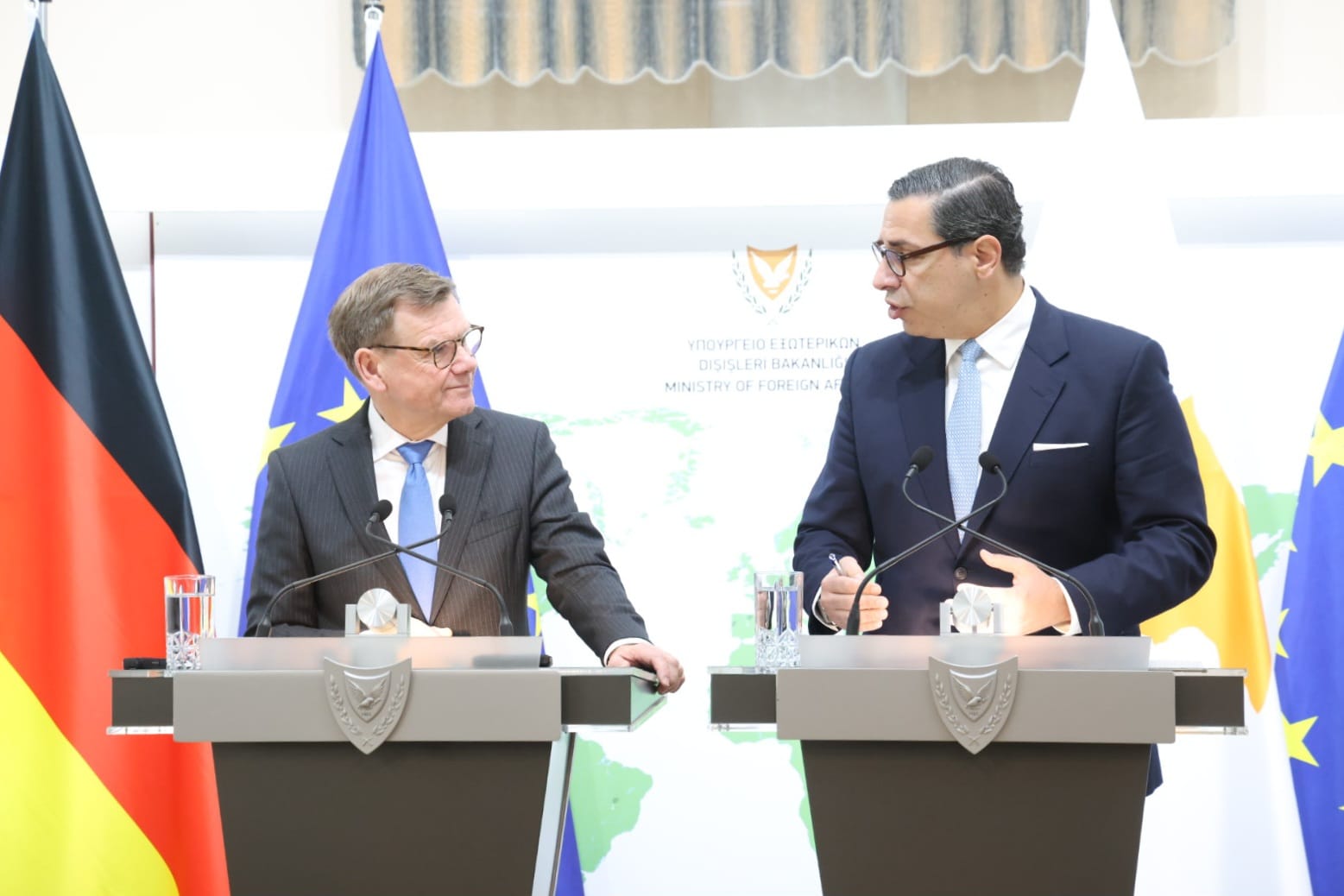
The implications of the ongoing conflict in the Middle East on international security, supply chains and the energy market were at the centre of talks between Foreign Minister Constantinos Kombos and his German counterpart Johann Wadephul in Nicosia on Tuesday.
“[It was a] timely and constructive meeting, with the exchange of views on the rapidly escalating situation in the Middle East,” Kombos wrote in a post on X.
Talks also focused on the need for Europe to ensure coordinated diplomatic de-escalation measures while maintaining a unified European stance against Iran’s recent attacks on Gulf countries.
Particular emphasis was placed on Cyprus’ role as an EU member state located close to the conflict region and its function as a hub for humanitarian and evacuation operation
These have included recent flights for passengers stranded in countries in the Middle East and the Gulf, through which citizens of various countries, including German nationals, have already been safely transported.
The evacuations are carried out under Cyprus’ Estia plan, which enables the island to operate as a coordination centre for the evacuation of European Union and third-country nationals from conflict zones.
Kombos and Wadephul also reviewed bilateral relations between Cyprus and Germany, confirming the “very positive level” of cooperation and the potential for further strengthening ties in sectors such as culture, education and shipping.
The ministers additionally exchanged views on the priorities of Cyprus’ ongoing EU presidency of the EU Council, stressing the importance of an active European role in the region, particularly in crisis management and in fostering opportunities for cooperation and development.
Kombos emphasised the importance of strong Euroepan coordination and support to partners in the region, and thanked Wadephul for Germanys solidarity.
“Cyprus really needs Germany, Germany will be here to support us,” he wrote.
Pleasure to welcome my German colleague Dr Johann Wadephul @AussenMinDE to Cyprus.
— Constantinos Kombos (@ckombos) March 10, 2026
Dear Johann, thank you for your support and solidarity, and for underlining that if Cyprus really needs Germany, Germany will be here to support us.
Timely and constructive meeting, with exchange… pic.twitter.com/JrpUSSJN2T



Click here to change your cookie preferences