
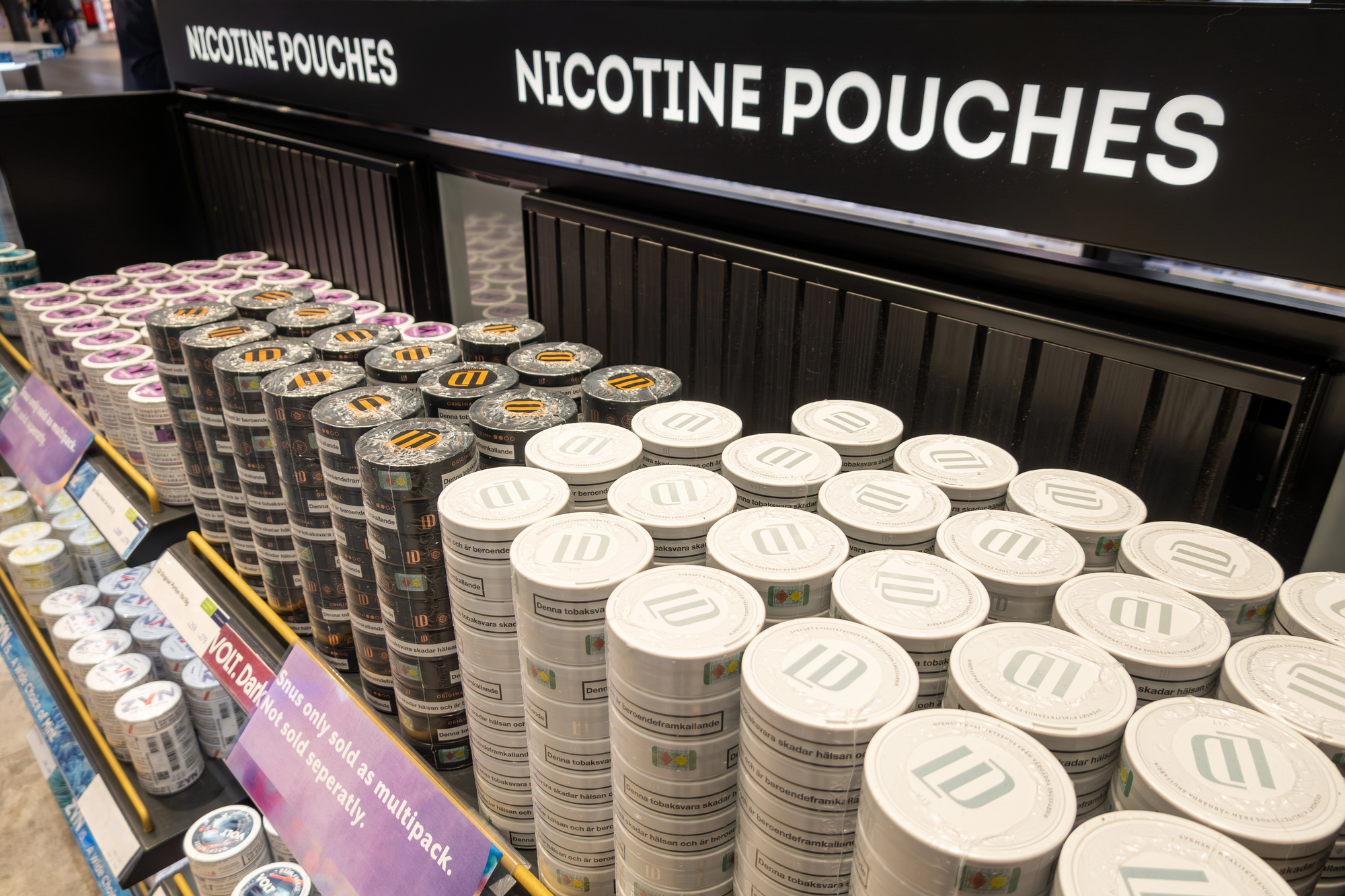
A proposed law to regulate nicotine pouches is expected to reach the House plenary session in early April, according to Diko MP Chrysis Pantelidis, as authorities continue to seize the products entering the country without legal authorisation.
Pantelidis said the draft legislation, discussed in principle by the House health committee on Thursday, aims to establish a regulatory framework governing the marketing, composition and quality of nicotine pouches currently circulating on the market.
“This bill aims to create a control mechanism by the state, both for the protection of public health and for the fight against smuggling.” Pantelidis said after the meeting.
According to Pantelidis, the proposed legislation has received broad support from government departments and other stakeholders involved in the consultation process.
“We were pleased to see that both the health and finance ministry, as well as all the involved public and private sector bodies, support this initiative of ours,” he remarked.
The bill seeks to include nicotine pouches within Cyprus’ existing smoking control legislation, placing them under the same regulatory regime as tobacco products.
Pantelidis said the framework would introduce controls on product content, taxation and customs marking, while also banning sales to minors.
He also remarked that part of the products circulating originate from the north, which complicates efforts to monitor their composition and nicotine concentration.
Responding to questions regarding their availability, Pantelidis clarified that nicotine pouches are not currently sold openly in kiosks, despite evidence that they are reaching consumers through other channels.
“As far as smokers are concerned, it is the product of the future,” he said, referring to their use as a potential substitute for traditional smoking.
Pantelidis also pointed to Scandinavian countries where similar products have been widely used, saying that in those cases “the reduction in traditional smoking is rapid, and just as rapid is the improvement in public health”.
Meanwhile, authorities have seized more than 3,700 nicotine pouches in the past two and a half years, as the products continue to circulate on the market despite having no legal authorisation for sale, according to customs department data released on Thursday.
A total of 3,728 nicotine sachets were confiscated between November 2023 and early March 2026 through inspections of postal shipments, retail premises and travellers entering the country.
Customs records show that the majority of seizures occurred in postal and courier deliveries, where 1,950 nicotine pouches were intercepted.
Another 1,533 were found in shops, 235 were discovered in passengers’ luggage and ten were identified at transit points.
The data indicates that the products are entering Cyprus through several routes, from online purchases to physical retail distribution.
Authorities have also struggled to trace the origin of many of the products.
Of the total seized, 1,435 originated from EU countries and 928 from third countries, while the source of 1,365 remained unknown.
Officials say the lack of traceability raises concerns about production standards and supply chains.
Nicotine pouches are small sachets placed under the lip that release nicotine without tobacco combustion.
Because they do not produce smoke, they can be used discreetly, a characteristic that authorities say has contributed to their growing presence on the market.
Under current legislation in Cyprus, nicotine pouches are classified as pharmaceutical products.
As such, they require marketing authorisation from the pharmaceutical services before they can be legally sold.
No such licence has been granted to date, meaning any product found on the market is considered illegal.
Despite this classification, the products continue to appear periodically in retail outlets and through online orders.
Officials say this situation has created enforcement challenges, as demand persists while a clear regulatory framework has yet to be established.
The issue is now before parliament, with a bill submitted by Diko MP Chrysis Pantelidis being examined by the House health committee, seeking to regulate nicotine pouches by incorporating them into existing smoking control legislation.
Pantelidis argues that the current situation leaves authorities with limited tools to manage a market that already exists.
“If nicotine pouches are going to circulate, pretending they are medicines that no one will license, simply hands the market to smugglers and unregulated imports,” he has previously said.
The proposed legislation would subject nicotine pouches to the same restrictions that apply to tobacco products, including a clear prohibition on sales to minors.
Violations could carry penalties of up to €2,000 and imprisonment for up to six months, with enforcement carried out by health services inspectors, the police and other authorised officers.



Click here to change your cookie preferences