
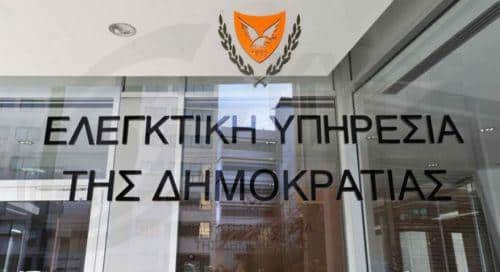
A total of nine financial statements concerning the activities of state organisations in the 1990s remain pending for audit, the audit office said on Thursday in a report decrying delays in the submission and audit of financial statements by public institutions.
The report stated that in total, four financial statements from school boards and five from “other organisations” concerning the period between 1995 and 1999 remain pending.
It added that in total, between 1999 and 2023, exactly 6,734 financial statements, the majority of which concerned village councils and large minorities of which also concern municipalities and school boards, remain pending for audit.
“The submission of financial statements to the auditor general is a fundamental obligation of public sector entities and aims to ensure transparency, accountability and solid financial management,” it said, adding that it is “also advisable that the audit of these financial statements be completed as soon as possible”.
This, it said, is done “so that the auditor general’s opinion be timely and relevant, thus enabling the competent entities to take any relevant measures”.
It pointed out that since 2014, the audit office has been empowered to assign the task of auditing those financial statements to private auditors, while “retaining the possibility to conduct, at its own discretion, an additional or other audit”.
As such, it said, “essentially, between 2014 and 2025, the audit office acted as a coordinating and contracting authority, through procedures which assigned the audit of financial statements of public entities to private auditors”, with the exception of institutions directly tied to the local government.
“Unfortunately, the analysis shows that the entire effort presented substantial weaknesses, which led to the accumulation of a large number of unaudited financial statements,” it said.
Of the more than 6,000 statements which remain pending for audit, it said, 81 per cent were assigned to private auditors, but have not yet been audited.
It added that of the remainder, 14 per cent of cases have seen the state institutions themselves not submit a financial statement at all, while in the remaining five per cent, the reports have not yet been assigned to private auditors.
Looking ahead, it said that the state institutions themselves will now be directly responsible “for finding and contracting a private audit firm” to audit their financial statements, rather than assigning the responsibility of finding private auditors to the audit office.
Nonetheless, it said, “the appointment of private auditors as well as the determination of their remuneration [will] continue to be subject to the prior approval of the auditor general”.
It added that “a target has been set to significantly reduce the number of unaudited financial statements over the next two years”, and that this effort will be evaluated every three months going forward.
Additionally, reports on the matter will be issued by the audit office every year.





Click here to change your cookie preferences