
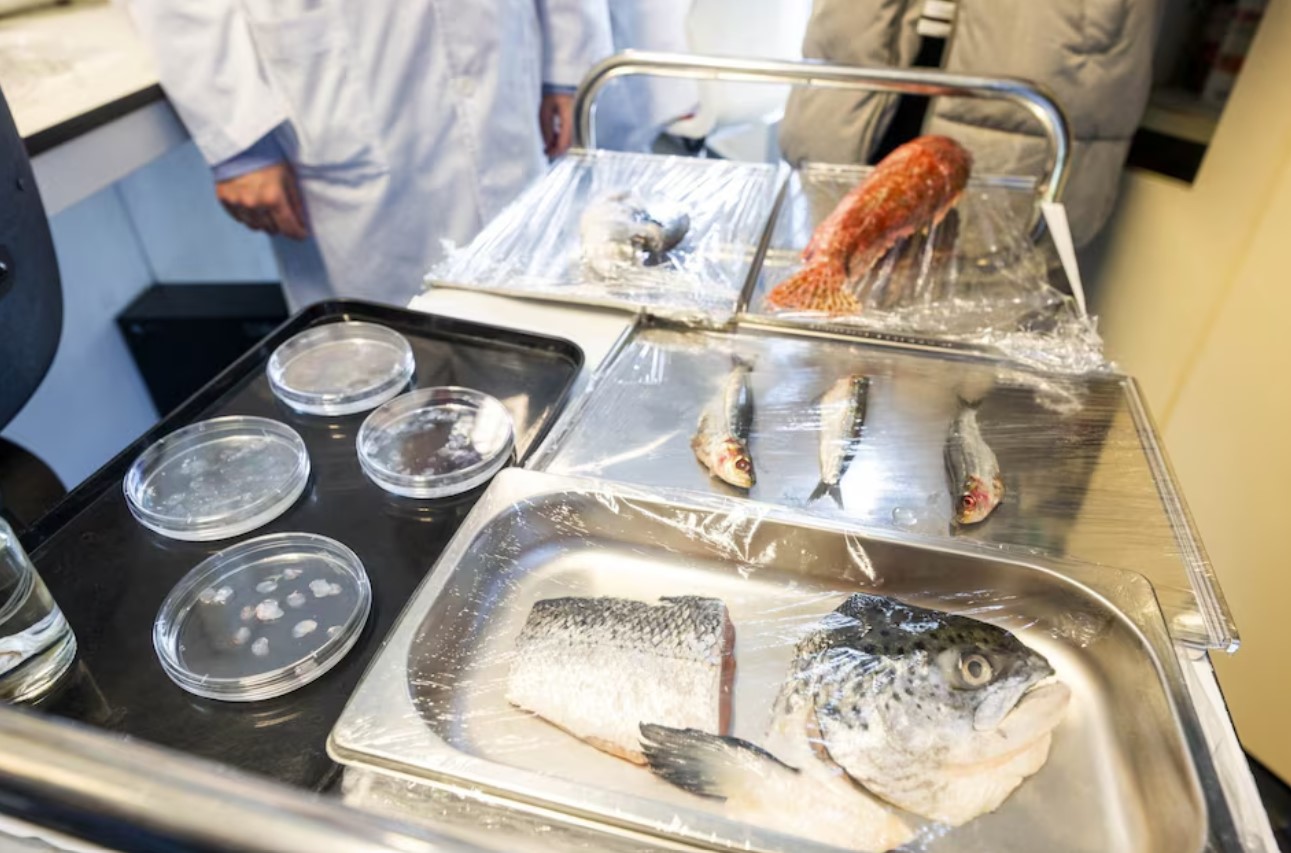
Researchers at Spain’s University of Granada have developed an artificial cornea made from the scales of several fish species commonly found in markets, which could become a lower-cost alternative to donor transplants for severe eye diseases.
The cornea – the eye’s transparent front layer – is difficult to repair when badly damaged because it has no blood vessels and limited regenerative capacity. Severe corneal disease is often treated with donor transplants, which can be constrained by organ availability and waiting lists.
Scientists from the university’s Tissue Engineering Group and the ibs.GRANADA biomedical research institute said in a press release they had created corneal implants with fish scales that were highly biocompatible, transparent and resistant.
“Due to its origin, this product is very accessible, easy to obtain and inexpensive, and could help boost the local fishing industry,” said Ingrid Garzon, professor of histology at the southern Spanish university, who co-authored the research.
While testing suggested they could be useful for corneal repair and regeneration, the technology remains far from possible clinical use in humans pending human trials.
The team said the material produced good functional results in laboratory studies and in animals that received the implants.
“Although the standard transplant usually offers good results, it’s necessary to develop new effective regeneration methods that do not depend on organ donation, which is subject to waiting lists,” Miguel Alaminos, also a histology professor at the same university, said in the release.
A 2016 peer-reviewed paper by researchers at Antwerp University found that fish scale-derived artificial corneas were biocompatible with humans.





Click here to change your cookie preferences