
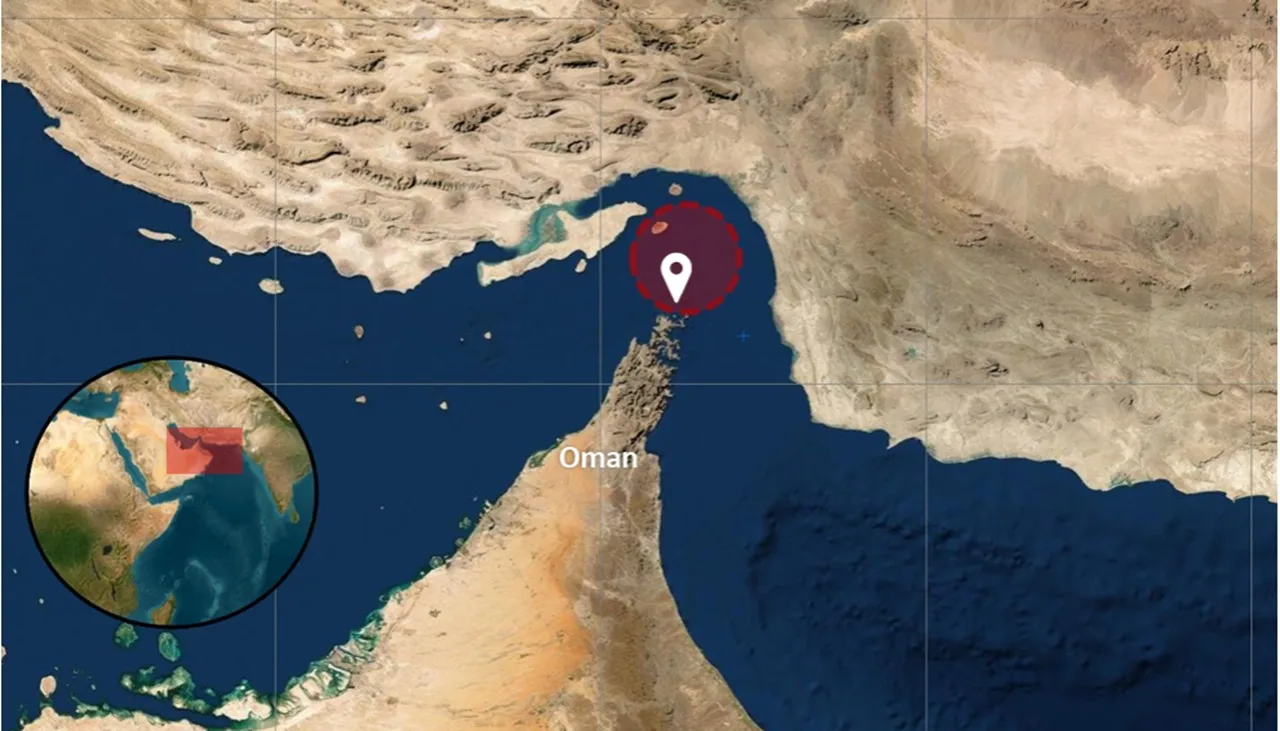
The International Maritime Organisation (IMO) is set to hold an emergency meeting on Wednesday as concern deepens over the impact of the Middle East war on commercial shipping, with thousands of seafarers and vessels still stranded in or near the Gulf.
The IMO’s extraordinary council session is due to take place on March 18 and 19 in London.
The two-day meeting at the London-based UN agency’s headquarters is expected to focus on a number of draft resolutions, including a proposal to establish a safe maritime corridor for the removal of ships and crews stranded in the Persian Gulf.
The measures, however, would not be binding even if approved by the IMO council on Thursday.
The meeting comes as Iran’s retaliation following the Israeli-US strikes has effectively paralysed commercial traffic in or near the Strait of Hormuz, one of the world’s most important maritime chokepoints. In peacetime, around a fifth of global crude oil and liquefied natural gas passes through the waterway.
According to the IMO, around 20,000 seafarers are stranded aboard some 3,200 ships west of the strait. At least 21 ships have been hit, targeted or reported in attacks since the conflict began, based on an AFP tally drawing on data from UK Maritime Trade Operations, the IMO and Iraqi and Iranian authorities.
Ahead of the meeting, the United Arab Emirates said more than 18 merchant ships of various nationalities had been struck by missiles, rockets, drones and sea mines.
A document submitted on Monday added that at least eight sailors had been confirmed dead, while four remain missing.
A group of countries including the United Kingdom, France, Germany and several Gulf states is pushing for the IMO council to adopt a statement strongly condemning Iran’s attacks on neighbouring states, commercial vessels, seafarers and civilian maritime infrastructure.
They also called for condemnation of Tehran’s alleged closure of the Strait of Hormuz, saying the attacks were unjustified and must stop.
Iran, for its part, told the IMO that the worsening maritime security environment could not be separated from what it described as unlawful attacks by Israel and the US.
It said the disruption now affecting shipping and seafarers was a direct and unavoidable consequence of those actions.
At the same time, Japan, Panama, Singapore and the UAE have urged the organisation to help create a framework for the safe removal of stranded ships and crews from high-risk areas to places of safety, in a move aimed at reducing the risk of further military attacks and protecting the wider maritime space.
Shipping industry groups have meanwhile called for a coordinated international security response, while stressing that the welfare of seafarers must remain central.
They said communication with home countries should be maintained, crew changes and disembarkation facilitated, and basic supplies guaranteed.
Separately, IMO secretary-general Arsenio Dominguez told the Financial Times that naval escorts through the Strait of Hormuz cannot “100 per cent guarantee” the safety of commercial ships.
He also said military support is “not a long-term or sustainable solution”, warning that vessels stranded in the Gulf risk running short of food and basic supplies for their crews.
Dominguez has also said that no attack on innocent seafarers or civilian ships is ever justified, and that crews must be protected from the effects of wider geopolitical tensions.
In the meantime, signs have emerged that Iran may be allowing selected vessels to pass through the strait under tightly controlled conditions.
According to ship-tracking data, Tehran appears to be permitting passage to ships from friendly countries, suggesting the blockade is being applied selectively rather than uniformly.
Shipping intelligence firm Windward said at least five ships exited the strait through Iranian waters on March 15 and 16, describing this as growing evidence of “permission-based transit” and Iranian control over who may pass.
JPMorgan also noted that at least four ships had recently been seen leaving through the Larak-Qeshm Canal near the Iranian coast, an unusual route for commercial traffic.
The bank said this may point to a screening process under which Iran verifies ownership and cargo before allowing passage to ships not linked to the US or its allies.
The vessels included bulk carriers and the Pakistan-flagged oil tanker Karachi.
MarineTraffic data showed the Karachi transited the strait with its automatic transponder switched on, unlike many other ships that have gone dark to reduce the risk of being targeted.
Most of the crude passing through the strait is bound for Asia, especially China, according to JPMorgan, and several countries have already entered talks with Tehran in an effort to secure safe passage for their vessels.
Two Indian-flagged tankers carrying liquefied petroleum gas reached Indian ports after crossing the strait over the weekend, while a Turkish-owned vessel also made the passage after receiving Iranian approval, according to Turkish authorities.





Click here to change your cookie preferences