
Cyprus cruise sector resilient, ferry service to Greece to launch on schedule
Deputy Shipping Minister Marina Hadjimanolis said on Thursday that 11 Cyprus-flagged ships in the Gulf are safe, as the government monitors the regional crisis and its potential impact on shipping, trade, energy and tourism.
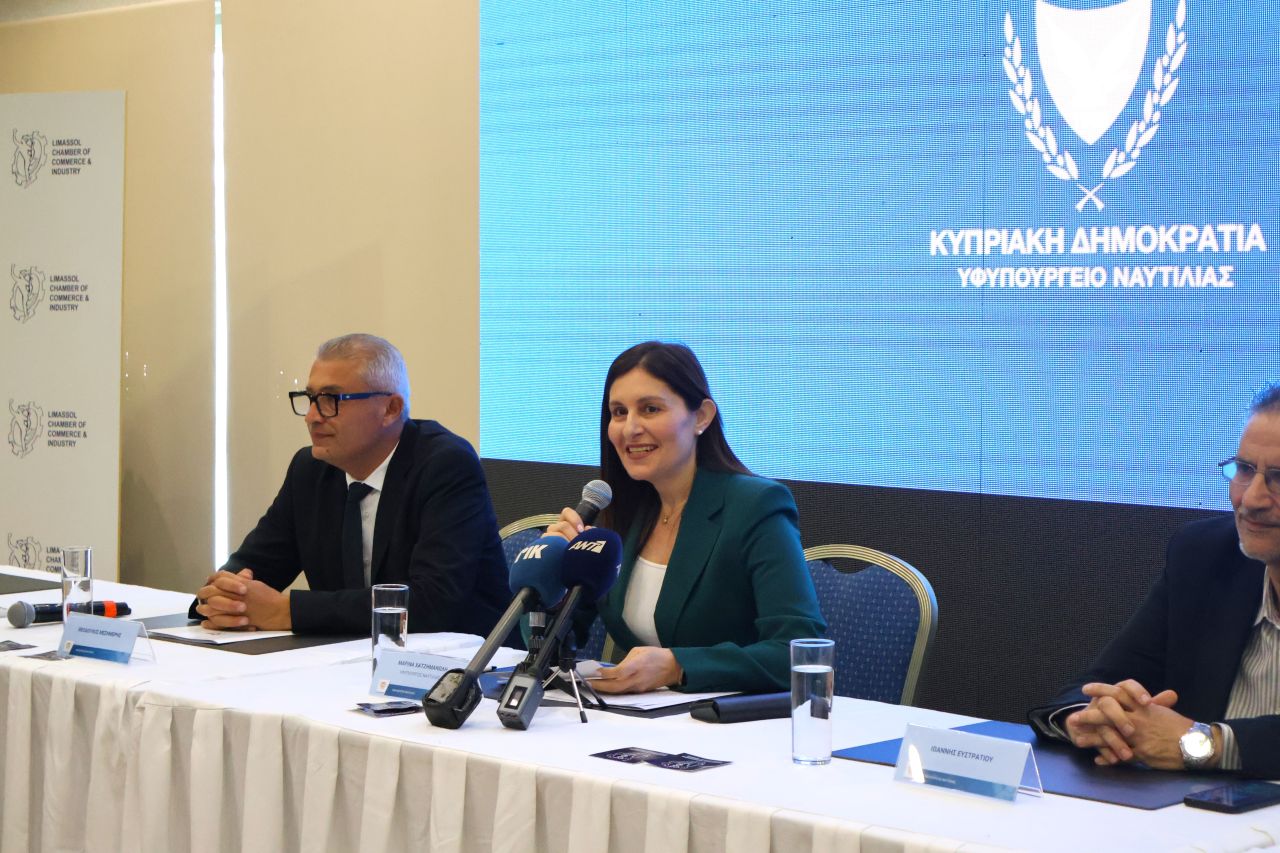
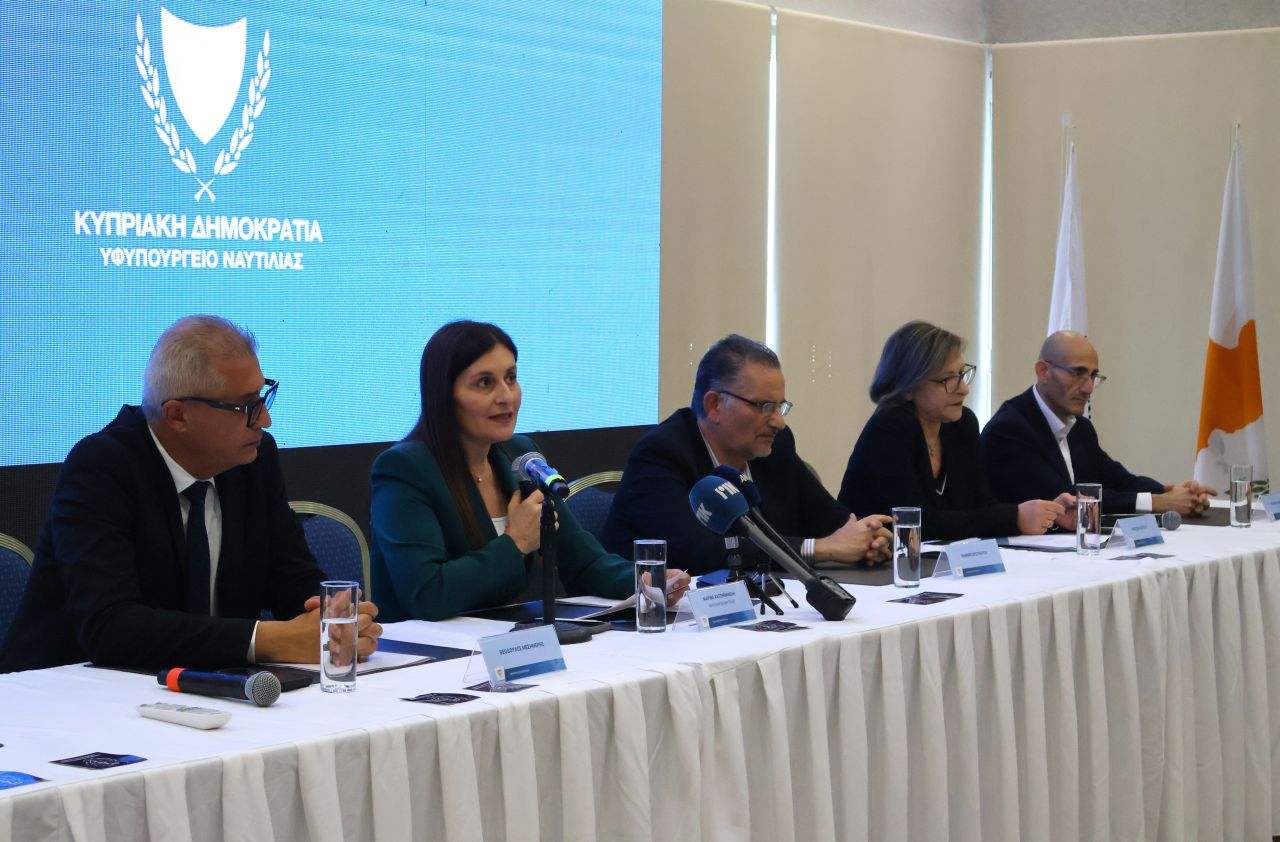
Speaking at a press conference for the Deputy Ministry of Shipping’s 2025 annual report in Limassol, Hadjimanolis said the closure of the straits had become a matter of major concern for global shipping, particularly because of the risks facing seafarers stranded in the area.
She said the passage is one of the world’s most critical maritime energy corridors and also important for agricultural trade, adding that the government and the deputy ministry had been closely monitoring developments from the outset.
“At the moment, as you know, the straits are essentially closed,” she said, adding that ship movements were very limited.
Hadjimanolis said there are an estimated 1,000 ships and 20,000 seafarers in the wider area, while Cyprus has issued recommendations since the first day of the crisis for vessels operating both there and in other vulnerable zones, including the Red Sea and the Gulf of Aden.
She said that of the 11 Cyprus-flagged vessels currently in the Gulf, most operate there on a permanent basis, providing mainly specialised or auxiliary maritime services, while only one Cypriot ship was effectively waiting to depart the region.
The deputy minister also said there are currently no coordinated collective proposals that could ensure the safe escort of ships through the straits, adding that Cyprus is working with its European Union partners on diplomatic efforts aimed at restoring safe passage.

She also referred to the extraordinary session of the International Maritime Organisation (IMO) Council, held on March 18 and 19, saying the main issue under discussion was the safety of seafarers stranded aboard ships in the affected area.
“I would like to begin by expressing our full solidarity with the Gulf States and the unacceptable attacks they have suffered,” she said.
On the possible impact on Cyprus, Hadjimanolis said the crisis has not so far affected the cruise sector, pointing instead to Marella Cruises’ continued decision to use Limassol port as a home port.
“On the contrary, next week we will welcome again this year the Marella Cruises ship,” she said, adding that this sends “the strongest message” that Cyprus remains a safe destination.
That view was echoed by port officials, who said no cruise cancellations or changes in berthing schedules had been recorded so far because of the regional tensions.
At the same time, officials said the Cyprus-Greece passenger ferry service would begin as scheduled at the end of May, with the first sailing due to depart from Limassol.
They added that a separate press release with details, including fares and any updates, would be issued shortly.
Asked whether the situation could disrupt the supply of goods to Cyprus, Hadjimanolis said there are currently no indications of shortages, although she acknowledged that prolonged instability could eventually affect flows and logistics.
“There are no valid reasons to show that there is a shortage of goods,” she said, while noting that much will depend on how long the crisis lasts.

Officials also said Cyprus is not heavily dependent on the most affected areas for essential goods, although the situation is being assessed continuously in cooperation with other services of the Republic.
Government representatives added that the authorities are also examining whether certain supply chains may come under pressure and what measures may be needed if the crisis deepens.
One of the main concerns, they said, is the impact on energy costs, with officials warning that this is the area most likely to feel the effects if disruption persists.
Reference was also made to the fact that around 4 per cent of global goods traffic passes through the affected area, with particular mention of the major port of Jebel Ali in the United Arab Emirates, which functions as a key transit hub.
Officials said some cargo is already being redirected to ports outside the Persian Gulf, while some shipping companies continue to opt for the longer route around Africa.
Beyond the regional crisis, Hadjimanolis used the press conference to present the deputy ministry’s work during the third year of President Nikos Christodoulides’ government, placing particular emphasis on the increase in tonnage in the Cyprus ship registry, the stronger contribution of shipping to GDP and higher revenue from the tonnage tax system.
Speaking at the Limassol Chamber of Commerce and Industry (Evel), she said Cyprus is one of the world’s largest shipping centres and added that the further strengthening of Cypriot shipping remains the primary goal.
Hadjimanolis said that since September 2023, the tonnage of the Cyprus ship registry has increased by 23 per cent, reaching its highest level since the establishment of the deputy ministry.
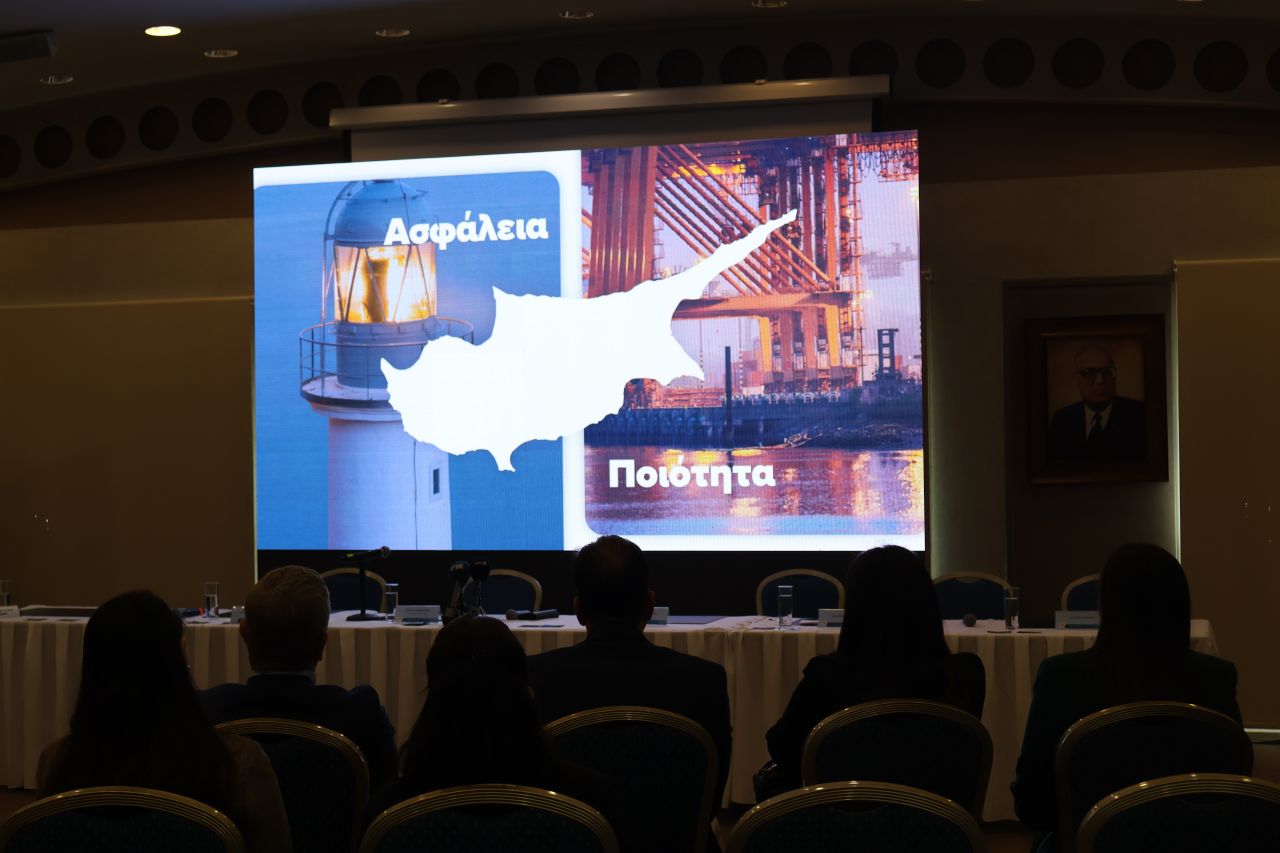
She added that the contribution of shipmanagement to GDP has continued to rise, reaching 17 per cent in 2025, while a video presentation accompanying the annual report referred to an 8.6 per cent increase in revenue from the tonnage tax system in 2025 compared with 2024.
She said Cyprus today is a significant maritime power on the global map, with an internationally recognised ship registry and one of the world’s largest shipping centres.
Cyprus’ maritime relations with countries in the Gulf were also emphasised, including the signing of memoranda of understanding (MoU) with Oman and Qatar, as well as the first Cyprus-Egypt Joint Shipping Committee meeting.
Reference was also made to the steady growth of the passenger maritime link between Cyprus and Greece, now in its fourth consecutive year, as well as a 30 per cent increase in cruise ship arrivals in 2025.
The deputy ministry said it is also working on a plan to strengthen cruise tourism and to develop the appropriate framework for attracting recreational vessels to the Cyprus ship registry.
Hadjimanolis said the deputy ministry’s main objective remains the further strengthening of Cypriot shipping, while outlining a series of actions and initiatives due to be rolled out in 2026.
She said those priorities remain focused on the continued digitalisation of the Deputy Ministry of Shipping, where significant progress has already been made.
She also made special reference to Cyprus’ upcoming presidency of the Council of the European Union, during which the deputy ministry has undertaken specific initiatives aimed, among other things, at highlighting the important role of seafarers in global shipping.
The deputy ministry also announced that Cyprus will host European Maritime Day 2026 in Limassol, in cooperation with the European Commission, with events scheduled for May 21 and 22, while Hadjimanolis also noted that Maritime Cyprus 2025 recorded its highest-ever participation, attracting more than 1,000 delegates from over 35 countries.
“With vision and determination, we continue to build the future of a vital and strategic sector for Cyprus. Cyprus Shipping continues to strengthen and lead the way forward,” Hadjimanolis said.
In conclusion, she said the successful course of Cypriot shipping is largely the result of cooperation between the public and private sectors, with the common goal of strengthening the competitiveness of the sector.
She added that the deputy ministry’s close and long-standing cooperation with the Cyprus Union of Shipowners (CUS) and the Cyprus Shipping Chamber (CSC) remains a driving force behind efforts to further establish Cyprus as a leading shipping centre.
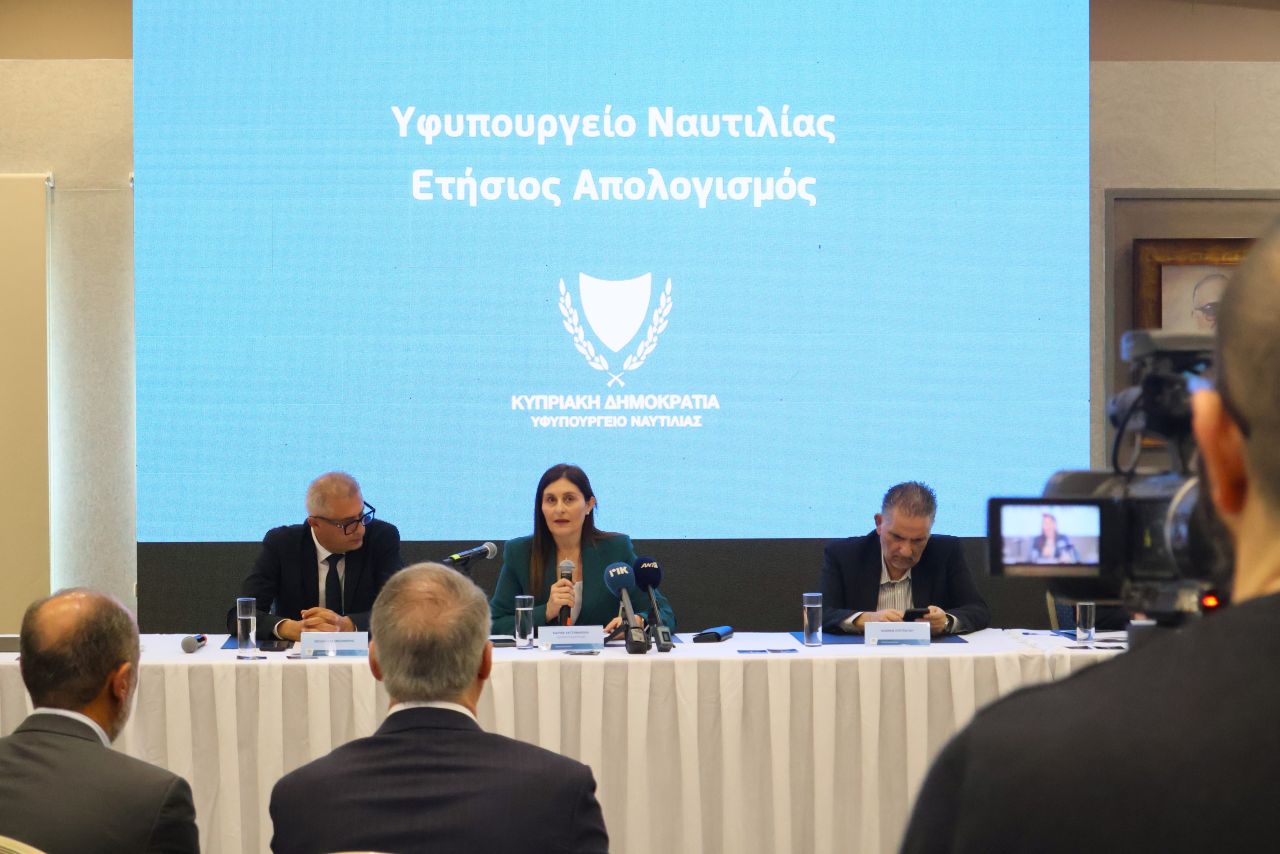
The remarks were made before the presentation of the Deputy Ministry of Shipping’s annual report for 2025, which was delivered during the same event held at the Evel.





Click here to change your cookie preferences