
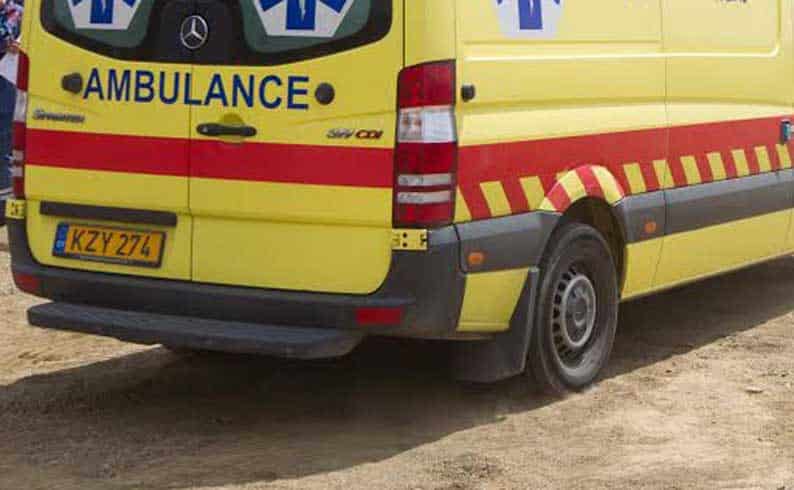
Health Minister Neophytos Charalambides commended the work of the ambulance service on Friday, and praised its role on the front lines as invaluable.
Speaking during a visit to the ambulance coordination centre, Charalambides remarked that “the immediate and effective response is what makes the difference between life and death.”
“We are here to see the ambulance service, express our thanks for the extremely important work they do every day, serving the citizen, serving the patient. At the same time, let us examine whether there is room for further support and upgrading of the services they offer,” he said.
Ambulance service head, Riana Constantinou, said the national role of the service extends to disasters, crises and everyday emergencies.
“At the moment, there is no other rescue corps of health professionals except the ambulance service, and its role is evident in all emergencies,” she said.
Constantinou said their goal is to reduce response times to incidents to under eight minutes.
She added that delays occur because ambulances are often attending other life-threatening emergencies.
“In all countries of the world, delays in ambulances are an everyday occurrence, since ambulances are not enough to deal with incidents that happen simultaneously,” she said.
The visit comes amid ongoing reforms aimed at creating a national ambulance agency under the health ministry.
Non-emergency transfers rose from 5,000 in 2020 to 45,000 in 2025, while emergency calls remained stable at around 41,200.
Stakeholders emphasise that the public service continues to function effectively but is over-extended.
Patients’ federation (Osak) president Marios Kouloumas said the current system leaves hospital beds occupied unnecessarily during prioritisation of emergency calls.
“There should be only one provider when it comes to emergency calls, and it has to be a state agency,” he said, stressing the need for efficiency and oversight.
Charalambides stressed that reforms aim to maintain a health system that is “immediate, effective and always humane,” while Constantinou said the service will continue striving to be among the best in Europe and the world.
“We want to reduce response time to less than eight minutes and develop rapid intervention capabilities further,” she concluded.





Click here to change your cookie preferences